
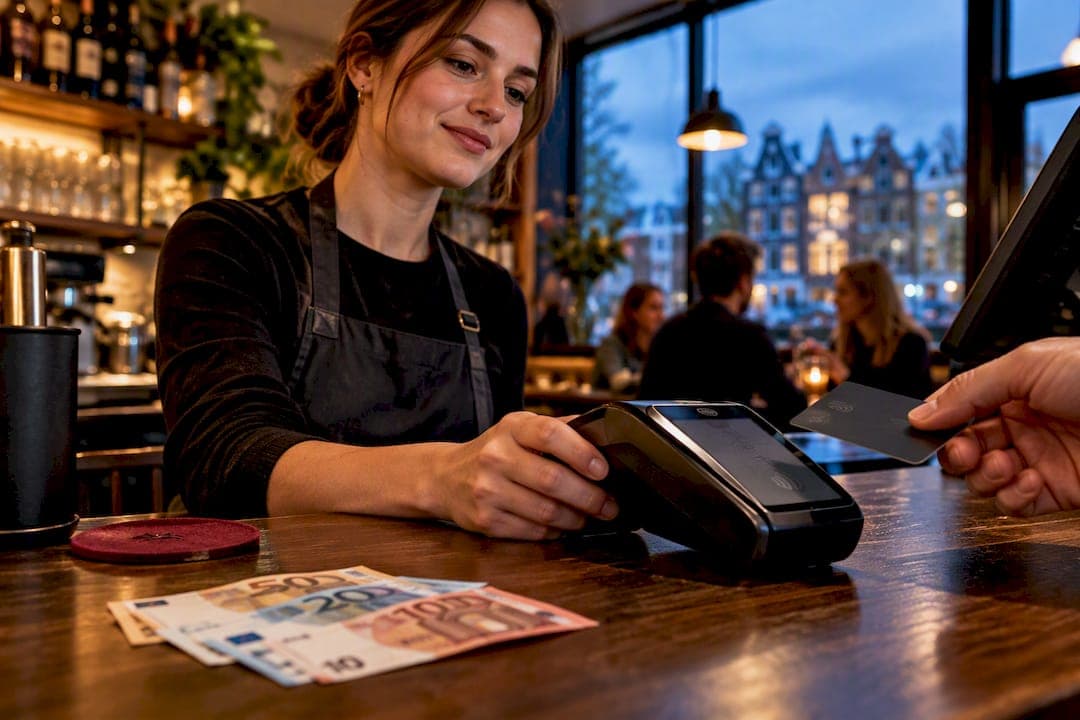
Yes, you can still pay with cash almost everywhere in Amsterdam, but plenty of urban shops and kiosks have gone pin-only. De Nederlandsche Bank (DNB) and GVB both track this shift closely, and their numbers point to the same practical advice: carry a debit card that works contactless, plus about €20 to €50 in cash for the spots that still prefer it.
TL;DR:
- Most large urban shops and street markets in Amsterdam are shifting towards card and mobile payments, with cash acceptance declining in busy areas.
- Public transport and parking machines now primarily accept contactless cards and mobile payments, with cash rarely welcomed and no on-board cash fares available.
- Retailers can choose whether to accept cash, but city regulations prohibit obliging customers to pay with it; cash use remains higher in markets and small neighborhood venues.
- Withdrawals are cheaper and safer from Geldmaat machines, located near supermarkets and banks, and cash should be kept small for tips and small purchases.
- Hospitality venues often prefer card payments for speed but usually maintain cash options for customers who request them, especially during busy hours.
Table of Contents
- Contant Betalen Amsterdam: How Common Is Cash Acceptance Really?
- Where You'll Still Use Cash in Amsterdam
- Public Transport, Parking, and Paying the City
- Your Wallet Strategy for Amsterdam
- What Amsterdam Hospitality Actually Looks Like at the Register
- Visiting Big Shots Amsterdam? Here's the Fast Way to Pay
- Where to Check the Rules Yourself
- Sources
- FAQ
Contant Betalen Amsterdam: How Common Is Cash Acceptance Really?
Cash still works at roughly 96% of Dutch retailers, according to DNB's national field study that visited thousands of shops and market stalls. That figure sounds reassuring, until you land in a city the size of Amsterdam.
DNB's finding: A notable share of points of sale in large Dutch cities (over 175,000 residents) now accept card or mobile payment only. Amsterdam falls squarely into that bracket, so pin-only signs at the register aren't rare.
The gap between the national average and the big-city reality comes down to foot traffic and staffing. A busy lunch counter near Dam Square processes payments faster with card taps, and fewer coins in the till means less risk of theft or counting errors at closing time. Retailers here are simply moving faster toward cashless, not being forced there by any law.
Legally, merchants can set their own payment policy within limits. Business explains the thresholds and exceptions that apply, including situations where refusing cash outright isn't permitted. There's no nationwide ban on cash, and DNB continues to monitor acceptance as part of an ongoing policy conversation about protecting access to cash for people who rely on it. A few things to keep in mind:
- Cash acceptance is a business choice, not a legal requirement for most private shops.
- Large cities skew more pin-only than small towns and villages.
- Regulators are actively discussing whether a formal acceptance obligation is needed.
Where You'll Still Use Cash in Amsterdam
Markets are your best bet. The Albert Cuyp Market, flea markets around the city, and most street food stalls still run heavily on coins and small bills, partly because card terminals cost money and cut into thin margins on a €3 stroopwafel.

Older snack bars, some neighborhood cafes, and public toilets (yes, plenty of Amsterdam restrooms still charge 50 cents at the door) also lean cash-friendly. Tipping is another gray area worth knowing: many Dutch people round up or leave a euro or two in coins rather than adding a tip to the card slip, a habit explored in more detail in this breakdown of tipping by sector in the Netherlands.
When you need to restock your wallet, skip the flashy ATMs wedged into tourist strips near Dam Square or Leidseplein. Those are frequently branded Euronet machines, and they tend to charge steep withdrawal fees plus push a bad currency conversion rate if you're not paying in euros already.
- Use Geldmaat machines instead. They're the country's bank-neutral ATM network and generally cheaper and safer than independent competitors.
- Look for the bright orange Geldmaat signage near supermarkets and bank branches.
- Decline any "dynamic currency conversion" prompt and choose to be charged in euros.
Pro Tip: If a machine asks "Would you like to be charged in your home currency?" always say no. That prompt almost always hides a worse exchange rate than your own bank offers.
Public Transport, Parking, and Paying the City
Amsterdam's public transport network has quietly gone cashless, and knowing the rules before you board saves real confusion at the gate.
- Trams, buses, and the metro run on OVpay, GVB's contactless system. Tap a contactless bank card or your phone's wallet at the yellow reader when boarding and again when you leave.
- GVB reports that about 18% of check-ins now happen this way, a number that keeps climbing as more travelers switch from paper tickets.
- OV-chipcard and paper tickets still exist as alternatives, useful if your card doesn't support contactless payment or you want a multi-day pass, though pricing can differ slightly from OVpay's pay-per-trip model.
- Cash never enters the equation on board. There's no coin slot, no cash fare option, nothing.
Parking follows the same pattern. Every municipal parking machine in Amsterdam accepts pin, credit card, or mobile only, and payment gets tied to your license plate rather than a paper ticket on the dashboard. Enforcement runs through automated scanauto vehicles that check plates against paid sessions.
Municipal bills, including sewerage tax and parking fines, work the same way. The city's own payment page routes everything through online banking or the Mijn Belastingen portal. There's no window where you hand over banknotes to settle a fine.
Your Wallet Strategy for Amsterdam
Build your wallet around one main contactless debit card, a backup credit card for hotels or larger deposits, and a modest cash cushion for the exceptions above.
- Activate Apple Pay or Google Pay before you land. Half of Amsterdam's card readers respond faster to a phone tap than a physical card.
- Keep a modest amount of cash in small bills and coins for markets, tips, and toilets.
- Withdraw from Geldmaat, not tourist-strip ATMs, and always decline currency conversion prompts, a habit worth building before you even leave home.
- If a merchant flatly refuses your cash and you believe that's against posted policy, ask calmly for the reason. Most staff will explain their store's rule rather than argue about it.
Splitting a bill in cash gets trickier than it should. Restaurants juggling six different card taps at one table often prefer one person pays and the group settles up later through a payment app, a pattern covered in more depth in this guide to paying bills at Dutch restaurants.
Pro Tip: Before ordering, glance at the door or the counter. A small sticker showing card logos only (no coin symbol) means don't bother reaching for your wallet.
What Amsterdam Hospitality Actually Looks Like at the Register

Hospitality venues in this city sit right at the center of this shift. Most bars and restaurants, including multi-room venues juggling food, drinks, and lounge service at once, lean on card and mobile payment for speed during peak hours, while still keeping a cash option open for guests who prefer it.
That mixed approach matters more than people think. A packed sports bar on match night moves faster when tabs close by tap instead of counting change, but turning away a guest holding cash creates friction nobody needs. The better hospitality venues in Amsterdam, including ones offering shisha lounges or private event bookings, treat payment flexibility as part of good service, not an afterthought. For anyone ordering delivery to a hotel room instead of dining in, payment usually happens entirely online anyway, a process worth understanding before you're hungry and confused, as explained in this guide to ordering food online in Amsterdam.
— Leo
Visiting Big Shots Amsterdam? Here's the Fast Way to Pay
This venue runs as a card-first establishment for reasons like faster tabs, fewer errors, and quicker service during busy nights watching sports or enjoying the lounge.
Cards and mobile wallets speed up service here, whether settling dinner, splitting cocktails, or closing out a private event booking. If cash is your backup plan, that's fine too, but tapping to pay gets your food and drinks to the table faster during peak hours. Browse the full menu to see what's on offer, check the delivery page if you'd rather order to your hotel, or look into lounge experiences for a group booking. Grabbing a bite before a night out is worth checking, too, in this roundup of late-night food options in Amsterdam. Ready to eat? Start with the menu and reserve your table today.
Where to Check the Rules Yourself
For readers who want the primary sources behind these numbers and rules:
- DNB's cash acceptance research tracks national and city-level acceptance rates every year.
- GVB's OVpay announcements cover check-in statistics and rollout details for public transport.
- Amsterdam's parking payment page explains machine rules and scanauto enforcement.
- Business lay out the legal framework merchants must follow.
- General traveler payment guidance, including digital reservation practices, rounds out the picture for anyone planning a trip.
Sources
- Acceptatie contant geld blijft op peil | De Nederlandsche Bank
- OVpay: 18% check-ins met betaalpas of creditcard bij GVB
- Betalen bij de parkeerautomaat | Gemeente Amsterdam
- Rules for cash payments
FAQ
How Do I Pay for Parking in Amsterdam?
Amsterdam's parking machines only take pin, credit card, or mobile payment, never cash, and your session gets linked to your license plate rather than a paper ticket. Enforcement runs through scanauto vehicles that check plates against paid time automatically.
How Much Time Passes Between the Scanauto Check and Payment in Amsterdam?
Scanauto vehicles check plates against the parking system in near real time as they drive through a zone, so payment needs to be active before the car scans, not after. There's no grace period once a scanauto vehicle logs your plate as unpaid.
How Much Sewerage Tax Do I Pay in Amsterdam?
Sewerage tax gets billed and paid entirely online through Mijn Belastingen or standard bank transfer; cash isn't accepted for this or any other municipal charge. Exact rates depend on your household situation and are listed directly on the municipality's own billing portal.
How Much Tourist Tax Do You Pay in Amsterdam?
Tourist tax rates vary by accommodation type and aren't part of the cash payment rules covered here, so check your hotel or booking platform's listed rate directly. What's consistent is the payment method: tourist tax is typically charged automatically at booking or checkout, not handed over in coins at a desk.
Does Big Shots Amsterdam Accept Cash?
Bigshotsamsterdam prioritizes card and mobile payment for speed during busy service, though it's worth checking current payment options directly through the menu or delivery pages before you visit. Tapping to pay remains the faster route for tabs, group bills, and lounge bookings alike.