
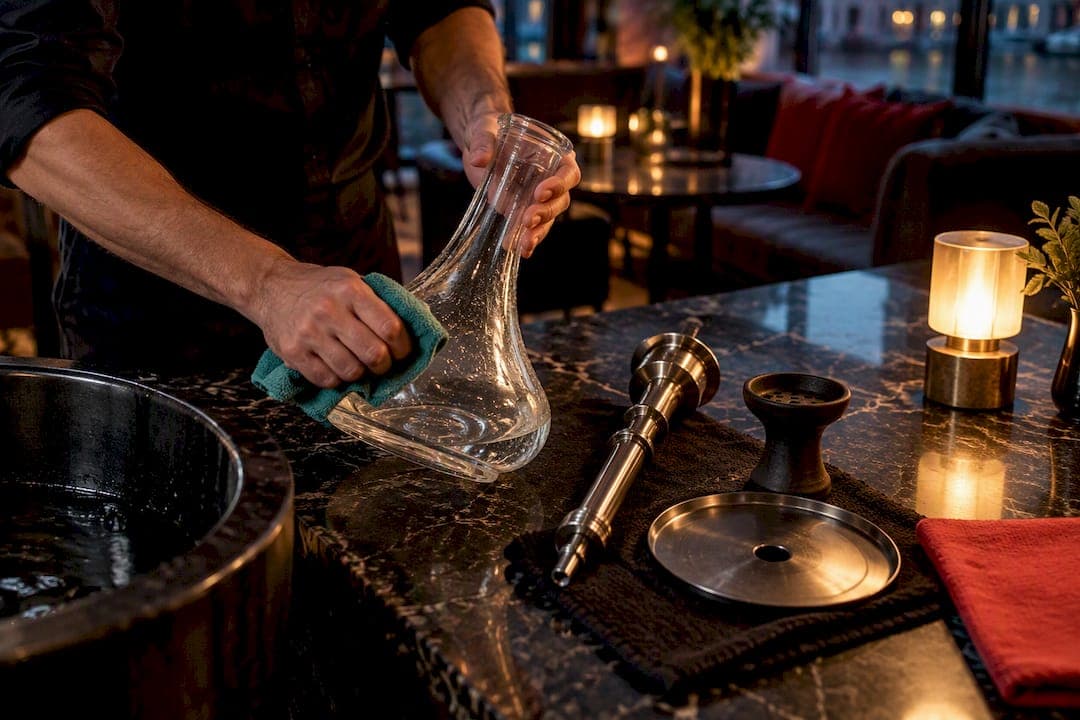
The three hygiene rules that make the biggest difference are simple: give every smoker their own disposable mouthpiece, clean and rinse the pipe after each session, and cut carbon monoxide risk by using electric heating or ventilating well when you burn charcoal. Skip any of these and you raise the odds of catching a respiratory infection or breathing in dangerous gas. None of it is complicated, but it does need to happen every single time.
TL;DR:
- Using disposable mouthpieces for each smoker significantly reduces the risk of transmitting respiratory infections and bloodborne viruses during waterpipe sessions.
- Immediate after-session cleaning of the vase, stem, hose, and bowl with appropriate methods prevents mold growth and residue buildup that can cause health hazards.
- Only water in the vase should be changed after each session, and water additives or ice should be avoided unless explicitly designed for use, as their safety is unverified.
- Charcoal heating produces carbon monoxide, making electric heating the safer choice, especially indoors, to eliminate CO poisoning risks entirely.
- Regularly inspecting parts for wear, using proper cleaning tools, and storing components dry are essential for maintaining hygiene and preventing equipment damage.
Table of Contents
- Why disposable mouthpieces matter more than anything else
- Your after-session cleaning routine, step by step
- Cleaning the vase, stem, hose, and bowl the right way
- Getting the water right without overselling what it does
- Knowing when to sit a session out
- Charcoal, carbon monoxide, and choosing safer heat
- Drying and storing your shisha so it stays sanitary
- What to buy for cleaning, and what to leave on the shelf
- How a well-run lounge handles hygiene
- Going beyond routine cleaning: real deep-clean schedules
- Disinfecting properly without damaging your gear
- Disposing of tobacco and charcoal residue the safe way
- Checking your shisha parts for wear before every session
- Making hygiene a habit, not an afterthought
- Keeping the ritual alive without cutting corners
- Book a lounge session where the hygiene work is already done
- Sources
- FAQ
Why disposable mouthpieces matter more than anything else
A shared mouthpiece is a direct line between one person's mouth and the next person's airway. According to the WHO fact sheet on waterpipe tobacco use, communal waterpipe sessions can spread respiratory viruses, tuberculosis, Epstein-Barr virus, Herpes Simplex, H. pylori, and even hepatitis C. Disposable mouthpieces remove that entire risk for the price of a few cents per person.
Managing them in a group is easy once it becomes a habit:
- Hand out a fresh mouthpiece to each person before the hose reaches them, not after.
- Keep a small bag or box nearby so used ones do not get mixed up with clean ones.
- Swap the mouthpiece any time the hose changes hands, even within the same group.
- Refuse to share if someone has a cold, a fever, or visible sores in or around the mouth.
None of this slows the session down. It just means nobody passes on anything they did not sign up for.
Your after-session cleaning routine, step by step
Cleaning right after you finish is the single habit that keeps a shisha from turning into a breeding ground for mold and bacteria. Waiting until tomorrow, or worse, next weekend, lets tobacco residue and moisture sit and harden.
Right after the coals go out, work through this order:
- Empty the vase and rinse it with warm water.
- Tap out the spent charcoal and ash from the bowl.
- Wash the bowl with warm water and a soft brush.
- Flush the stem by running water through the full length of the pipe.
- Wipe down the tray and any parts that touched ash or juice.
- Leave everything to air-dry, disassembled, before you put it away.
Pro Tip: Keep a dedicated brush and cloth just for the shisha so you are not reaching for whatever kitchen sponge is nearby, which can carry grease and food residue into the pipe.
This quick routine is different from a deep clean, which should happen at least once a week even with regular use. A host or a lounge staffer should be able to glance at the pipe before the next session and confirm the vase is clear, the stem has no visible residue, and the bowl smells clean, not stale.
Cleaning the vase, stem, hose, and bowl the right way
Each part of a shisha needs slightly different handling, and getting it wrong can crack glass or wreck a hose faster than normal wear would.
- Vase: stick to warm water, a bottle brush, and a small amount of mild dish soap. Boiling water or a sudden switch from hot to cold can shatter the glass through thermal shock.
- Stem and downpipe: use a long, narrow brush to reach the full interior, since residue tends to collect where the tube narrows. Dry it completely before reassembly so moisture does not sit inside.
- Hose: check whether yours is washable. Washable hoses can be rinsed and left to dry fully; non-washable ones should be replaced on a regular schedule since they cannot be properly disinfected inside.
- Bowl: scrape out old tobacco and resin gently. Avoid harsh scrubbing that strips the glaze or damages the seal, and replace the bowl if it cracks or the residue buildup will not come off anymore.
Pro Tip: If a hose has an odor that rinsing does not fix, that is usually a sign it is done. No amount of cleaning brings a saturated hose back to neutral.
Getting the water right without overselling what it does
Fresh water in the vase should be changed every single session, no exceptions. It is not a filter that neutralizes the smoke. According to the Trimbos Institute's waterpipe factsheet, water only catches a small share of the harmful substances in the smoke, so treat it as a hygiene and comfort measure, not a safety device.
- Fill the vase enough to submerge the stem tip by about two to three centimeters, no more.
- Too much water causes splash-back into the hose; too little weakens the draw and can scorch the stem.
- Skip additives, flavor drops, or ice unless a product is explicitly labeled safe for waterpipe use, since unverified additives can introduce contaminants or clog the stem.
Knowing when to sit a session out
Some situations call for a firm no, even in the middle of a good night. A cold, a fever, a sore throat, mouth ulcers, or any illness that spreads through saliva or respiratory droplets are all reasons to skip sharing, no matter how mild it feels.
- Say it plainly: "I'll pass this round, feeling a bit off."
- Offer to grab a disposable mouthpiece instead of dropping out of the session entirely.
- Hosts and lounges can post simple signage and train staff to offer a fresh mouthpiece automatically rather than waiting for a guest to ask.
Charcoal, carbon monoxide, and choosing safer heat
Charcoal is the part of a shisha session most people underestimate. Burning it produces carbon monoxide, a gas you cannot see or smell, and the RIVM factsheet on waterpipe risk flags CO poisoning as a serious concern with charcoal-heated pipes. Early symptoms include headache, nausea, and dizziness, and higher exposure can lead to unconsciousness.
RIVM recommends electric heating over charcoal specifically because it removes CO production at the source. If charcoal is still your preference, light it outdoors or in a well-ventilated space, never in a closed room, and use a CO meter indoors as a basic safety check.
- Choose an electric heater where possible to skip CO risk entirely.
- Light charcoal outside or under a range hood, not on a kitchen counter with the windows shut.
- Crack a window or run a fan during the session, even with electric heat, since tobacco smoke still needs somewhere to go.
- Lounges should keep charcoal lighting in a separate, ventilated area away from where guests are seated.
Drying and storing your shisha so it stays sanitary
A shisha that goes back in the cupboard while still damp is a shisha that grows mold. Every part, from the bowl to the hose interior, needs to dry completely before storage.
- Leave all components disassembled and upright so air reaches every surface.
- Keep the setup out of direct sunlight and away from radiators, since sharp temperature swings can crack glass over time.
- Check hoses, seals, and O-rings every few weeks and replace anything cracked, stiff, or discolored.
- Keep a couple of spare seals and a spare hose on hand so a worn part gets swapped immediately instead of staying in rotation.
What to buy for cleaning, and what to leave on the shelf
A basic cleaning kit covers most of what you need: a vase brush, a long stem brush, a smaller bowl brush, soft cloths, and mild dish soap. Local hookah shops and general homeware retailers both carry these.
- Skip bleach, harsh chemical cleaners, and boiling water, since they can degrade seals, cloud glass, or leave residue that transfers into the smoke.
- An electric coal heater is worth the investment if you smoke often. It sidesteps the CO exposure that comes with burning charcoal indoors.
How a well-run lounge handles hygiene
Staff at a professionally run lounge hand out a fresh disposable mouthpiece with every order and clean the pipe fully between guests rather than doing a quick rinse. Many lean on electric heating and track air quality with CO meters in areas where charcoal is still used. Before booking, it is fair to ask a venue directly how they handle mouthpieces, cleaning, and ventilation.

Going beyond routine cleaning: real deep-clean schedules
A rinse after each session handles surface residue, but resin builds up in places a quick wash never reaches, especially inside the stem and around the bowl's base. Plan a proper deep clean weekly if you smoke a few times a week, and after every single use if the pipe sees heavier or daily use.
A deep clean means fully disassembling the shisha rather than just emptying the vase:
- Take the stem, bowl, hose, and vase completely apart.
- Soak the vase and bowl in warm water with a small amount of mild dish soap for 10 to 15 minutes to loosen buildup.
- Run the long brush through the stem multiple times, checking the water that comes out until it runs clear.
- Scrub tray and grommet surfaces with a soft brush to remove hardened tobacco juice.
- Rinse every part thoroughly to clear soap residue, since leftover soap affects both taste and smoke quality.
- Lay everything out to dry fully before reassembly.
If a session ran long or used flavored tobacco heavy in syrup, treat the next cleaning as a deep clean rather than a routine one, since sugary residue hardens fast and resists a simple rinse. Sticking to a set schedule, rather than cleaning only when something looks visibly dirty, is what actually prevents the buildup that harbors bacteria and mold in the first place.
Disinfecting properly without damaging your gear
Disinfecting is a separate step from washing. Washing removes visible residue; disinfecting reduces the bacteria and viruses that a rinse alone leaves behind, and it matters most for parts that touch the mouth directly, like the mouthpiece and hose connector.
A mix of warm water and white vinegar in roughly equal parts works well for glass and metal components, left to sit for several minutes before a full rinse. Isopropyl alcohol on a cloth is effective for wiping down metal fittings and connectors, though it should not be used on rubber seals or grommets, since it can dry them out and cause cracking. Avoid bleach entirely: it is corrosive to metal fittings and can leave a residue that is unsafe to inhale if not rinsed completely.

For hose interiors, the safest approach is one that is fully washable in the first place. Non-washable hoses cannot be reliably disinfected on the inside, which is why swapping them on a schedule matters more than trying to clean them thoroughly. Between different users at the same session, a fresh disposable mouthpiece does the disinfecting work that a shared hose tip cannot.
Disposing of tobacco and charcoal residue the safe way
Used tobacco (often called shisha molasses once it is spent) and burned charcoal both need to cool completely before you handle them. Charcoal in particular can hold heat far longer than it looks like it does, and tipping still-warm coals into a regular bin is a fire risk.
- Let charcoal cool fully in a metal container or an ashtray designed for it, never straight into a plastic bin.
- Once cold, wrap ash and spent coal in foil or a paper bag before binning it to keep dust contained.
- Scrape spent tobacco out of the bowl into household waste rather than rinsing it down a sink, where it can clog drains over time.
- Wash your hands after handling both tobacco residue and charcoal ash, since both leave a fine, clingy dust.
Lounges handling higher volumes typically keep a dedicated ash container away from guest seating and empty it between sessions rather than letting it accumulate through the night.
Checking your shisha parts for wear before every session
Wear and damage are not just a comfort issue. Cracks, rough seals, and pitted metal all give bacteria somewhere to hide that a normal wash will not reach.
- Check the glass vase for cracks or chips, especially near the base, since a thin crack can spread suddenly under thermal stress.
- Run a finger along hose interiors where possible to feel for cracking or a sticky residue that will not rinse out.
- Inspect grommets and seals for stiffness or visible wear. A seal that no longer sits flush lets smoke and moisture leak into small gaps.
- Look at the bowl's glaze for chips or a rough, dull surface that suggests it has absorbed residue rather than releasing it during cleaning.
Any part that fails this check should be replaced rather than pushed for another few sessions. A cracked seal or a pitted bowl does not get cleaner with more scrubbing.
Making hygiene a habit, not an afterthought
Good hygiene protocols only work if everyone in the room actually follows them, which means the information has to be visible and easy to act on, not buried in an instruction manual nobody reads.
At home, that can be as simple as keeping disposable mouthpieces in the same spot as the shisha itself, so grabbing one is the default rather than an extra step. For lounges, this usually looks like short staff briefings on mouthpiece handling, cleaning turnaround between guests, and how to flag a guest who seems unwell, paired with simple signage near the seating area reminding guests that fresh mouthpieces are available on request. Consistency matters more than the format: a rule that only gets followed on busy nights is not really a rule.
Keeping the ritual alive without cutting corners
Shisha is a social habit built around sharing, and that is worth protecting, not fighting. The fix is not fewer rounds or less conversation. It is small structural habits: a mouthpiece for every guest, a window cracked for airflow, a rinse between rounds. Do those consistently and the vibe stays exactly the same.
— Leo
Book a lounge session where the hygiene work is already done
If keeping up with disposable mouthpieces, deep cleans, and ventilation checks sounds like more than you want to manage at home, Lounge Experiences at Big Shots Amsterdam takes that off your plate. Sessions come with trained staff handling setup and cleaning between guests, so you show up and enjoy the night rather than scrubbing a stem afterward.

Before booking anywhere, it is reasonable to ask a venue how they handle mouthpieces, cleaning turnaround, and ventilation. You can also pair a session with something off the menu if you are making a full night of it. Check availability and book a session through the Lounge Experiences page.
This article is general information, not a substitute for advice from a qualified doctor. Consult a qualified healthcare professional about your own circumstances before acting on anything here.
Sources
FAQ
What are the rules for running a shisha lounge?
Lounges need to follow general hospitality hygiene and health regulations that apply to their location, alongside voluntary best practices like single-use mouthpieces and documented cleaning between guests. There is no single global standard, so specific licensing and ventilation requirements depend on local regulations, which a venue should confirm with its own authorities.
What are the health risks of shisha?
Waterpipe smoke exposes users to nicotine, tar, heavy metals, and carcinogens, and the Trimbos Institute notes the water filters only a small share of these substances, so the health risks are comparable to or exceed those of cigarette smoking. Charcoal heating adds a separate risk of carbon monoxide exposure, which the RIVM links to headaches, nausea, dizziness, and in severe cases unconsciousness.
How do you clean a hookah properly?
Rinse the vase, bowl, and stem after every session, then run a full deep clean weekly, or more often with heavy use, by disassembling every part and scrubbing with warm water, mild soap, and dedicated brushes. Dry every component completely before reassembling or storing it to prevent mold and residue buildup.
Can you use weed in a water pipe?
This depends entirely on local drug laws, which vary widely by country and even by region, so there is no universal answer. Check the specific legal framework where you live rather than assuming a practice permitted elsewhere applies to you.