
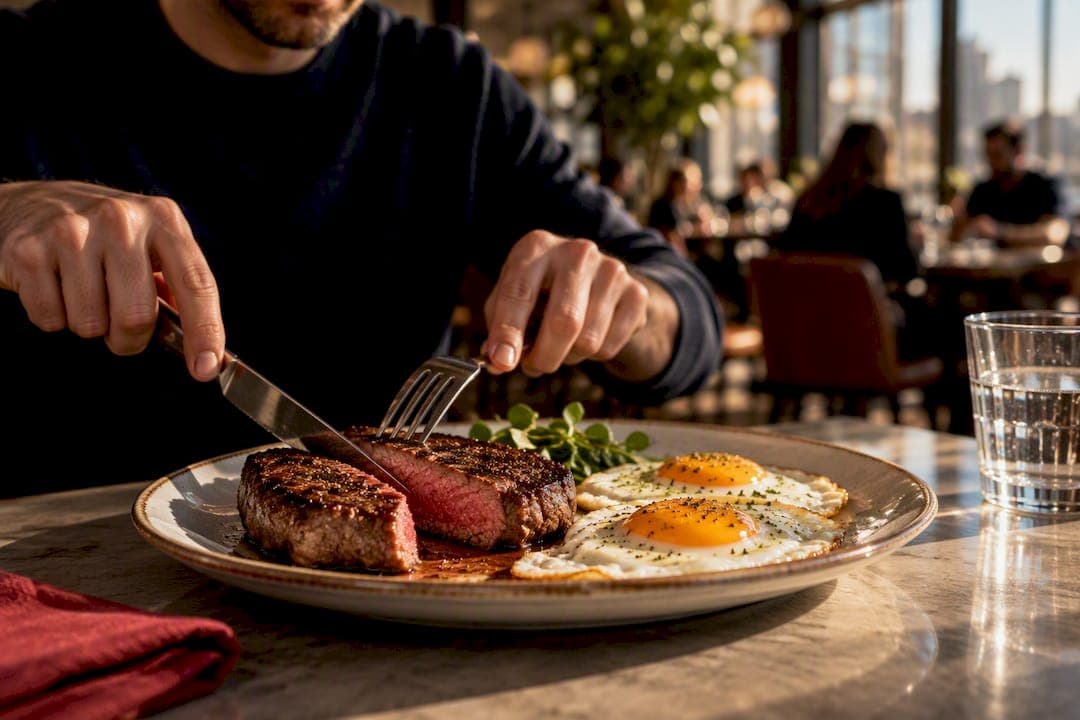
Yes, steak-and-eggs is worth ordering when a kitchen actually cooks the steak to order and portions it fairly. Check the menu for a listed steak weight and named cut before you order, and ask your server if the steak comes cooked to your spec rather than pulled from a warming tray. At venues like Big Shots Amsterdam, where steak sits alongside a full breakfast and an all-day menu, the dish works because it treats the steak as the main event, not an afterthought.
TL;DR:
- Choosing a quality steak and eggs plate depends on confirmed steak cut, weight, and doneness options, rather than vague descriptions or pre-cooked proteins.
- The dish's filling power comes from high protein and healthy fats, making it ideal for active days, travel, or long brunch sessions.
- To get the best experience, specify steak doneness, egg style, and portion size when ordering, and verify if the steak is cooked fresh.
- Nutritionally, steak and eggs provide dense protein, B vitamins, and minerals, but they are calorie-rich and may not suit frequent consumption for those watching cholesterol.
- Variations like steak Benedict or regional flavors adapt the dish, but presentation and side choices significantly influence expectations and meal satisfaction.
Table of Contents
- Steak and Eggs Benefits: Why Diners Keep Ordering It
- How to Spot a Quality Steak and Eggs on the Menu
- Common Variations You'll See on Restaurant Menus
- What to Say When Ordering Steak and Eggs
- When Steak and Eggs Is the Right Call
- What's Actually in the Plate: Protein, Vitamins, and Minerals
- Things to Keep in Mind Before You Order
- Steak and Eggs vs. Other Breakfast Options
- Does Steak and Eggs Fit Your Diet?
- Steak and Eggs for Muscle Building and Fitness Goals
- Big Shots Amsterdam's Take: Why We Put Steak and Eggs on the Menu
- Try It at Big Shots Amsterdam
- Sources
- FAQ
Steak and Eggs Benefits: Why Diners Keep Ordering It
The biggest steak and eggs benefits come down to one thing: this plate keeps you full. Protein-forward breakfasts hold hunger off longer than a stack of pancakes or a bowl of cereal, because protein and fat digest slower than refined carbs and blunt the blood sugar spike that leaves you snacking by 10 a.m. That's the whole case for protein-first breakfasts over carb-heavy ones, and it's why menu writers increasingly position steak combos as a substantive morning meal rather than a novelty.
Pro Tip: If you have a full day of walking planned (museum hopping, a long flight, a hike), order steak-and-eggs over a pastry. You'll likely skip the mid-morning coffee shop stop entirely.
Beyond staying power, there's the flavor case. A well-seared steak brings savory depth; a runny yolk brings richness that coats the palate. That contrast between meaty char and creamy egg is a big part of why the combination has stuck around on menus for decades, according to restaurant coverage of the dish's enduring popularity across chains and diners. It also happens to be one of the few breakfast dishes that reads equally well at 8 a.m. or 8 p.m., which is why you'll see it on all-day menus, not just morning specials.
What makes the plate feel complete usually comes down to the sides:
- Crispy hash browns or home fries for texture contrast
- Toast or a biscuit to mop up egg yolk and steak juices
- A light side salad when you want something less heavy
- Occasionally pancakes, for diners who want both savory and sweet on one plate
Steak-and-eggs has been a diner and brunch staple for generations precisely because it flexes across these combinations without losing its identity.
How to Spot a Quality Steak and Eggs on the Menu
Not every steak-and-eggs listing is created equal, and the menu itself usually tells you which kitchens take it seriously. A quality version names the cut, lists a weight, and offers doneness choices. A weak version buries "steak" in the description with no weight, no cut, and no cooking option, which usually signals a pre-cooked or bulk-prepped protein rather than something fired to order.
Here's a quick scan you can run before you order:
- Look for a named cut. Sirloin, ribeye, and flat iron are common; "steak" alone with nothing else is a yellow flag.
- Check for a listed weight. Six or eight ounces is typical for a breakfast portion; no number at all often means a smaller, inconsistent cut.
- Confirm doneness options appear. Menus or servers that offer rare through well-done are set up to cook individually, not in batches.
- Ask if it's cooked to order. A direct "is this fired fresh or held?" question gets a straight answer fast.
- Notice how eggs are described. Specific styles (over easy, scrambled soft, poached) suggest the kitchen treats the egg with the same care as the steak.
Pro Tip: If a menu lists the steak weight and cut but says nothing about the eggs, ask. Kitchens that nail the steak sometimes treat the eggs as filler, and that imbalance shows up on the plate.
Server training materials back this up directly: listing steak weight and offering doneness choices are considered positive signals that correlate with diner satisfaction, not just menu decoration.
Common Variations You'll See on Restaurant Menus
Classic diner-style steak-and-eggs sticks to the basics: a grilled steak, two eggs, and a starchy side like hash or toast. It's straightforward, and it's what most people picture when they order the dish.
Plenty of kitchens dress it up, though. Common variations include:
- Steak Benedict: sliced steak swapped in for Canadian bacon under a poached egg and hollandaise
- Glazed or teriyaki steak: a sweeter, Asian-influenced twist that changes the flavor profile entirely
- Steak and egg salad: a lighter build with greens, a soft egg, and sliced steak instead of starch
- Regional plating: some kitchens add chimichurri, salsa, or roasted peppers depending on local influence
Presentation matters more than diners expect. A plated steak sliced and fanned next to a jammy egg reads as a brunch centerpiece; the same ingredients dumped together in a skillet reads as diner comfort food. Neither is wrong, but they set very different expectations for the meal ahead. If you're curious how local brunch culture shapes these choices, Amsterdam's brunch scene leans toward the more composed, shareable style.
What to Say When Ordering Steak and Eggs
Getting the plate you want usually comes down to three details: doneness, egg style, and portion confirmation. Servers can't read your mind on any of these, so spelling them out up front saves a remake.
- State your steak doneness clearly. "Medium, still pink in the middle" is more useful than just "medium."
- Specify your egg style and yolk preference. "Over easy, yolk runny" avoids the disappointment of a hard-cooked yolk.
- Ask if it's cooked to order. This confirms you're not getting a held or pre-cooked piece of meat.
- Confirm the weight if it's not listed. A quick "how many ounces is the steak?" clears up portion size before you commit.
- Ask what's included. Some plates come with sides baked in; others charge extra for toast or potatoes.
A simple line like "medium rare, eggs over easy, and is the steak weighed or a set portion?" covers most of what you need in one breath. Restaurant-facing guides on ordering steak and eggs clearly point to the same core details: doneness and egg style are the two things worth stating outright every time.
When Steak and Eggs Is the Right Call
Steak-and-eggs earns its price tag on certain occasions more than others. It's a strong pick for hungry travelers who skipped dinner, for anyone with an active day ahead, for a slower weekend brunch, or as recovery food after a late night out.
On value: a higher up-front price often pays for itself if it means skipping a second meal or a mid-morning snack run. If the portion feels like more than you need, splitting sides with a table-mate or asking for a smaller cut keeps the cost and calories in check without losing the core of the dish. Worth checking, too, whether the venue offers it as a breakfast-only special or keeps it on the menu all day, since that flexibility changes when you can realistically order it.
- Hungry travelers between flights or long walks
- Active mornings before a workout or long day on foot
- Weekend brunch with time to enjoy a bigger plate
- Post-night-out recovery meals
What's Actually in the Plate: Protein, Vitamins, and Minerals
A typical steak-and-eggs plate is built around two ingredients that pack a lot of nutrition per bite. Steak delivers a dense source of protein along with iron, zinc, and B vitamins, particularly B12, which supports energy metabolism. Eggs add complete protein of their own, plus choline and vitamin D, and the yolk carries most of the fat-soluble vitamins in the dish.
Together, the combination gives you a meal built almost entirely around protein and micronutrients rather than refined starch. That's a meaningfully different nutritional shape than a bagel or a bowl of cereal, where the bulk of the calories come from carbohydrate with little protein to anchor it. The specific numbers vary by cut and portion size, a 6-ounce sirloin sits differently than an 8-ounce ribeye, but the general pattern holds across most versions: high protein, moderate fat, minimal carbohydrate unless sides add it.
This is part of why restaurant nutrition writers keep circling back to steak-and-eggs when discussing dishes built for lasting fullness: the nutrient density does real work, not just the calorie count.
Things to Keep in Mind Before You Order
Steak-and-eggs isn't a light meal, and it's worth knowing that going in. Egg yolks and red meat both carry dietary cholesterol, and a well-marbled cut adds saturated fat on top of that. For most healthy diners, an occasional plate like this fits fine within a normal week, but it's not a dish to build a daily habit around if you're watching cholesterol or fat intake closely.
Caloric density is the other factor. A generous cut of steak paired with two eggs and a starchy side can easily land in the 700 to 900 calorie range before you add butter, sauce, or a drink. That's not a problem if it's replacing two smaller meals, but it can add up quickly if you're treating it as a light bite before a big lunch.
If you have a specific medical condition tied to cholesterol, blood pressure, or heart health, it's worth checking with a doctor about how a meal like this fits your particular situation rather than relying on general guidance. For most diners without those concerns, moderation, not avoidance, is the practical approach.
Steak and Eggs vs. Other Breakfast Options
Compared to a bowl of cereal or a plate of pancakes, steak-and-eggs wins clearly on protein and staying power, but loses on speed and price. A cereal breakfast might cost less and take two minutes to eat, but it also leaves most people hungry again within a couple of hours.
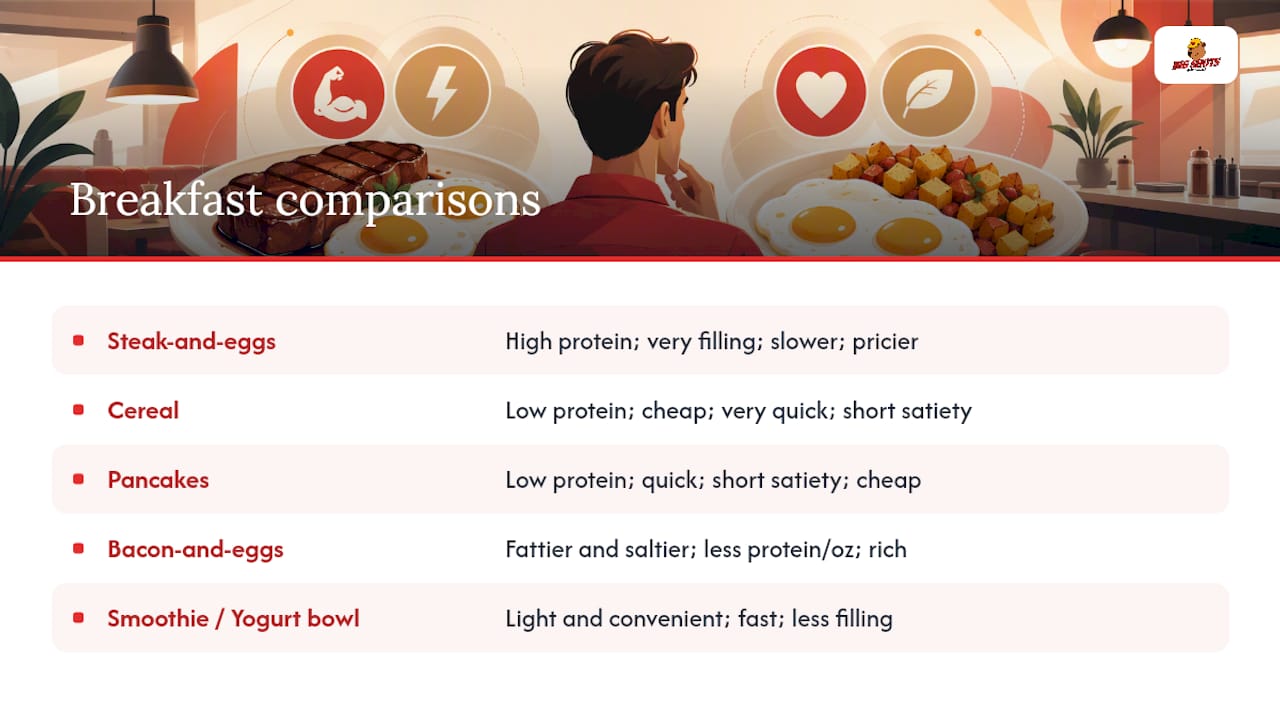
Compared to a bacon-and-eggs breakfast, the difference is mostly about portion and richness. Bacon is fattier and saltier per bite, while steak brings more protein per ounce and a firmer, more substantial chew. Compared to a smoothie or yogurt bowl, steak-and-eggs sits at the opposite end of the spectrum entirely, heavier, slower to eat, and far more filling, but far less convenient if you're eating on the move.
None of these comparisons make one option universally "better." A smoothie wins on a rushed morning; steak-and-eggs wins on a morning where you need the meal to carry you for hours. Matching the dish to the day, rather than picking a default, is really the whole game.
Does Steak and Eggs Fit Your Diet?
Steak-and-eggs fits naturally into several popular eating patterns, largely because the base dish is already low in carbohydrate before sides get added.
- Keto and low-carb diets: the steak and eggs themselves carry almost no carbohydrate; skipping toast, hash, or pancakes keeps the plate solidly in range.
- Paleo-style eating: both proteins fit within typical paleo guidelines, provided sides skip processed grains.
- High-protein diets generally: the plate delivers a dense protein hit in one sitting, useful for anyone tracking daily protein totals.
- Standard omnivore diets: no restrictions apply; sides can flex freely between starch, greens, or fruit.
The one adjustment most diners on a restricted plan need to make is at the sides. Swap hash browns or toast for a side salad or extra vegetables, and the core plate stays aligned with keto, paleo, or low-carb goals without asking the kitchen to change the steak or eggs themselves.
Steak and Eggs for Muscle Building and Fitness Goals
For anyone training regularly, steak-and-eggs offers a practical way to front-load protein early in the day rather than saving it all for dinner. Spreading protein intake across meals, instead of eating most of it at night, is a strategy many trainers and dietitians favor for supporting muscle repair and growth.
A single plate, depending on the cut and portion, can deliver a substantial share of a full day's protein target in one sitting. That makes it a convenient option before or after a workout, when appetite is often higher anyway and a lighter meal wouldn't hold you over. The iron and B12 in steak also support the oxygen transport and energy metabolism that heavier training demands, complementing what the protein itself does for recovery.
It's not a magic formula, and no single meal builds muscle on its own. But as a repeatable, satisfying way to hit a protein target without relying on shakes or bars, steak-and-eggs holds up better than most breakfast alternatives.
Big Shots Amsterdam's Take: Why We Put Steak and Eggs on the Menu
Steak-and-eggs makes sense for a venue built around more than one kind of visit. A venue that combines multiple hospitality experiences and serves dishes that work for a lazy breakfast, a pre-match lunch, or a late-night bite fits that flexibility better than a single-purpose menu item. It's part of why steak holds a place on bar and nightlife menus as much as breakfast ones.
Online ordering and delivery mean you don't have to choose between the atmosphere and convenience. Whether you're settling in for match day or grabbing something on the way home, the goal is the same: a properly cooked steak, a well-handled egg, and sides that actually round out the plate. Leo, who covers hospitality trends for Big Shots Amsterdam, has watched steak-and-eggs go from a niche order to a menu anchor as diners increasingly expect breakfast spots to double as gathering places.
— Leo
Try It at Big Shots Amsterdam
If everything above has you leaning toward ordering, the easiest next step is to see it for yourself. Big Shots Amsterdam serves steak-and-eggs as part of a full breakfast and all-day menu, so you can order it as a slow morning plate or a late-day comfort meal depending on when you show up. The venue can be suitable for a casual solo breakfast, a date, or a table full of friends watching a match with a shisha experience.

Not planning to sit down? Big Shots Amsterdam also offers delivery if you'd rather enjoy the same plate at home. Either way, one habit carries over from everything covered here: confirm your steak doneness and check what sides come standard before the order goes in. It's the simplest way to make sure the plate that arrives is the one you actually pictured.
Sources
- Best chain restaurant steak-and-eggs — EatThis
- Steak and eggs — Wikipedia
- Why your breakfast never keeps you full until lunch — Gulfsena
- How to order eggs and steak at a restaurant — Berlitz
FAQ
Will Steak and Eggs Actually Keep Me Full?
Yes, protein-forward plates like steak-and-eggs tend to hold hunger off longer than carb-heavy breakfasts because protein digests more slowly and steadies blood sugar. Research on breakfast satiety backs this pattern consistently across protein-first meals.
What's the Best Way to Order Steak and Eggs?
State your steak doneness clearly, specify your egg style and yolk preference, and ask if the steak is cooked to order rather than held. Restaurant ordering guides recommend naming doneness and egg style every time to avoid a remake.
Is Steak and Eggs Available All Day, or Only at Breakfast?
It depends on the venue. Many restaurants now keep it on all-day menus rather than restricting it to morning hours, and Big Shots Amsterdam serves it as part of its broader breakfast and all-day menu.
Does Steak and Eggs Work for Keto or Low-Carb Diets?
Yes, the steak and eggs themselves are naturally low in carbohydrate, and skipping starchy sides like toast or hash keeps the plate solidly within keto or low-carb guidelines. Swapping in a side salad or extra vegetables is the simplest adjustment.
What Should I Check on the Menu Before Ordering?
Look for a named steak cut, a listed weight, and explicit doneness options, since these signal the kitchen cooks the steak fresh rather than in bulk. If any of that is missing, ask your server directly before you order.