
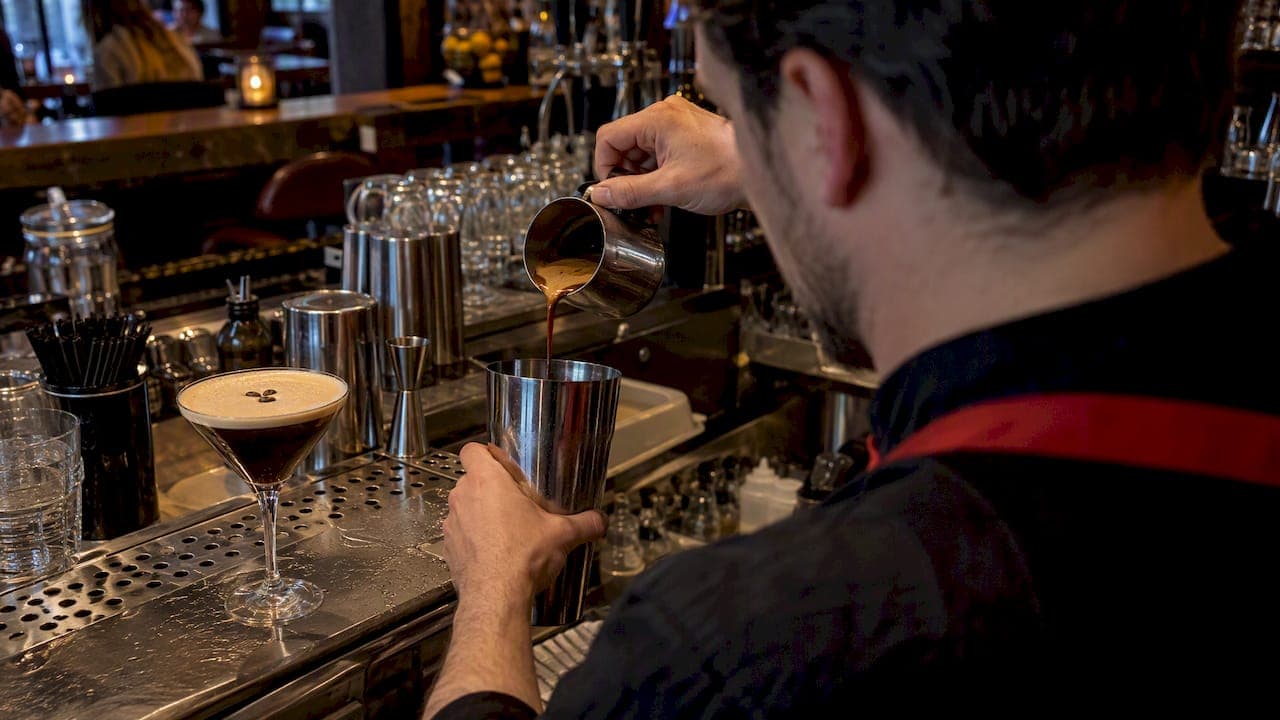
The best espresso martini variations to try are a vanilla riff with Mr. Black, a tequila or mezcal version, a salted caramel twist, a lavender and Averna build, a rum and chocolate take, a frozen cold brew blend, and a caffeine-free mocktail. Each one keeps the classic's balance of bitter, sweet, and foam while shifting the flavor in a different direction. Recipes and technique follow below.
TL;DR:
- The IBA baseline uses 50 ml vodka, 30 ml Kahlúa, 10 ml sugar syrup, and one shot of strong espresso; shake hard and double strain.
- Hot espresso and a hard ten to fifteen second shake build foam; double strain through fine mesh to remove ice shards and preserve texture.
- When skipping coffee liqueur, raise espresso to 40 ml and use rich 2:1 sugar syrup to replace the liqueur’s lost body in the drink.
- For mocktails without caffeine, use roasted chicory or decaf concentrate, dry shake aquafaba before adding ice, and garnish with cocoa instead of coffee beans.
- If a riff tastes too sweet, halve the syrup and add a bitter bridge such as Averna or a little more espresso.
Table of Contents
- Eight standout espresso martini riffs to try first
- Seven ready-to-make recipes with proportions and technique
- Spirit and liqueur swaps: what changes and how to rebalance
- Getting the coffee base and foam right
- Non-alcoholic and low-caffeine builds that still foam
- Garnish and presentation that change perception
- Fixing a drink that's too sweet, flat, or watery
- A bartender's take on riffing versus visiting a pro
- Taste espresso martini variations at Big Shots Amsterdam
- FAQ
- Sources
Eight standout espresso martini riffs to try first
Before you start measuring syrups, it helps to know which riffs actually deliver on flavor and which ones are easiest for a first attempt.
- Vanilla (Patrick Smith style): vodka, vanilla liqueur, and Mr. Black coffee liqueur for a dessert-like finish, best after dinner.
- Tequila or mezcal: reposado tequila or mezcal swapped for vodka brings earthiness or smoke, good for a backyard gathering.
- Salted caramel: PX sherry and salted demerara syrup build a toffee note, a strong match for a cold evening in.
- Lavender and Averna: floral syrup balanced by a bittersweet amaro, a good choice for a lighter, less sugary pour.
- Rum and chocolate: aged rum with crème de cacao leans tropical and rich, suited to a dinner party finale.
- Cold-brew frozen: blended with coffee ice cubes instead of shaken, best for a hot afternoon.
- Tiramisù style: mascarpone-adjacent sweetness with cocoa garnish, a crowd-pleaser for dessert tables.
- Caffeine-free mocktail: built on roasted chicory or decaf concentrate with aquafaba foam, the pick for a late-night gathering where everyone still wants the ritual without the buzz.
Seven ready-to-make recipes with proportions and technique
Once you know which direction you want to go, these proportions get you there without guesswork. The IBA's own formula for the classic is 50 ml vodka, 30 ml Kahlúa, 10 ml sugar syrup, and one shot of strong espresso, shaken hard and double-strained into a chilled glass with three coffee beans on top. Use that as your baseline ratio and adjust from there.
- Vanilla (Patrick Smith variation): vodka, vanilla liqueur, Mr. Black coffee liqueur, demerara syrup, and espresso. Shake hard, double-strain, and float a few coffee beans.
- One Night in Mexico (tequila): reposado tequila, Averna, dry curaçao, and crème de cacao with cold brew. Shake for the classic version or freeze the cold brew into cubes and blend for a frozen pour that still tastes like coffee instead of watered-down ice.
- Mezcal swap: same proportions as the tequila riff, but replace reposado with mezcal for a smokier profile. Taste as you build since mezcal's intensity varies by brand.
- Lavender and Averna: vodka, espresso, Averna, a small amount of coffee liqueur, and lavender syrup (steep dried lavender in simple syrup). The Averna keeps the floral sweetness from tipping into dessert territory.
- Salted caramel (Bar Americano style): vodka, PX sherry, salted demerara syrup, and diluted cold-brew concentrate mixed roughly 60:40 concentrate to water. Shake hard and double-strain; garnish with a pinch of flaky salt.
- Rum and chocolate: aged rum, crème de cacao, espresso, and a touch of demerara syrup. Shake and strain into a coupe, garnish with a dusting of cocoa.
- Cold-brew frozen blend: vodka or your chosen spirit, cold-brew concentrate frozen into cubes, a touch of coffee liqueur, and syrup to taste. Blend until smooth rather than shaking, which keeps the coffee flavor concentrated instead of diluted.
Balance each one by tasting before you strain: if a syrup-heavy riff tastes flat, a few extra drops of espresso or a splash of Averna almost always fixes it.
Spirit and liqueur swaps: what changes and how to rebalance
Swapping the base spirit or the coffee liqueur changes more than the name on the recipe card. According to bartenders experimenting with the format, reposado tequila adds earthiness, mezcal brings smoke, and aged rum contributes toffee or molasses notes that work well with chocolate garnishes. Whisky-forward versions tend to lean spiced and vanilla-heavy.
- Reposado tequila: adds earthy, slightly vegetal depth without overpowering the coffee.
- Mezcal: introduces smoke, best used in small amounts until you know your brand's intensity.
- Aged rum: brings toffee and molasses, pairs naturally with chocolate or banana riffs.
- No coffee liqueur: increase espresso to 40 ml and use a rich 2:1 sugar syrup to replace the lost body.
- Amaro like Averna or PX sherry: adds a bitter or savory bridge that keeps sweeter riffs from feeling cloying.
Getting the coffee base and foam right
The coffee base decides whether your espresso martini looks professional or flat. Hot espresso with real crema gives the shake something to grab onto, which is why BBC Food's technique notes call for a long, hard shake of ten to fifteen seconds using hot espresso rather than cold. For cold-brew builds, a 60:40 concentrate-to-water ratio keeps the body without watering down the coffee character, and freezing extra concentrate into cubes lets you blend frozen versions without diluting them. For brewing a strong shot at home, a solid espresso-at-home guide covers grind size and extraction basics that carry straight into cocktail work.
Double-straining through a Hawthorne strainer and a fine mesh sieve is the professional standard for removing tiny ice shards so the texture stays velvety. For non-espresso or caffeine-free builds, a teaspoon of egg white or aquafaba dry-shaken first, then shaken again with ice, stabilizes the foam.

Pro Tip: Dry-shake your egg white or aquafaba without ice before adding ice and shaking again; it builds a sturdier foam than shaking everything together from the start.
Non-alcoholic and low-caffeine builds that still foam
A caffeine-free version can still look and feel like the real thing. Replace vodka with a 0.0 spirit alternative or water, and lean on a strong caffeine-free brew such as roasted chicory for the coffee note. A simple herbal coffee syrup, made by steeping chicory or decaf grounds in simple syrup, adds depth without the buzz. For foam, aquafaba works as well as egg white in these builds.
- Build the base with chicory or decaf concentrate instead of espresso.
- Add a teaspoon of aquafaba and dry-shake before adding ice.
- Skip the floating coffee beans since there's no real espresso underneath. A dusting of cocoa or a citrus twist reads better on a mocktail.
Garnish and presentation that change perception
A good garnish signals that a drink was made with care, not just poured. Three coffee beans is the IBA's traditional call, but orange peel, grated nutmeg, or a chocolate-dipped peel all work depending on the riff.
- Salted caramel or toffee riffs: a salted rim or a dusting of orange powder.
- Chocolate or rum riffs: a light grating of nutmeg or cocoa.
- Serve shaken versions in a coupe; pour whisky-forward riffs into a rocks glass instead.
Fixing a drink that's too sweet, flat, or watery
Most espresso martini problems trace back to one of three things: sugar, foam, or dilution.
- Too sweet: halve the syrup and add a bitter bridge like Averna, or add a touch more espresso to cut through it.
- Foam collapses fast: use hot espresso and shake hard for a full ten to fifteen seconds, or add egg white or aquafaba and dry-shake first.
- Watery by the last sip: double-strain, pour quickly, use fresh ice each time, and keep the final shake short so it doesn't melt too much ice into the glass.
A bartender's take on riffing versus visiting a pro
Riffing at home is part of the fun, and most of these builds come together with a shaker and a few extra ingredients. That said, getting the shake, the foam, and the balance right takes repetition. At Big Shots Amsterdam we serve cocktails behind the bar, and tasting a well-built one is still the fastest way to learn what you're aiming for.
— Leo
Taste espresso martini variations at Big Shots Amsterdam
We serve cocktails at Big Shots Amsterdam.

If you'd rather taste a professionally balanced version than troubleshoot foam at home tonight, check our menu or book one of our lounge experiences with friends.
FAQ
Are there different types of espresso martinis?
Yes, the base formula of spirit, coffee liqueur, espresso, and syrup supports many riffs, including tequila, mezcal, rum, and whisky versions, plus flavor twists like vanilla, lavender, and salted caramel. Each swap changes the flavor direction while keeping the same shaken, foam-topped structure.
How to jazz up an espresso martini?
Swap part of the coffee liqueur for an amaro like Averna or a splash of PX sherry to add complexity without extra sweetness. You can also change the base spirit to tequila, mezcal, or aged rum, or finish with a flavored syrup like lavender or salted demerara.
What is a dirty espresso martini?
A "dirty" espresso martini typically adds a small amount of olive brine or a savory element, similar to a dirty vodka martini, for a salty, savory edge against the coffee sweetness. It's a less common riff and works best for drinkers who already like dirty martinis.
What are some of the best martini variations?
Beyond espresso martinis, classic martini variations include the dirty martini with olive brine, the dry martini with minimal vermouth, and flavored twists using different spirits or garnishes. Within espresso martinis specifically, tequila, salted caramel, and lavender and Averna riffs are among the most popular for home bartenders.
What's the difference between a martini vs espresso martini?
A classic martini is built from gin or vodka and dry vermouth, stirred or shaken, with no coffee element at all. An espresso martini adds espresso, coffee liqueur, and sugar syrup to vodka, shaken hard to create a foam layer that the classic martini doesn't have.
Sources
- Espresso Martini – IBA
- One Night in Mexico: An Espresso Martini - Imbibe Magazine
- Lavender & Espresso: An Espresso Martini - Imbibe Magazine
- Espresso martini recipe - BBC Food
- Espresso Martini Without Kahlua (Best Easy Substitutes) - By Andrea Janssen