
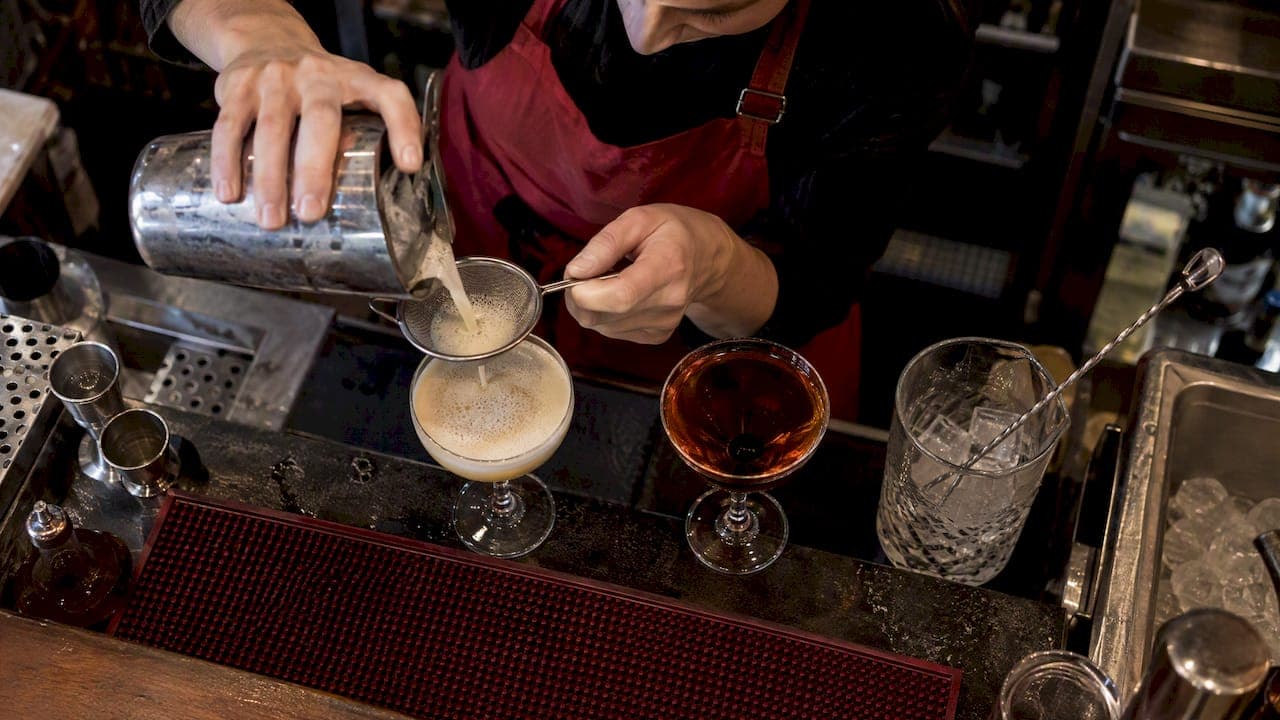
Shake when a recipe contains citrus, egg, dairy or opaque ingredients; stir when all ingredients are clear spirits. Shaking chills fast, adds air and small ice shards, and gives juice-based drinks a frothy texture, while stirring chills gently and keeps spirit-forward cocktails clear and silky. These two techniques serve different purposes, not just varying in intensity.
TL;DR:
- With clear cubes, shake for 7 to 12 seconds, extending toward 15 for egg white; wet or crushed ice needs 5 to 7 seconds.
- Stir cocktails made from clear spirits for 30 to 45 seconds with large cubes, rotating the spoon smoothly around the glass to limit dilution.
- A highball needs a brief stir in its serving glass; crushed ice calls for a shorter shake because dilution continues after serving.
- To calibrate your palate, make the same Manhattan both ways with identical ratios and ice, then compare clarity, temperature, texture, and perceived dilution.
Table of Contents
- Shaking vs stirring at a glance
- Why shaking changes texture so dramatically
- Why stirring protects a spirit's character
- Picking the right shaker, spoon, and ice
- When to shake, when to stir, when to do neither
- How to train your hands and your palate
- What bartending at Big Shots Amsterdam teaches about method
- How shaking and stirring became bartending's great divide
- How each method changes flavor and how ingredients come together
- Common mistakes that ruin an otherwise good drink
- Matching technique to glassware and how you plan to serve
- The real lesson in shaken versus stirred
- Taste the difference at Big Shots Amsterdam
- FAQ
- Sources
Shaking vs stirring at a glance
Both methods chill and dilute a drink, but they get there differently and leave different fingerprints on the glass. Shaking moves faster and rougher, which is exactly what citrus and dairy need to blend properly.
- Shaking: fast chill, heavier dilution, visible aeration, cloudy finish, typically 7 to 15 seconds depending on ice condition.
- Stirring: gentler chill, lighter dilution, clear appearance, velvety mouthfeel, typically 30 to 45 seconds.
- Shaken examples: daiquiri, margarita, whiskey sour.
- Stirred examples: martini, Manhattan, negroni.
The contrast comes down to texture and clarity: a shaken drink wants a little foam and chill shock, a stirred drink wants to taste like its ingredients, only colder.
Why shaking changes texture so dramatically
Shaking works by smashing ice against liquid over and over, which increases the surface area of ice in contact with the drink and forces tiny air bubbles into the mix. That agitation is what gives shaken cocktails their pale, slightly cloudy look and light foam cap, especially when egg white or citrus is involved.
Shaken drinks typically land in a serving range that is noticeably colder than stirred drinks, cold enough to mute harsh edges in citrus and sugar, according to temperature guidance cited by bartending experts. Timing depends heavily on your ice: with clear, well-tempered cubes, 7 to 12 seconds is the standard window, extending toward 15 seconds for drinks built for maximum aeration, like a whiskey sour with egg white. If your ice is already wet or partly crushed, cut that down to 5 to 7 seconds, since it will dilute faster.
- Citrus-forward cocktails: daiquiri, margarita, whiskey sour.
- Dairy or egg-based drinks: pisco sour, amaretto sour.
- Opaque mixers: anything with juice, puree, or cream.
Why stirring protects a spirit's character
Stirring moves liquid around ice slowly and smoothly, which limits aeration and keeps ice from fracturing into small shards. The result is a clear drink with a silkier mouthfeel, since the spirits stay more concentrated and the texture stays dense rather than frothy.
According to America's Test Kitchen's breakdown of the mechanics, stirring preserves clarity and minimizes ice fragmentation compared to the rougher motion of shaking. A good stir runs 30 to 45 seconds, landing the drink in a warmer serving band of roughly -0.5°C to -7°C, cold enough to tame alcohol heat without muting the botanicals in a gin or the spice in a rye.
- Classic stirred cocktails: martini, Manhattan, negroni, old fashioned.
- Use large, dense ice cubes to slow dilution during the longer stir time.
- Rotate the spoon smoothly along the inside of the glass rather than stabbing at the ice.
Pro Tip: Stir until the outside of the mixing glass feels uncomfortably cold to hold, that's usually your cue the drink has hit the right dilution.
Picking the right shaker, spoon, and ice
Equipment matters less than technique, but the right tools make consistency easier. A Boston shaker, two tins that seal together, is quick to use and simple to clean, while a cobbler shaker has a built-in cap and strainer but more parts to wash. Either works, though bartender guidance generally favors pairing a Boston shaker with a Hawthorne spring strainer for clean, fast straining.
For stirring, a simple bar spoon and a tall mixing glass with a reasonably wide base give you more ice contact and a smoother chill curve. Ice size changes everything: large cubes melt slowly and are ideal for both shaking and stirring when you want controlled dilution, while crushed ice chills almost instantly but waters down a drink fast, better suited for serving over than for mixing in. For glassware pairings and more technique tips, see our cocktail tips for beginners.
- Boston shaker: fast, minimal parts, needs a separate strainer.
- Cobbler shaker: built-in strainer, bulkier to clean.
- Large cubes: slow, even dilution for both shaking and stirring.
When to shake, when to stir, when to do neither
Most confusion disappears once you apply one simple filter: look at what's in the glass.
- Citrus, egg, dairy, or any opaque ingredient: shake. Think daiquiri, whiskey sour, piña colada.
- Only clear spirits and clear modifiers: stir. Think martini, Manhattan, negroni.
- Built drinks poured directly over ice: skip both. A negroni on the rocks or a simple highball just needs a stir in the glass to combine, not a full shake or a proper stirred dilution.
- Espresso martini: an exception worth naming, since it contains dairy-like crema and coffee but is always shaken hard to build that signature foam cap, a technique covered in our dry-shaking espresso martinis guidance.
- Personal preference swaps: some drinkers stir a margarita for a cleaner sip or shake a Manhattan for extra chill. Neither is wrong, just different, as long as you understand what you're trading away.
How to train your hands and your palate
The fastest way to understand the difference is to make the same drink two ways and taste them side by side.
- Pick a spirit-forward recipe like a Manhattan and make one batch shaken, one stirred, using identical ratios and ice.
- Taste both immediately, noting clarity, temperature, and whether the shaken version feels thinner or more diluted.
- Repeat with a citrus cocktail like a margarita, this time stirring one version instead of shaking it, to feel how much texture and aeration you lose.
- Adjust shake time by 2 to 3 seconds or stir time by 5 to 10 seconds on your next attempt based on what tasted off.
Checkpoints worth tracking each round: temperature on the tongue, visual clarity, mouthfeel (silky versus frothy), and how diluted the drink tastes compared to the base spirit alone.
Pro Tip: Keep a small notebook of your shake and stir times next to your tasting notes, patterns show up after just a handful of side-by-side batches.
What bartending at Big Shots Amsterdam teaches about method
Behind the bar, choosing to shake or stir is never about ritual, it's about shaping how a drink lands with a guest. Bartenders stir a Manhattan to keep its whiskey character intact and shake a sour hard enough to build real foam, because the texture is part of the experience being served, not an afterthought. This same thinking guides how cocktails are built across venues where sports bar energy, lounge seating, and late dinners all call for slightly different drink styles. If you want to taste the contrast rather than just read about it, it's worth experiencing both styles side by side on one visit, and you can learn more about how we think about drink service in our piece on how bartenders shape the drink experience.
How shaking and stirring became bartending's great divide
Cocktail history doesn't record a single moment when bartenders split into shakers and stirrers, but the distinction hardened as mixed drinks grew more complex in the 19th century. Early cocktails were often simple spirit-and-bitters combinations stirred in a glass, a style that carried directly into classics like the Manhattan and the martini. As bartenders began adding citrus juices, egg whites, and cream to drinks like sours and fizzes, shaking became necessary just to combine ingredients that wouldn't blend with a spoon alone.
The phrase most people associate with the debate, "shaken, not stirred," comes from Ian Fleming's James Bond novels and the films that followed, according to Wikipedia's account of the catchphrase's origin. It turned a technical choice into pop culture shorthand, even though bartenders had already settled on shaking versus stirring as a practical decision long before Bond ordered his first martini. A small study referenced in that same account found measurable antioxidant differences between shaken and stirred martinis, but the finding is narrow and doesn't change the practical case for choosing a method based on texture and ingredients rather than lab results.
What's stayed consistent since those early sours and juleps is the underlying logic: rough ingredients need rough treatment, smooth ingredients deserve a gentle hand.
How each method changes flavor and how ingredients come together
Shaking doesn't just chill a drink, it physically integrates ingredients that resist blending on their own. Citrus juice, simple syrup, and spirit don't naturally combine into one cohesive texture, so the forceful agitation of shaking emulsifies them, which is especially visible with egg white or cream, where shaking builds a stable foam that a stir never could. That same aeration also slightly dilutes sharp edges in sour or acidic cocktails, rounding out flavors that would otherwise taste harsh or thin.
Stirring, by contrast, is about restraint. A negroni or Manhattan is built entirely from spirits and modifiers that are already miscible, so there's nothing to emulsify and no texture to build, only dilution and temperature to manage carefully. Stirring lets the botanicals in gin, the spice in rye, or the bitterness in Campari stay forward and distinct, because the gentle motion doesn't fracture ice or introduce air that would otherwise blur those flavors together. Bartenders interviewed on the subject tend to frame the choice less as dogma and more as matching the method to the result you want: a frothy, lighter sip from shaking, or a dense, spirit-forward sip from stirring.
The practical upshot is that method isn't just a chilling mechanism, it's an ingredient in itself, changing how a drink's components taste together rather than simply making them cold.

Common mistakes that ruin an otherwise good drink
Most shaking and stirring mistakes come down to timing, ice choice, or simply using the wrong method for the ingredients in the glass.
On the shaking side, the most frequent error is under-shaking a drink with egg white or cream, which leaves the texture thin instead of properly frothy. Over-shaking a delicate citrus drink with already-wet ice is just as common, and it waters the cocktail down past the point of balance. Using too little ice is another quiet killer, since a half-full shaker can't generate enough agitation to chill or aerate properly.
On the stirring side, the biggest mistake is stirring too fast or too roughly, which chips ice and muddies a drink that's supposed to stay clear. Using small, fast-melting cubes for a stirred drink is another common misstep, since it over-dilutes the cocktail before it ever reaches proper temperature. Some home bartenders also stir for far too short a time, pulling the drink at 15 or 20 seconds when 30 to 45 seconds is usually needed to hit the right dilution and chill.
A broader mistake sits above both techniques: treating the choice as arbitrary rather than ingredient-driven. Shaking a martini might look dramatic, but it clouds a drink that's supposed to be crystal clear, and stirring a daiquiri leaves it under-diluted and missing the aeration that citrus cocktails rely on.
Matching technique to glassware and how you plan to serve
The method you choose should line up with how the drink will actually be served, not just what's in it. A martini or Manhattan served "up" in a stemmed glass depends on stirring to stay perfectly clear, since any cloudiness is immediately visible in a drink with no ice sitting in it. A coupe or Nick and Nora glass works the same way, rewarding the silky clarity that only stirring produces.
Drinks served "on the rocks," by contrast, have more flexibility. A negroni or old fashioned poured over a single large cube can be stirred briefly in the glass itself rather than in a separate mixing glass, since the serving ice will continue diluting and chilling it afterward. Shaken drinks served over crushed ice, like a classic daiquiri variation or a tiki-style cocktail, benefit from a slightly shorter shake since the crushed ice will keep diluting the drink at the table. For a rundown of which glass suits which style, our guide to cocktail glass types breaks down the options without requiring a full bar cabinet.
Coupes and martini glasses call for drinks strained completely clean of ice, which makes technique precision matter more, while rocks glasses forgive small timing errors since the serving ice corrects for them. If you're building a round of cocktails for a group, matching glass to method first, then adjusting your shake or stir time to the ice you're serving over, keeps every drink consistent from the first sip to the last.

The real lesson in shaken versus stirred
The debate gets treated like a matter of taste or even personality, largely thanks to one fictional spy, but the evidence points somewhere more useful: method is a texture decision, not a style statement. The conventional wisdom oversimplifies this into a binary of "shaken is bold, stirred is classic," when the actual variable is simply what's in the glass and what you want it to feel like on the tongue.
Where most home bartenders go wrong isn't picking the wrong method, it's skipping the comparison step entirely. Reading a rule of thumb is useful, but tasting the same recipe shaken and stirred side by side teaches more in ten minutes than any article can. That direct comparison is also where the lab-study headlines about antioxidants or chemical differences become irrelevant, since nobody chooses a method based on biochemistry, they choose it based on how the drink feels in the mouth.
If you take one thing from this, prioritize ice condition and timing over memorizing which classic cocktails belong where. Get those two variables right and the right method becomes obvious from the texture alone, no matter what's in the glass.
— Leo
Taste the difference at Big Shots Amsterdam
Reading about shaken versus stirred only gets you so far, tasting both side by side is what actually trains your palate. Some bars bring together a full cocktail menu, sports viewing, and shisha lounge seating across multiple locations, allowing you to order a shaken sour and a stirred classic in the same sitting and compare them while they're both fresh.

Check our menu to see what's pouring, or look into our lounge experiences if you want to book a table for a proper tasting session with friends.
FAQ
Why do people say shaken, not stirred?
The phrase comes from Ian Fleming's James Bond novels and the films that followed, where the character orders his martini that way as a personal signature rather than a technical rule, according to the catchphrase's documented origin. It stuck in popular culture even though most bartenders would actually stir a martini to keep it clear.
What's better, shaken or stirred?
Neither method is better overall, each suits different ingredients. Shake drinks with citrus, egg, dairy, or other opaque mixers, and stir cocktails made only from clear spirits, since the physical outcomes differ in aeration, clarity, and dilution.
What not to say to a bartender?
Avoid demanding a specific shake or stir time or insisting a classic be made against its traditional method without explaining your preference, since most bartenders are happy to adjust once they understand what you're after. It's more useful to describe the texture or strength you want than to recite technical instructions.
Why does James Bond like shaken, not stirred?
The preference is a character trait invented for the novels and carried into the films, not a reflection of standard bartending practice. In fact, a small study referenced alongside the phrase's history found minor antioxidant differences between shaken and stirred martinis, but that finding has little bearing on why most bartenders would actually stir one for clarity and texture.
Sources
- Shaken vs. Stirred? How to Mix Any Cocktail the Right Way | Bon Appétit
- When to shake or stir your drink | Food & Wine
- Shaken vs. Stirred: Why Does It Matter? | America's Test Kitchen
- Shaken, not stirred — Wikipedia