
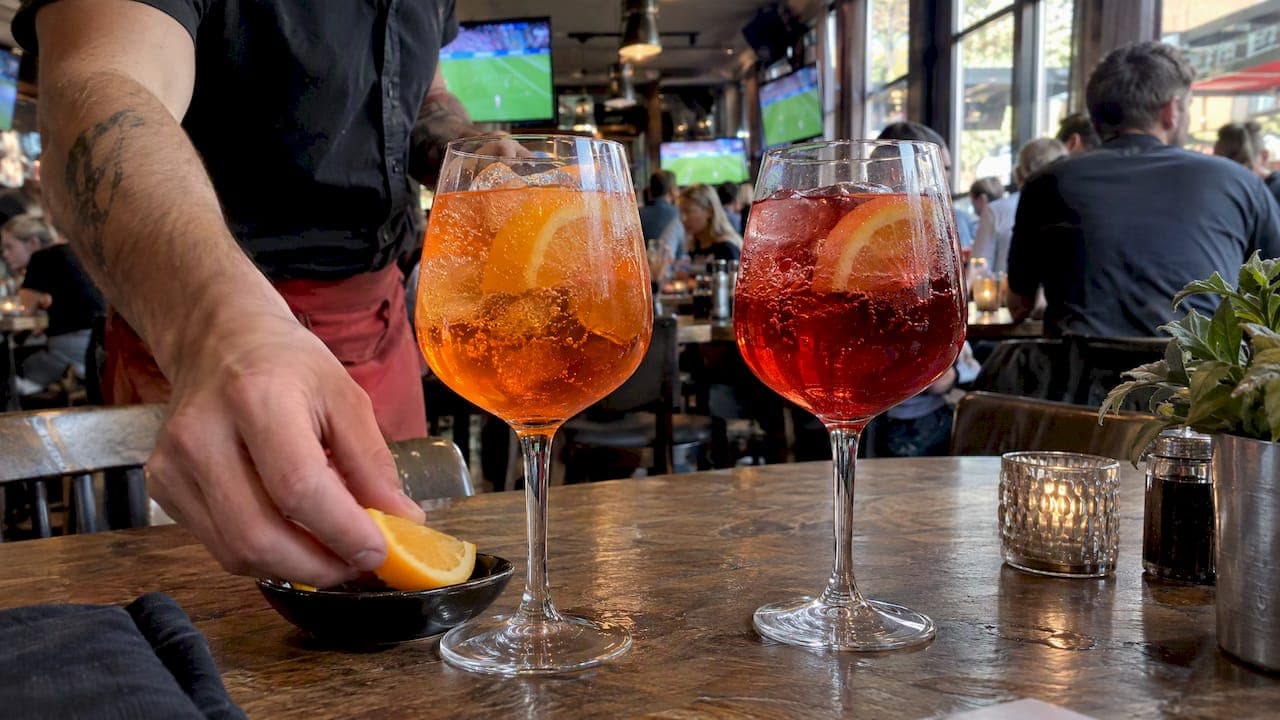
Aperol Spritz is the lighter, sweeter choice, built on an 11% ABV aperitif with citrus and rhubarb notes, while Campari Spritz brings a bigger, more bitter punch from a base that runs far higher in alcohol. Both follow the same Prosecco-and-soda structure, so swapping one for the other is simple, but the result changes the drink's whole personality. Pick Aperol for easy afternoon sipping, and pick Campari when you want real bitter depth.
TL;DR:
- Aperol Spritz has an 11% ABV, making it suitable for light, afternoon drinking, while Campari Spritz ranges from 20% to 28%, providing a bolder taste.
- Aperol features a fruity flavor profile with hints of orange and rhubarb, whereas Campari offers a more herbal, medicinal bitterness from its secret botanical mix.
- The traditional recipe uses a 3-2-1 ratio of Prosecco to Aperol or Campari, with added soda, and bartenders often adjust quantities to balance the higher alcohol and bitterness of Campari.
- Campari Spritz generally has a longer-lasting bitterness and pairing suggestions for richer snacks like cheese and charcuterie, unlike Aperol which suits lighter, citrusy fare.
- Starting side-by-side tastings by drinking Aperol first, followed by Campari, helps identify personal preference due to Campari's longer bitterness lingering.
Table of Contents
- Flavor, ABV, color, and who each spritz suits
- What's in each aperitif and how those botanicals shape taste
- Exact recipes and bartender adjustments for each spritz
- Tasting notes and pairings for each spritz
- How we serve and recommend Aperol and Campari spritzes
- A simple side-by-side tasting plan
- Try both at Big Shots Amsterdam or order for delivery
- FAQ
- Sources
Flavor, ABV, color, and who each spritz suits
The two drinks share a glass and a method but land very differently on the palate. Aperol leans sweet and citrus with a gentle bitter edge, while Campari delivers a sharper, more herbal bitterness that lingers. That gap traces back to the base spirits and their differences in ingredients and strength, which also explains why one feels like a session drink and the other feels like a statement.
- Flavor: Aperol tastes of orange peel, rhubarb, and a soft bitterness; Campari tastes of bitter orange, herbs, and a sharper, more assertive bite.
- ABV and mouthfeel: Aperol sits around 11%, making it easy to drink through an afternoon, while Campari's higher proof gives the finished spritz more weight and a longer finish.
- Color: Aperol pours a bright orange, closer to a sunset hue; Campari pours a deeper, almost ruby red.
- Best for: Aperol suits newcomers to bitter aperitifs and anyone wanting a lighter terrace drink; Campari suits readers who already enjoy bitter cocktails like a Negroni and want that same intensity with bubbles.
Neither is objectively "better." The choice comes down to how much bitterness you want standing between you and the Prosecco.
What's in each aperitif and how those botanicals shape taste
Aperol's recipe draws on rhubarb, gentian, and cinchona bark alongside citrus peel, which is why it reads as fruity first and bitter second. Campari's formula centers on bitter orange peel and rhubarb too, but its exact botanical blend stays a closely guarded secret, and the result tastes more herbal and medicinal than fruity.
- Aperol: rhubarb, gentian, cinchona, sweet and bitter orange, built for balance rather than punch.
- Campari: bitter orange peel, rhubarb, and an unpublished mix of herbs and spices, built for intensity.
- ABV gap: Aperol sits near 11%, while Campari typically runs between 20% and 28% depending on the market, a difference that changes how strong the finished spritz tastes even when the pour ratio stays identical.
Both belong to the Italian amari tradition, the family of bittersweet liqueurs built for aperitivo hour, and that shared lineage is part of why they slot into the same cocktail so easily despite tasting so different.
Exact recipes and bartender adjustments for each spritz
The International Bartenders Association lists the Spritz Veneziano with a fixed build: 90 ml Prosecco, 60 ml Aperol, and a splash of soda water, often shorthanded as the 3-2-1 ratio. The IBA recipe also notes that other bitter aperitifs, Campari included, work as valid variations on the same structure.
- Aperol Spritz (IBA standard): fill a wine glass with ice, pour Prosecco, add Aperol in the proportion of about three parts Prosecco to two parts Aperol, then top with a splash of soda water and garnish with an orange slice.
- Campari Spritz: build the same way, but because Campari carries more alcohol and bitterness, many bartenders trim the aperitif slightly and add extra soda to keep the drink balanced rather than harsh.
Pouring order matters more than it seems. Add ice first, then the Prosecco while it is still cold, then the aperitif, then the soda last, which keeps the bubbles alive instead of flattening them on contact with room-temperature ice. A drier, higher-acid sparkling wine such as Cava also cuts through Campari's bitterness better than a sweeter Prosecco, a swap worth trying if your first Campari Spritz tastes too sharp. For technique on building layered drinks at home, our cocktail recipe guide walks through ratio thinking that carries over from espresso martinis to spritzes.
Pro Tip: If a Campari Spritz tastes too bitter, add soda in two small pours instead of one long one. You keep the red color and soften the edge without watering down the drink.

Tasting notes and pairings for each spritz
An Aperol Spritz opens sweet and citrusy, moves through a light herbal middle, and finishes with a short, clean bitterness that barely lingers. A Campari Spritz opens more serious: orange peel and herbs up front, a bigger botanical middle, and a bitter finish that stays on the tongue well after the sip.
- Aperol pairs with: cicchetti, salty olives, light seafood, and citrus-forward dishes that echo the drink's own brightness.
- Campari pairs with: charcuterie, aged cheese, and richer, fattier bites that need a sharper drink to cut through them.
- Occasion: Aperol fits a daytime terrace session, while Campari suits an evening aperitivo where you want something with more weight before dinner.
Aperol's marketing push toward year-round drinking, moving it away from a purely summer identity, is a big part of why it now shows up on menus in every season rather than just June through August. Our pairing guide for diners has more detail on matching small plates to specific drink styles.
How we serve and recommend Aperol and Campari spritzes
We pour both spritzes in large balloon glasses over plenty of ice, finished with an orange wedge, because the bigger glass lets the Prosecco keep its fizz longer across a sitting. Aperol tends to move faster earlier in the day and on terraces, while Campari is ordered more by guests who prefer something bolder before a steak or a heavier plate. When asked which to pick, first-timers are often steered toward Aperol and those who like a Negroni are pointed toward Campari. Our guide to glassware covers why that glass choice matters beyond looks.

A simple side-by-side tasting plan
Order both, taste the Aperol first, then the Campari, since starting with the milder drink keeps your palate fair to both. Take a sip of plain water between the two, and after each glass, wait 30 seconds before swallowing to notice how long the bitterness lingers; Campari holds on far longer. If you already lean toward bitter cocktails, you can swap Aperol into a Negroni for a lighter version of that drink, or simply ask your bartender for a Campari Spritz by name next time instead of defaulting to Aperol.
— Leo
Try both at Big Shots Amsterdam or order for delivery
We pour both spritzes across our Amsterdam venues, so the easiest way to settle the Aperol versus Campari question is to order one of each and compare them side by side. Our menu lists both alongside the small plates that pair well with each, and if you'd rather stay in, our delivery service brings the same drinks and food to your door.

- Book a table or a lounge experience for a group tasting, a date night, or a relaxed evening with friends.
- Order through our menu for dine-in, or get both spritzes delivered for a comparison at home.
FAQ
Which is better, Aperol or Campari Spritz?
Neither is objectively better: Aperol Spritz is lighter, sweeter, and easier to drink through an afternoon, while Campari Spritz is more bitter and bolder. The right choice depends on whether you want a gentle aperitif or a stronger, more herbal drink.
Do Italians prefer Campari or Aperol?
Preference varies by region and generation rather than following one national rule, and both aperitifs remain staples of Italian aperitivo culture. Aperol's marketing has pushed it toward broader, younger appeal, while Campari keeps a loyal following among drinkers who prefer a stronger, more bitter profile.
Is Campari stronger than Aperol?
Yes, Campari is stronger. Aperol sits around 11% ABV, while Campari typically runs between 20% and 28% depending on the market, which gives the finished spritz noticeably more weight.
What is the disappointing truth about Aperol Spritz?
Some drinkers find Aperol Spritz underwhelming because its low ABV and heavy sweetness can taste thin next to a bitter cocktail like a Negroni or Campari Spritz. Its popularity owes a lot to marketing that turned it into a year-round social drink rather than a purely seasonal aperitivo.
Sources
- Spritz – IBA
- What's the Difference Between Campari and Aperol? — Food & Wine
- Aperol Spritz beats Champagne with 1.5 billion servings - Il Sole 24 ORE