
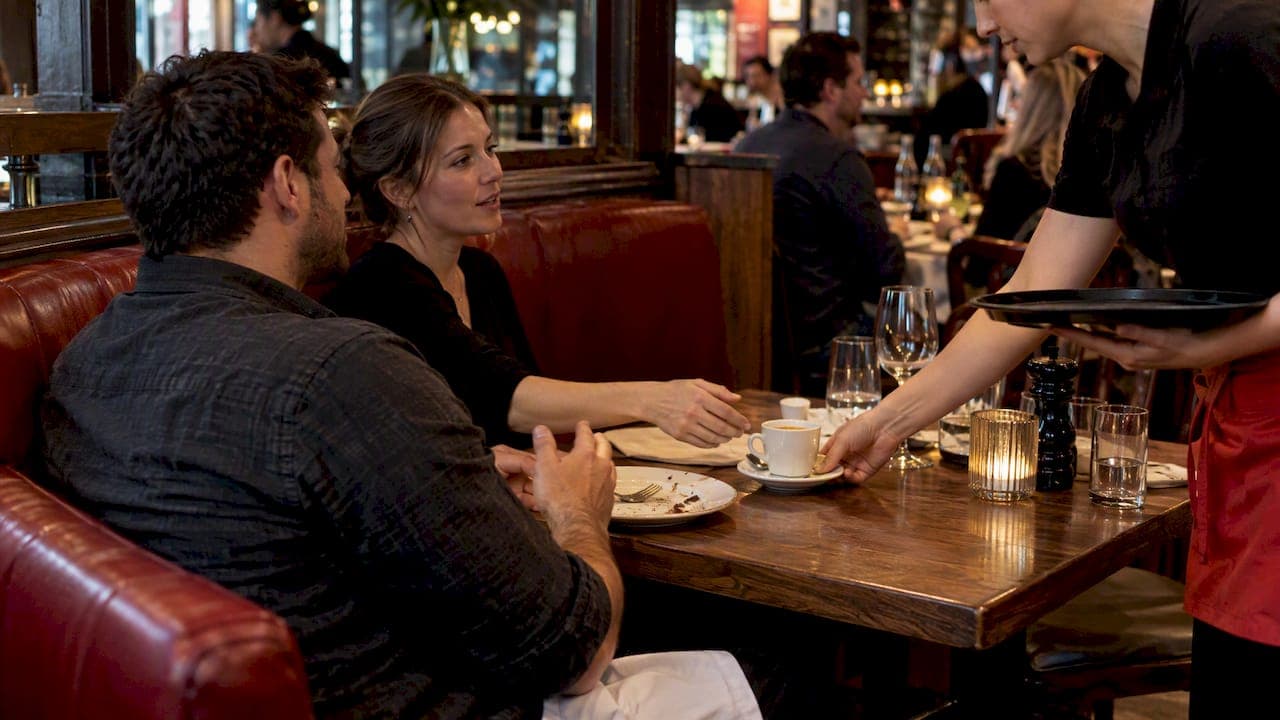
Yes, you can drink coffee after dinner, and for most healthy adults it does no harm. Three things decide whether it is a good idea for you: how much caffeine you are already getting, how sensitive your sleep is, and whether the meal you just ate was rich in iron. Keep the cup small, wait a little after the last bite, and choose decaf or something herbal if you are going to bed soon.
TL;DR
- Healthy adults can safely have up to 400 mg of caffeine a day, and single doses up to 200 mg raise no safety concerns, according to the European Food Safety Authority.
- An espresso has about 40 mg of caffeine, a double about 80 mg and a cup of filter coffee about 60 mg, so a small after-dinner coffee is a modest dose.
- If sleep is your concern, 100 mg close to bedtime may already affect some adults, so go decaf or herbal late in the evening.
- If you rely on plant-based or iron-rich meals, wait roughly 45 to 60 minutes before the coffee.
- Coffee can help some people feel their meal settle, but it is not a cure for a heavy dinner.
Table of Contents
- Why we end dinner with coffee
- How much caffeine are you actually drinking?
- Coffee after dinner and your sleep
- Iron: why a short wait helps
- Does coffee help you digest dinner?
- A simple decision guide
- What to order instead when you want the ritual
- Our view on coffee after dinner
- Finish your meal with us in Amsterdam
- FAQ
- Sources
Why we end dinner with coffee
The after-dinner coffee is less a nutritional decision than a social one. In France and Italy a long meal without coffee at the end can feel unfinished. In Italy the small, strong espresso is the usual full stop, often taken standing or sipped slowly while the conversation carries on. In Amsterdam the habit looks a little different: a koffie na het eten is often a cappuccino or a koffie verkeerd that arrives when the plates are cleared and the table decides whether the night is over or only starting.
That ritual matters. Hospitality writers keep coming back to how a closing drink turns a meal into an occasion, and the shared-table side of food and drink is part of what people look for when they go out. If you want to see how Amsterdam's own café scene works, our pieces on Amsterdam café culture and how cafés fuel social life in the city go deeper.
The question is whether the habit costs you anything. Let's look at the three places it could: sleep, iron and digestion.

How much caffeine are you actually drinking?
Before worrying about timing, count the dose. The Dutch Nutrition Centre (Voedingscentrum) lists typical amounts:
| Drink | Size | Caffeine (approx.) |
|---|---|---|
| Espresso | 30 ml | 40 mg |
| Double espresso | 60 ml | 80 mg |
| Filter coffee, cup | 125 ml | 60 mg |
| Filter coffee, mug | 250 ml | 120 mg |
Those are averages. A café's espresso can run stronger or weaker depending on the bean, the grind and the machine, and a large cappuccino often hides a double shot. If you are unsure, ask what size the shot is.
The European benchmark is useful here. EFSA says that up to 400 mg of caffeine a day from all sources is safe for healthy adults, roughly four standard cups of coffee, and that single doses up to about 200 mg do not raise safety concerns. One espresso after dinner is a small slice of that budget. The trouble starts when the after-dinner cup comes on top of a morning flat white, an afternoon cola and an energy drink, because caffeine also hides in tea, chocolate and cola.
Pregnant women, people with heart rhythm problems, anxiety disorders or reflux should not rely on the general figures. Ask your GP (huisarts) or midwife what limit applies to you.
Coffee after dinner and your sleep
Sleep is the strongest reason to hesitate. EFSA notes that as little as 100 mg of caffeine, about 1.4 mg per kilo of body weight, may affect sleep in some adults when taken close to bedtime. That is roughly a double espresso. The effect is individual: some people sleep soundly after a ristretto at 11 p.m., others lie awake after a 5 p.m. cappuccino.
Two things make the timing less obvious than it sounds:
- The peak comes later than the cup. According to the Voedingscentrum, the stimulating effects such as alertness and concentration typically peak between 30 minutes and 2 hours after you drink it. A coffee at the end of a 9 p.m. dinner is working hardest around the time you want to wind down.
- It lingers. Caffeine's half-life runs to several hours, so a good part of the dose is still in your system when the evening has ended.
A practical rule: if you fall asleep easily and have no trouble, one small espresso with dessert is unlikely to matter. If you wake at night or take a long time to drift off, keep your last caffeine well before dinner and switch to decaf or herbal tea afterwards. A decaf is not caffeine-free, but the amount is small, and the Voedingscentrum's table lists it separately from regular coffee.
Iron: why a short wait helps
The less famous reason to pause is iron. Iron in food comes in two forms, heme iron from animal products and non-heme iron from both animal and plant foods, as the Voedingscentrum explains. Coffee and tea interfere with how well you absorb the non-heme kind. One report on the topic notes that experts suggest leaving 45 to 60 minutes between a meal and caffeinated drinks so the nutrients can be taken up.
Does it matter to you? For most people eating a varied diet, an occasional coffee straight after dinner is not a problem. It matters more if you:
- eat mostly plant-based meals, where nearly all your iron is the non-heme kind;
- have been told you are low in iron or are prone to anaemia;
- drink several cups with meals every day.
In those cases, the fix is cheap: move the coffee 45 to 60 minutes later. Have dessert first, talk a while, then order the coffee. If you have a diagnosed iron deficiency, ask your doctor about the right approach rather than relying on general advice.
Does coffee help you digest dinner?
Partly, for some people. Coffee does stimulate the gut. A Guardian explainer concludes that caffeine can support digestion and gut health, but advises avoiding it after noon, or altogether if you have irritable bowels. The feeling of a meal "moving along" after an espresso is real for many people, and it explains the Italian custom.
But it is not a universal remedy:
- If you are prone to heartburn, coffee on a full stomach can make it worse.
- If you have IBS, the same gut stimulation can mean cramps or an urgent dash to the bathroom.
- If your problem is plain fullness after a big steak, a walk and a slower pace will do more than caffeine.
So treat "coffee helps digestion" as a pleasant side effect, not a reason to order one. If you enjoy it and feel fine, carry on. If you feel worse, believe your body over the folklore.
A simple decision guide
| Your situation | What to do |
|---|---|
| Healthy, sleep well, dinner before 8 p.m. | A small espresso or cappuccino is fine |
| Dinner at 9 p.m. or later, light sleeper | Decaf, herbal tea or a short espresso earlier with dessert |
| Plant-based or iron-conscious diet | Wait 45 to 60 minutes after eating |
| Reflux or IBS | Try decaf or tea, and notice how you feel |
| Already at 3 or 4 coffees today | Skip it, you are near the EFSA ceiling |
| Pregnant or on medication | Ask your GP or midwife about your limit |
What to order instead when you want the ritual
Often what people want is not the caffeine but the pause. A few ideas that keep the moment without the sleepless night:
- Decaf espresso or cappuccino. Ask for it in the same small cup.
- Herbal or mint tea. Fresh mint is a common choice across the Netherlands and the Mediterranean.
- A dessert and a long chat. The table stays occupied, which is the point.
- A coffee cocktail on a night out. Espresso with spirits is a different kind of after-dinner drink, and the caffeine is real. If you want to make a bar-style one at home, see our espresso martini recipe, and keep the late-night caffeine in mind.
- A shared lounge session. Staying for a relaxed hour after the meal keeps the evening going without another dose of coffee.
If you are hosting, the same logic applies at your own table. Set out a pot of coffee, a pot of decaf and a herbal tea, and let guests choose. Our guide to creating a romantic café atmosphere at home covers the lighting, music and table details that make a slow coffee feel like a finish rather than an afterthought.
Our view on coffee after dinner
We run a sports bar, shisha lounge, restaurant and café under one name in Amsterdam, so we watch how a night actually ends more than most. Here is what we see and what we would tell a friend.
A night out rarely stops when the plates are cleared. Groups linger. Someone watches the match, someone orders another round, someone wants something warm. The after-dinner drink is the hinge between the meal and the rest of the evening, and it should fit what comes next. If the plan is to head home, a small coffee or tea suits the moment. If the plan is to stay, we would rather you pace yourself, because several coffees across an evening add up faster than they feel.
We also think the coffee deserves the same care as the food. A good café serves it hot, in the right cup, at the right time, which means not slammed on the table while you are still eating. If you have a steak, a pasta or a pizza from our menu and want coffee, tell us when you want it. Asking for it 20 or 30 minutes after the main course is a normal request, and it suits the iron advice above too. Our drinks list changes, so check the menu for what is available.
Our advice is plain: enjoy it, keep it small, and listen to how you sleep. Caffeine is not a villain and it is not a digestive miracle. It is a pleasant drink with a known dose, and you are the best judge of your own limits.
— Leo
Finish your meal with us in Amsterdam
If you are looking for somewhere to linger after dinner, we serve food from breakfast to steaks, burgers, pizza and pasta, plus drinks, at our central Amsterdam venues. Stay on for the game or move to the lounge: see Lounge Experiences for what is on offer. Prefer to eat at home? You can order delivery and make your own coffee afterwards. For a wider look at where to go, our guide to Amsterdam venues for dining and sports is a good start.
FAQ
Is drinking coffee after dinner good or bad?
For most healthy adults it is neither. A small coffee fits comfortably within EFSA's 400 mg daily limit, and some people find it helps them feel less heavy. It becomes a poor choice if it disturbs your sleep, aggravates reflux or IBS, or sits on top of many other caffeinated drinks.
How long should you wait to drink coffee after eating?
If you want to protect iron absorption, experts suggest about 45 to 60 minutes. If iron is not a concern for you, there is no strict rule, and you can drink it with dessert.
Will coffee after dinner keep me awake?
It can. The effects of caffeine typically peak 30 minutes to 2 hours after drinking, and about 100 mg near bedtime may affect sleep in some adults. If you are sensitive, choose decaf or herbal tea in the evening.
Is espresso better than regular coffee after dinner?
Per cup, yes, in caffeine terms: an espresso has about 40 mg against about 60 mg in a 125 ml cup of filter coffee. A double espresso, though, is about 80 mg, so the size matters more than the style.
Does coffee really help digestion?
Sometimes. Caffeine can stimulate the gut, but the effect varies by person, and people with irritable bowels are advised to be careful. Do not use it as a cure for a very heavy meal.
Sources
- Caffeine | EFSA
- Cafeïne | Voedingscentrum
- IJzer in voeding | Voedingscentrum
- Should you drink coffee after meals? | The Times of India
- Is it true that coffee aids digestion? | The Guardian
- Trends in Gastronomy 2026 | Wild Foodz