
Tequila is a legally defined type of agave spirit, and mezcal is the broader category it belongs to. The decisive differences come down to agave species, growing region, and how the plant gets cooked before distillation. Flavor and price then follow from those production choices, which is why one bottle of mezcal can taste nothing like another while tequila stays more predictable.
TL;DR:
- Choose 100% agave tequila for sipping; mixto requires only 51% agave, and the NOM number on its label identifies the distillery.
- For gentler mezcal, start with espadín; wild agaves such as tobalá can take over a decade to mature and usually cost more.
- Pit roasting and pot distillation add complexity but raise prices; artisanal and ancestral labels signal traditional methods and usually cost more.
- When substituting mezcal for tequila in a cocktail, begin with half the amount and taste as you go, since smoke builds quickly.
Table of Contents
- What is mezcal: legal definition, agave variety, and labeling basics
- What is tequila: blue Weber agave, Denomination of Origin, and mixto vs 100% agave
- Agave species and terroir: why the plant and place make a difference
- Production methods: pit-roasting vs ovens/autoclaves, fermentation, and stills
- Flavor and tasting notes: what to expect when sipping or mixing
- Types and aging categories, plus labeling cues to watch for when buying
- How to choose between mezcal and tequila for your palate, budget, or cocktail
- Bartender-tested notes from Leo at Big Shots Amsterdam: tasting and pairing guidance
- Why the mezcal movement matters for curious drinkers
- Taste both spirits side by side at Big Shots Amsterdam
- FAQ
- Sources
What is mezcal: legal definition, agave variety, and labeling basics
Mezcal carries its own Denomination of Origin and falls under NOM-070-SCFI-2016, which permits production across nine Mexican states and authorizes more than 40 agave species.
- Mezcal: the baseline category, allowing some mechanized steps.
- Mezcal Artesanal: requires more traditional methods, such as stone mills or wood-fired stills.
- Mezcal Ancestral: the strictest tier, cooking agave in earthen pits and distilling in clay pots.
Espadín is the workhorse agave behind most bottles you will find, while wild varieties like tobalá and tepeztate show up in smaller, pricier batches. A certification hologram on the label is your signal that the bottle meets the official standard.
What is tequila: blue Weber agave, Denomination of Origin, and mixto vs 100% agave
Tequila's Denomination of Origin is far narrower. Production is restricted to five Mexican states, and every bottle is overseen by the Consejo Regulador del Tequila under NOM-006-SCFI-2012. Unlike mezcal's dozens of permitted species, tequila can only be made from Agave tequilana Weber, commonly called blue Weber agave, which keeps the flavor profile tighter and more consistent from bottle to bottle.
- 100% agave tequila: made entirely from blue Weber agave, usually the better choice for sipping.
- Mixto tequila: only 51% agave is required, with the rest made up of other sugars.
- Label cues: look for "100% agave" and a NOM number identifying the distillery.
That NOM number matters more than most shoppers realize since several brands share the same facility, which can hint at similar production methods even across different labels.
Agave species and terroir: why the plant and place make a difference
Blue Weber agave was selected for tequila partly because of its relatively high, consistent sugar content, which supports steady fermentation and a more uniform spirit. Mezcal's agaves vary widely by comparison: espadín matures faster and offers a gentler profile, while wild species like tobalá can take over a decade to reach harvest and bring deeper, more mineral character.
Terroir plays a real role on top of species. Volcanic soil, higher altitude, and lower rainfall tend to concentrate sugars and intensify earthy or mineral notes, while agave grown in richer, lower-altitude soil often leans sweeter and more fruit-forward. Producers increasingly list agave variety and growing region on the label or in tasting notes, so reading past the brand name is worth the extra few seconds.

Pro Tip: Check the back label or producer's website for the agave species and harvest region before buying; it tells you more about the taste than the bottle's price point does.
Production methods: pit-roasting vs ovens/autoclaves, fermentation, and stills
The biggest flavor divide between these spirits starts before fermentation even begins, in how the agave gets cooked. According to Food & Wine, mezcal producers traditionally roast agave piñas in underground pits lined with wood, lava rock, and sometimes charcoal, which infuses the spirit with smoke and caramelized sugars. Tequila producers, by contrast, typically cook agave in above-ground ovens or large autoclaves, a method that produces a cleaner, more uniform result.
- Cooking: pit-roasting for mezcal builds smoke and complexity; ovens or autoclaves for tequila produce steadier, milder flavor.
- Fermentation: mezcal is often fermented in open-air wooden vats with wild yeast, while tequila fermentation tends to happen in controlled, temperature-regulated tanks.
- Distillation: mezcal frequently runs through small clay or copper pot stills, while tequila is commonly distilled in larger stainless steel or copper column stills.
These artisanal steps take more time and yield smaller batches, which is a major reason mezcal prices and batch-to-batch variation tend to run higher than tequila's.
Flavor and tasting notes: what to expect when sipping or mixing
Mezcal's flavor range stretches from barely smoky to intensely campfire-like, layered with mineral, vegetal, and sometimes tropical fruit notes depending on the agave and roast level. Tequila leans into cooked-agave sweetness with citrus and black pepper at the forefront, and aged expressions pick up vanilla and caramel from the barrel.
- Blanco tequila: bright, peppery, straightforward agave character.
- Young mezcal: smoky, earthy, often with a lingering mineral finish.
- Aged versions of either: softer edges, more vanilla and oak, less raw agave bite.
- Cocktail swaps: mezcal works well floated on top of a tequila cocktail for smoke without overpowering the drink, and either spirit can usually substitute for the other in citrus-forward recipes.
Food & Wine and other drinks writers generally agree the simplest way to think about it is that tequila is a geographically and botanically restricted type of mezcal, which is why a classic margarita built with mezcal instead of tequila still works, just with a smokier finish.
Types and aging categories, plus labeling cues to watch for when buying
Both spirits use aging to shift texture and flavor, though the category names differ slightly.
- Tequila: blanco or plata (unaged), reposado, añejo, extra añejo, with aging periods increasing through each category.
- Mezcal: joven (unaged) is most common, with reposado and añejo versions appearing less frequently and following similar barrel-aging logic.
- Artesanal and ancestral labels: signal more traditional, hands-on production and usually a higher price.
- Quality signals on any bottle: "100% agave" wording, a visible NOM number, and a certification hologram from the CRT.
How to choose between mezcal and tequila for your palate, budget, or cocktail
Start with what you are drinking it for. A margarita or paloma built for a crowd usually calls for tequila's steadier profile, while a spirit meant to be sipped slow or to headline a smoky cocktail points toward mezcal.
- Set your budget first: mixto tequila is the most affordable entry point, 100% agave tequila sits in the middle, and artisanal or ancestral mezcal commands the highest prices.
- Ask about the agave: espadín mezcal is gentler and more approachable than wild varieties like tobalá.
- Check the production method: pit-roasted and pot-distilled bottles cost more but deliver more complexity.
- Confirm the certification: a NOM number or mezcal hologram confirms you are buying the real thing.
Pro Tip: If a recipe calls for tequila and you only have mezcal, start with half the amount and taste as you go. The smoke concentrates fast.
Bartender-tested notes from Leo at Big Shots Amsterdam: tasting and pairing guidance
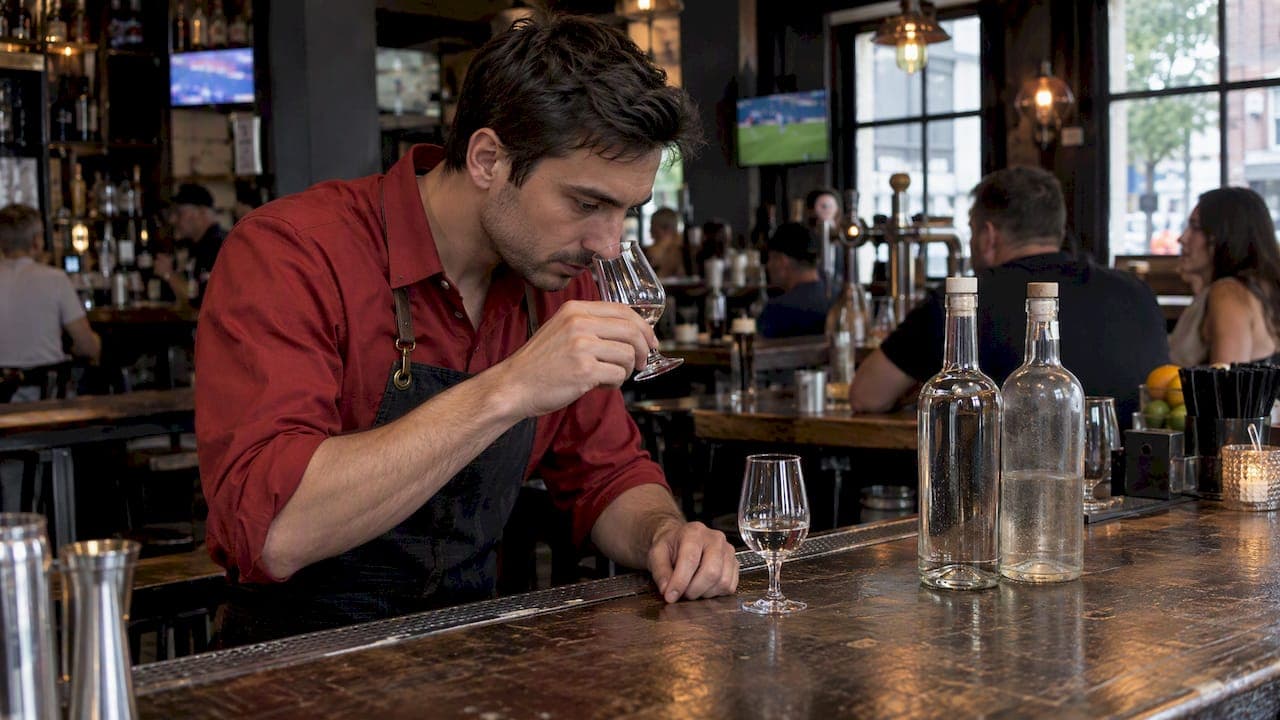
Side-by-side tastings show the same pattern: a blanco tequila disappears cleanly into citrus, while even a light mezcal leaves a smoky trail that lingers through the next sip.
Smoky mezcal holds its own next to grilled steaks and heavier plates, while a clean blanco tequila sits better alongside lighter dishes.
Both spirits can be poured neat for comparison before committing to a cocktail.
Why the mezcal movement matters for curious drinkers
Exploring mezcal's range of agave species supports small, often family-run producers and rewards a slower, more attentive way of drinking. It is also worth remembering that wild agave takes years to mature, so sustainable sourcing deserves a thought alongside the tasting notes.
— Leo
Taste both spirits side by side at Big Shots Amsterdam
We pour both spirits across our cocktail list, so a flight or a side-by-side pour is an easy way to find your preference without committing to a full bottle. Browse our menu for agave-based cocktails, or book a session through our lounge experiences page for a guided tasting.

If you are stocking a home bar instead, our partners at Whiteout Tequila put together margarita-focused picks worth a look.
FAQ
What is the difference in taste between mezcal and tequila?
Mezcal typically carries smoky, earthy, or mineral notes from pit-roasting, while tequila leans toward cooked-agave sweetness with citrus and pepper. The exact flavor depends heavily on agave species and whether the spirit is aged.
Is mezcal good for diabetics?
Agave spirits like mezcal and tequila contain no significant sugar once distilled, but anyone managing diabetes should check with a doctor before adding any alcohol to their diet. This is a medical question that depends on individual health factors, not something a bottle label can answer.
What are the different types of tequila?
Tequila comes in blanco or plata (unaged), reposado, añejo, and extra añejo, with aging time increasing through each category. It is also split between 100% agave tequila and mixto, which requires only 51% agave according to the Consejo Regulador del Tequila.
What is mezcal?
Mezcal is a Mexican agave spirit made under its own Denomination of Origin, permitting production across nine Mexican states and authorizing more than 40 agave species, as set out in NOM-070-SCFI-2016.
Sources
- Tequila vs. Mezcal: What’s the difference? | Food & Wine
- About Tequila | Consejo Regulador del Tequila
- NOM-070-SCFI-2016 Mezcal (English PDF)