
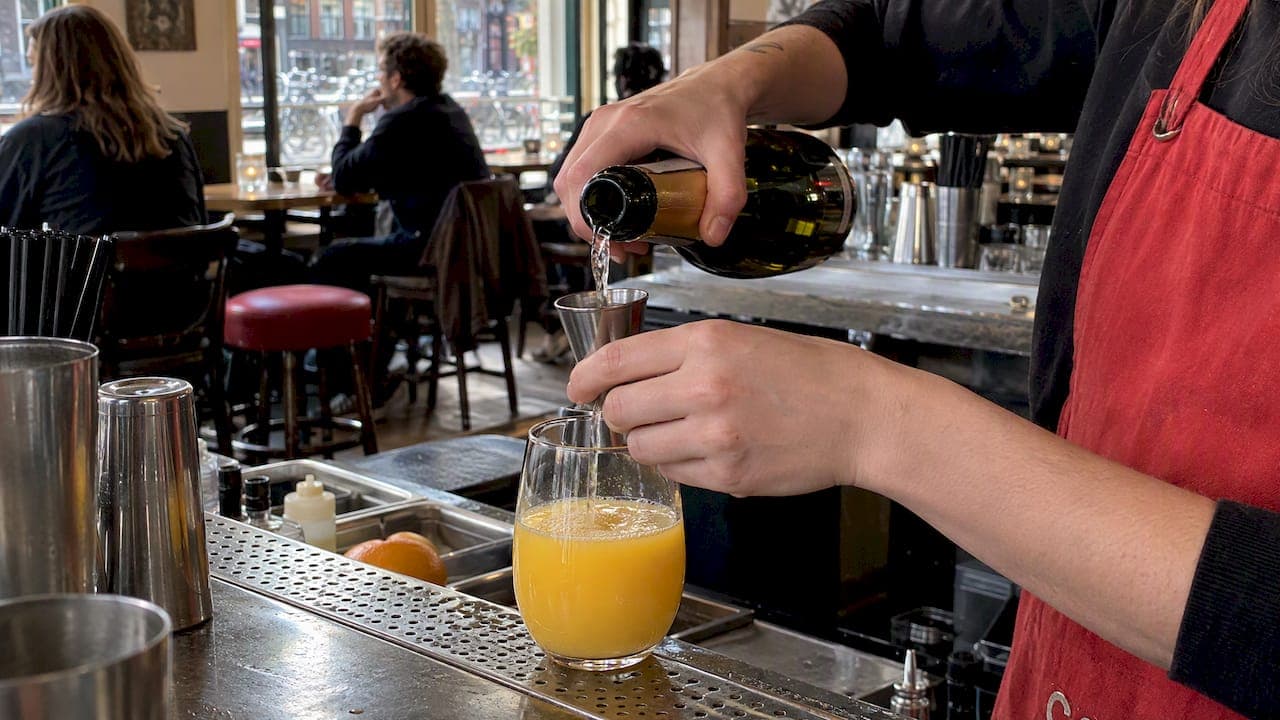
Your best breakfast cocktail picks are the mimosa for a bubbly celebration, a Bloody Mary when the table wants something savory, and an espresso martini or Breakfast Martini when coffee needs to join the party. From there, this guide covers classic recipes, spritzes, low-ABV and nonalcoholic swaps, food pairings and quick hosting tips so you can build a brunch menu that actually works.
TL;DR:
- Use equal parts fresh orange juice and chilled dry sparkling wine for a mimosa, then add more bubbles for a drier drink.
- Squeeze citrus the same morning, dissolve marmalade in lemon juice before shaking a Breakfast Martini, and add sparkling wine just before serving.
- To lower alcohol without shrinking a drink, halve the spirit and add soda water or dry sparkling wine; fruit shrub mixed with soda contains no alcohol.
- Pair bubbly, acidic drinks with buttery brunch dishes, sweeter cocktails with waffles, and savory tomato drinks with spiced hash or shakshuka.
Table of Contents
- 1. Classic brunch cocktails worth mastering
- 2. Spritzes and sparkling cocktails for a crowd
- 3. Coffee cocktails and warm brunch drinks
- 4. Low-ABV and nonalcoholic brunch cocktails
- 5. How to pick a cocktail that fits your brunch menu
- 6. Serving brunch cocktails at scale: notes from Big Shots Amsterdam
- 7. Where breakfast cocktails actually came from
- 8. Twists on the classics for different tastes
- 9. Swapping ingredients by season
- 10. Lighter versions for health-conscious brunch menus
- 11. Which signature drink fits your occasion
- Order brunch cocktails or book a lounge experience
- FAQ
- Sources
1. Classic brunch cocktails worth mastering
A handful of recipes anchor almost every brunch menu, and getting the ratios right matters more than any fancy technique.
- Mimosa: equal parts fresh orange juice and chilled dry sparkling wine, served in a flute with no garnish needed; you can adjust to a higher proportion of bubbles for a drier taste.
- Bloody Mary: vodka, tomato juice, lemon juice, Worcestershire and hot sauce, a pinch of celery salt, built over ice and garnished with a celery stalk.
- Bellini: white peach puree topped with chilled Prosecco or another dry sparkling wine, stirred gently so the bubbles survive.
- French 75: gin, lemon juice, simple syrup, shaken and topped with sparkling wine in a flute.
- Breakfast Martini: gin, lemon juice, orange liqueur and a bar spoon of marmalade, shaken hard and strained.
Fresh-squeezed juice makes a real difference in the mimosa and Bellini especially, since carton juice tends to carry more added sugar and a flatter flavor. Bartenders lean on bright, acidic, freshly squeezed juice specifically to keep brunch cocktails lively rather than tasting like dessert.
For a lighter spin on the Bloody Mary, swap half the vodka for beer and add a squeeze of lime to build a Michelada style drink with the same savory backbone but less alcohol per glass, an approach that several brunch cocktail collections treat as a staple alongside the classic Bloody Mary and mimosa.
The Breakfast Martini depends on how well the marmalade dissolves. Recipes built around marmalade or similar preserves note that the fruit's viscosity can leave clumps unless you pre-dissolve it with a splash of lemon juice before shaking, a tweak the original Breakfast Martini recipe calls for directly.
One drink in five served at brunch gatherings today skips alcohol entirely or uses a reduced-proof base, reflecting a broader shift toward lighter daytime drinking that shows up across the recipes below.
2. Spritzes and sparkling cocktails for a crowd
Sparkling drinks do the heaviest lifting at brunch because they stay light, refresh the palate between bites, and scale easily into pitchers.
- Aperol spritz: 3 parts dry sparkling wine, 2 parts Aperol, 1 part soda water, built over ice in a wine glass with an orange wheel.
- Elderflower and herb cooler: 1.5 oz gin, 0.75 oz elderflower liqueur, a few mint or basil leaves, topped with soda water and served long over ice.
- Rhubarb spritz pitcher: combine rhubarb syrup, dry sparkling wine and a splash of soda water at a roughly equal ratio, multiplied to fill a pitcher, and pour over ice to serve six.
Dry sparkling wines like Cava or crémant tend to mix better than sweet Prosecco because their acidity balances the syrups and liqueurs instead of stacking sweetness on sweetness. When scaling any of these into a pitcher, keep the sparkling component separate until just before serving so it doesn't go flat, and finish each glass with a fresh garnish rather than batching the citrus twist in advance.
3. Coffee cocktails and warm brunch drinks
Coffee-based cocktails round out a brunch menu for guests who want their caffeine and their cocktail in the same glass.
- Espresso martini: shake 1.5 oz vodka, 1 oz fresh espresso (cooled slightly), 0.5 oz coffee liqueur and 0.25 oz simple syrup hard and fast to build the crema; a double shot of espresso gives a stronger coffee note than a single if your guests want more bite.
- Irish coffee: stir 1.5 oz Irish whiskey and a spoon of brown sugar into hot coffee, then float lightly whipped cream on top instead of stirring it in.
- Make-ahead shortcut: batch the whiskey and sugar in advance so all you add at service is hot coffee and cream.
- Keep an eye on total caffeine across the table: pacing water and food between coffee cocktails helps guests avoid the jittery, dehydrated crash that can follow two or three espresso drinks back to back.
4. Low-ABV and nonalcoholic brunch cocktails
Not every guest wants a full-strength pour at 11 a.m., and a well-built low-ABV or alcohol-free option keeps the table together rather than splitting into two menus.
- Low-ABV swap: cut the spirit in a classic recipe by half and top with soda water or dry sparkling wine to keep the volume and the visual the same.
- Shrub mocktail: mix 1 oz fruit shrub (a vinegar-based fruit syrup) with soda water and a squeeze of citrus over ice for a tart, refreshing base with no booze.
- Ginger-lemon cordial soda: combine ginger-lemon cordial with club soda at a 1:3 ratio for a brunch-friendly nonalcoholic option that still feels built, not just poured from a can.
Low-alcohol and alcohol-free drinks have become a genuine category rather than an afterthought, with beverage directors citing them as a deliberate fit for daytime drinking. For more structured nonalcoholic ideas, our mocktail guide walks through a wider set of bases and garnishes.
Pro Tip: Keep one shrub or cordial on hand at all times: it turns into a mocktail with soda, a low-ABV spritz with a splash of wine, or a cocktail mixer with a full pour.
5. How to pick a cocktail that fits your brunch menu
Matching the drink to the food matters as much as the recipe itself.
- Bubbles and acid cut through fat, so pour a mimosa, Bellini or spritz alongside eggs Benedict, pastries or anything buttery.
- Reach for a sweeter, syrup-forward drink when the plate is already sweet, like French toast or waffles, so the flavors echo instead of clash.
- A Bloody Mary or Michelada stands up well to savory, spiced dishes, from hash to shakshuka.
- Batch the nonalcoholic mixers and juice bases the night before, but add carbonated elements only at the moment of serving.
Fresh juice loses brightness fast, so squeeze citrus the same morning rather than the night before, a detail covered in more depth in our guide to fresh juice in cocktails. For a fuller breakdown of which drinks go with which dishes, our food and drink pairings guide covers combinations beyond brunch. Pacing water alongside each round and spacing drinks across a few hours are practical steps recommended for reducing alcohol-related harm at any gathering that runs long.
6. Serving brunch cocktails at scale: notes from Big Shots Amsterdam
Running a venue with multiple service areas has taught us a few things about keeping brunch drinks consistent when the room is full.
- Batching the base (juice, syrup, spirit) ahead of service and adding carbonation only at the glass keeps every pour tasting like the first one.
- Coffee cocktails move fastest when the espresso is pulled fresh per order rather than held warm, since crema fades within minutes.
- We build our mocktail options around the same shrub-and-cordial bases featured in our blog, so sober guests get the same care as everyone else at the table.
7. Where breakfast cocktails actually came from
The mimosa traces back to the Ritz hotels of the 1920s, where pairing orange juice with Champagne turned an ordinary morning fruit into an occasion. The Bloody Mary followed a similar path: a savory, tomato-based drink built partly as a hangover remedy and partly as a way to make daytime drinking feel acceptable, eventually becoming a brunch fixture across American diners and hotel bars. The Bellini emerged from Harry's Bar in Venice, built on white peach puree and sparkling wine as a lighter alternative to straight Champagne.
Brunch itself grew into a social ritual largely because it blurred the line between a proper breakfast and a daytime party, and cocktails became the signal that the meal was more celebration than routine. The French 75, borrowed from an earlier cocktail era, found a second life at brunch because its citrus and bubbles fit the same late-morning mood. Coffee cocktails like the espresso martini came later, built for a crowd that wanted the ritual of brunch without giving up caffeine, and they now sit alongside the older classics as a fixture on most brunch menus.
8. Twists on the classics for different tastes
Once you know the base ratios, small swaps change the whole character of a drink without starting from scratch. Swap orange juice for grapefruit or blood orange in a mimosa for a tarter, more floral version. Add a few dashes of smoked paprika or a pickled vegetable garnish to a Bloody Mary for a smokier, more textured take. Replace the gin in a French 75 with bourbon for a warmer, oak-forward variation that still keeps the citrus and bubbles intact.
For the Breakfast Martini, orange marmalade is standard, but a ginger or fig preserve shifts the drink toward something spicier or earthier while keeping the same gin-and-citrus frame. Espresso martinis take well to flavored syrups like vanilla or hazelnut in place of plain simple syrup, giving the drink a dessert-like edge without changing the core ratio of vodka to espresso to liqueur.
9. Swapping ingredients by season
Brunch cocktails built around fresh fruit shift naturally with what's in season. Summer stone fruit like peaches and nectarines works in place of the classic white peach puree for a Bellini, while winter calls for blood orange or pomegranate juice in a mimosa for color and a sharper, more complex flavor than standard orange juice. Rhubarb, at its best in spring, makes a sharp, pink-tinted syrup for spritzes, and it fades out in favor of berry purees by midsummer.

Herbs shift too: basil and mint work well in warmer months, while rosemary or sage bring a heavier, more autumnal note to a gin-based cocktail. None of these swaps change the underlying ratio of spirit, acid and sweetener, they just change what fills the acid-and-flavor slot depending on what's fresh.
10. Lighter versions for health-conscious brunch menus
Cutting sugar and calories in a brunch cocktail usually starts with the juice and syrup rather than the spirit. Using fresh juice instead of bottled already trims added sugar, and cutting simple syrup by half in a recipe like the French 75 or Breakfast Martini keeps the balance intact while reducing overall sweetness. Topping drinks with soda water instead of a full pour of sparkling wine lowers both calories and alcohol per glass without losing the bubbly feel.

For dishes like the colorful, seed-based bowls and salads featured by Wild Foodz, a tart shrub mocktail or a low-ABV spritz fits the lighter, fresher tone of the plate better than a syrup-heavy classic. Dutch public-health guidance is direct about the fact that alcohol carries health risks at a population level, which is part of why moderate serving sizes and alcohol-free options belong on every brunch menu, not just the health-focused ones.
11. Which signature drink fits your occasion
For a celebration, pour bubbly. For a savory crowd, build a Bloody Mary bar. For a mixed group with different tastes and tolerances, a low-ABV spritz keeps everyone at the same table. Pick one, adjust the garnish, and let your guests take it from there.
— Leo
Order brunch cocktails or book a lounge experience
If you'd rather skip the shopping list and the shaker, our breakfast and drinks menu covers the classics above alongside the rest of our food lineup.

- Order through our delivery page when you want brunch cocktails and food brought straight to you.
- Book one of our lounge experiences for a group brunch without the prep work.
- Browse our merch if you want to take a bit of the venue home with you.
FAQ
What's a good cocktail for breakfast?
A mimosa, Bellini or Bloody Mary are the most reliable breakfast cocktail choices because they're light, food-friendly and quick to batch for a group. An espresso martini works well too if coffee is part of the morning ritual.
What alcoholic drink is best for breakfast?
Dry sparkling wine, whether on its own or mixed into a mimosa or Bellini, tends to suit breakfast best because its acidity cuts through rich or fatty dishes rather than sitting heavy. A Bloody Mary is the better pick when the table leans savory.
What is a good morning alcoholic beverage?
Lighter, lower-ABV drinks like a spritz or a Michelada work well in the morning since they deliver flavor without the heaviness of a full-strength pour. Many hosts now build at least one low-ABV or alcohol-free option into the morning lineup alongside the classics.
What are 10 popular breakfast drinks?
Mimosa, Bloody Mary, Bellini, French 75, Breakfast Martini, espresso martini, Irish coffee, Aperol spritz, Michelada and a shrub-based mocktail cover the range from bubbly to savory to caffeinated. Recipe collections consistently feature this same core set as the backbone of most brunch menus.
Sources
- How to Find Your Signature Brunch Sip — Food & Wine
- 36 Brunch cocktail recipes — BBC Good Food
- Alcohol en gezondheid in brede zin — Gezondheidsraad (summary)
- Breakfast Martini — Difford's Guide
- Responsibility