
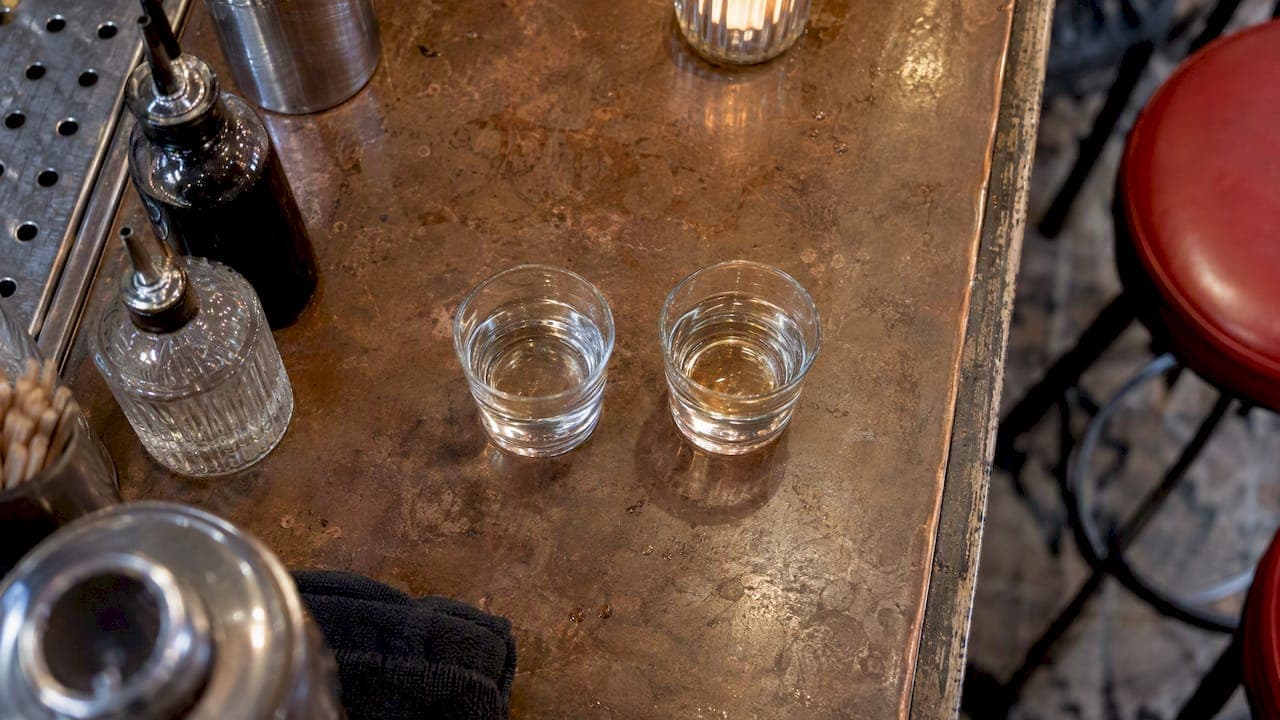
Genever (also spelled jenever) is the older, grain-based Dutch spirit that gin grew out of. Gin is built on a neutral spirit and driven by botanicals, with juniper in front. Genever is built on malt wine, a distillate of grains like rye, corn and malted barley, so it tastes rounder, maltier and closer to a light whisky. Both use juniper. They are not the same drink, and you should not treat them as interchangeable.
Below you will find the exact differences, what the labels mean, how to drink each one, and how to order them when you are in Amsterdam.
TL;DR
- Base spirit: genever is made with malt wine from grains, while most modern gin starts from a neutral grain spirit infused with botanicals.
- Flavor: gin is juniper and botanical forward. Genever is malty, fuller and often gentler on the juniper.
- Labels: "jonge" (young) and "oude" (old) describe style and malt wine content, not age.
- Serving: genever is traditionally sipped neat from a tulip glass, often with a beer. Gin is the classic G&T base.
- Health: neither is a safe choice in the sense of zero risk. The WHO says no level of alcohol consumption is safe for cancer prevention.
Table of Contents
- Where the two spirits come from
- How they are made
- Jonge, oude and korenwijn: what the labels mean
- What each one tastes like
- How the Dutch drink genever
- Which one in a cocktail?
- Our perspective at Big Shots
- How to order in Amsterdam
- Drinking it, and the health facts
- Drink and eat with us
- FAQ
- Sources
Where the two spirits come from
Genever is the ancestor. Bols describes genever as the older of the two, originating in the Netherlands and built on a malt grain base. Modern gin styles were born when English distillers tried to replicate Dutch genever. That is why genever is often called the godfather of gin, and why Hooghoudt, a Dutch distiller, calls it the predecessor of the style we now know as London Dry Gin.
The name itself tells the story. According to the Oxford Companion to Spirits & Cocktails, the word comes from the French for juniper berry, and in modern Dutch it is spelled jenever. The English word gin is a shortened form of the same root. You will see genever, jenever, Hollands and even "Dutch gin" in the wild, as Wikipedia's overview of jenever lists.
There is also a legal difference. Genever is a protected geographical indication. According to the same overview, it can only be produced in the Netherlands, Belgium and limited areas of France and Germany. Gin has no such regional restriction and can be made anywhere.
How they are made
This is the real dividing line.
Genever is based on malt wine. Think of a mash of grain, fermented and distilled much like an unaged whisky. Difford's Guide explains that genever is a bridge between whisky and gin. Juniper is obligatory in genever as it is in gin, but genevers generally contain less of it.
Gin is, in most cases, a neutral grain spirit, closer to vodka, that is flavored with botanicals. Juniper must lead, but the producer chooses everything else. As a Dutch consumer program points out, one gin can taste of lemon and another of flowers, herbs or even licorice, depending on the botanicals.

So the shorthand is simple. Gin is defined by its botanicals. Genever is defined by its grain.
Side by side
| Gin | Genever | |
|---|---|---|
| Base | Neutral grain spirit | Malt wine blended with neutral spirit |
| Lead flavor | Juniper and botanicals | Malty grain, softer juniper |
| Texture | Light, crisp | Fuller, rounder |
| Origin rule | Can be made anywhere | Protected: NL, BE, parts of FR and DE |
| Classic serve | Gin and tonic, Martini | Neat in a tulip glass, with beer |
| Best in cocktails | Long drinks, shaken and stirred | Short, stirred drinks |
Jonge, oude and korenwijn: what the labels mean
This is where most visitors get confused. "Jonge" means young and "oude" means old, but neither is about time in a barrel. They describe how much malt wine is in the bottle.
According to the Oxford Companion, the rules look like this:
- Jonge jenever: 1.5% to 15% malt wine. It makes up 98% of the Dutch genever market.
- Oude jenever: at least 15% malt wine, richer and more complex.
- Korenwijn: at least 51% malt wine, the luxury style.
All of these need a minimum of 35% ABV, and 38% for korenwijn, per the same entry. Glazen.nl's guide to jenever makes the same point: young and old have nothing to do with age. Only bottles that state an age, such as 5 or 10 years, have matured in wooden casks.
In practice, a jonge is lighter and more neutral, which makes it the easiest first step for a gin drinker. An oude or korenwijn is where the whisky comparison starts to make sense. If you love a good unaged malt or a grain-forward bourbon, start there.
What each one tastes like
Gin: expect pine and citrus first, then whatever the producer added: coriander, orange peel, cucumber, floral notes. The finish is clean and crisp.
Young genever: subtle and soft. Think a hint of grain, a gentle sweetness and juniper in the background.
Old genever and korenwijn: bread-like, nutty and malty, with a rounder body. Some are lightly oaky or smoky, but only the aged bottles have seen wood.
The tasting difference is clearest when you taste them neat, side by side, at room temperature. Gin is best cold. Genever, particularly oude, gets more interesting as it opens up in the glass.
How the Dutch drink genever
The classic way is neat from a tulip-shaped glass filled to the brim. You lean down and take the first sip without lifting the glass, which keeps the table dry. Bols notes that it is often served with a beer in a ritual called a kopstoot, or headbutt. The beer is sipped alongside to refresh the palate and bring out the malty notes. Matador Network describes how the pairing of a beer with a tulip glass of genever is still served in old Amsterdam bars.

A word of care here. A kopstoot puts two alcoholic drinks in front of you at once. If you are new to genever, order a single glass first, drink water between rounds and skip the beer if you are driving, cycling or heading home alone late. The WHO is clear that alcohol is classified as a carcinogen, and the tradition does not change the risk.
For a deeper look at the culture, see our piece on jenever's role in Dutch drink culture.
A slow pour deserves a slow evening
Old genever and korenwijn are sipping spirits, the kind you let sit through a long conversation. Some people like to pair that pace with a cigar, and if that is you, a curated option such as these cigar sampler packs can help you try a few styles before committing to a box. Smoking carries its own health risks, so keep it occasional and follow the rules of wherever you are drinking.
Which one in a cocktail?
Do not swap genever for gin one-to-one. Experts note that, because of its malt-heavy profile, genever acts more like a base spirit with texture, similar to a light whisky. That is why it shines in stirred, short drinks rather than a standard gin and tonic, as the Oxford Companion notes.
A simple rule set:
- Use gin for a G&T, a Negroni, a Martini, a Tom Collins or anything bright and long.
- Use jonge genever if you want a gentle, grainy twist on a gin drink. Keep the mixers light.
- Use oude genever in an Old Fashioned-style build: a little sugar, bitters, a big ice cube, stirred.
- Sip korenwijn neat. Mixing it hides what you paid for.
If you want the logic behind stirring versus shaking, our test of shaken vs stirred drinks walks through it. And for the wider menu of options, our guide to every cocktail type covers classics and Amsterdam originals.
Our perspective at Big Shots
We run a sports bar, shisha lounge, restaurant and café across three central Amsterdam venues, and the gin versus genever question comes up at our tables more than you might expect. Visitors usually arrive thinking genever is just Dutch gin. Locals know better, and they tend to have strong opinions about it.
Our view is practical. Treat the two as different tools. When a group of friends wants a long, refreshing drink during a match, gin is the easy call. When someone wants to slow down over dinner or after a steak, a glass of genever is a more interesting choice, because the grain character matches grilled meat and richer dishes in the same way a malt whisky would.
We also think the best way to learn the difference is to taste, not to read. Ask for a jonge and an oude, take small sips, and notice how the body changes. That is a better lesson than any label. And we would rather you leave knowing what you liked than tick a tradition box. Pace yourself, eat something, and have water alongside.
— Leo
How to order in Amsterdam
A few steps make it easy.
- Ask for a "jonge" or an "oude" by name. Staff will know what you mean, and it shows you understand the labels.
- Start with a single glass. Genever is typically served full to the brim, so a first pour can be generous.
- Taste neat before you mix. Even if you plan to have it in a cocktail, one neat sip tells you what the spirit brings.
- Pair with food. Genever works with savory dishes. Tapas, burgers and steaks are all natural partners for a malt-forward spirit.
- Mind the venue rules. Whether you smoke or not, check the house rules for indoor areas before you settle in.
If you are exploring beyond genever, our list of best drinks to try in Amsterdam gives more local ideas, and our look at why Amsterdam mixologists are so talented explains why a craft cocktail here is worth seeking out. If you prefer to skip alcohol, see our Amsterdam mocktail guide.
Drinking it, and the health facts
It is easy to read about heritage spirits and forget the basics. The WHO states that when it comes to alcohol, no level of consumption is safe for health. Cancer risk, including cancers of the mouth, esophagus, liver and breast, rises from the first drop, whatever the drink is. The same source reports that around half of alcohol-attributable cancers in the WHO European region occur in people who do not count as heavy drinkers.
The Dutch guidance is stricter than many visitors expect. The Netherlands' Health Council advises adults not to drink alcohol, or at most to limit intake to one glass per day. Gin and genever are both spirits of similar strength, so neither is a lighter option in health terms. If you have a medical condition, are pregnant, or take medication, talk to your doctor (huisarts in the Netherlands) before drinking at all.
The practical takeaway: choose quality over quantity. A single well-made glass of oude genever, sipped slowly with food, fits that idea far better than a round of kopstoten.
Drink and eat with us
If you would like to try both spirits in the same evening, come to Big Shots Amsterdam. Our menu runs from breakfast, tapas and soups to steaks, burgers, pizza and pasta, plus drinks. If you prefer a slower night, see our lounge experiences. Can't make it out? We also offer delivery, and you can find our merch online. For a look at what is on across our venues, see our guide to bar entertainment in Amsterdam, or read about bar dining in the city.
If you also enjoy dark spirits, our comparison of whiskey and bourbon is a natural next read, since oude genever shares so much with them.
FAQ
Is genever just Dutch gin?
Not quite. Genever is the older spirit, and it is made with malt wine from grains, while most gin is a neutral spirit flavored with botanicals. It is sometimes nicknamed Dutch gin, but its taste is maltier and closer to a light whisky.
Can I use genever instead of gin in a cocktail?
Sometimes, but not one-to-one. Genever has more body and grain character, so it works best in short, stirred drinks. In a gin and tonic, the malt can clash with the tonic, so a young genever is the safer pick if you want to try.
Does "oude" jenever mean it is aged?
No. Oude means the style has at least 15% malt wine, not that it spent years in a barrel. Only bottles that state an age, such as 5 or 10 years, have matured in wood.
How do the Dutch drink genever?
Traditionally neat, from a tulip glass filled to the brim, often with a beer on the side in a kopstoot. Sip slowly, and consider one glass rather than a pairing if you are new to it, since both drinks are alcoholic and the WHO says no level of alcohol is risk-free.
Sources
- Jenever, Wikipedia
- Genever, The Oxford Companion to Spirits & Cocktails
- Genever vs gin: the difference explained, Bols
- Genever vs Korenwijn: Styles, Production, Serving, Difford's Guide
- Jenever: young, old, korenwijn, and the right glass, Glazen.nl
- Jenever vs Gin, Hooghoudt
- Wat is het verschil tussen jenever en gin?, KRO-NCRV
- History of the Kopstoot and Where to Drink in Amsterdam, Matador Network
- No level of alcohol consumption is safe for our health, WHO Europe
- Joint statement by WHO/Europe and IARC, raising awareness of the link between alcohol and cancer