
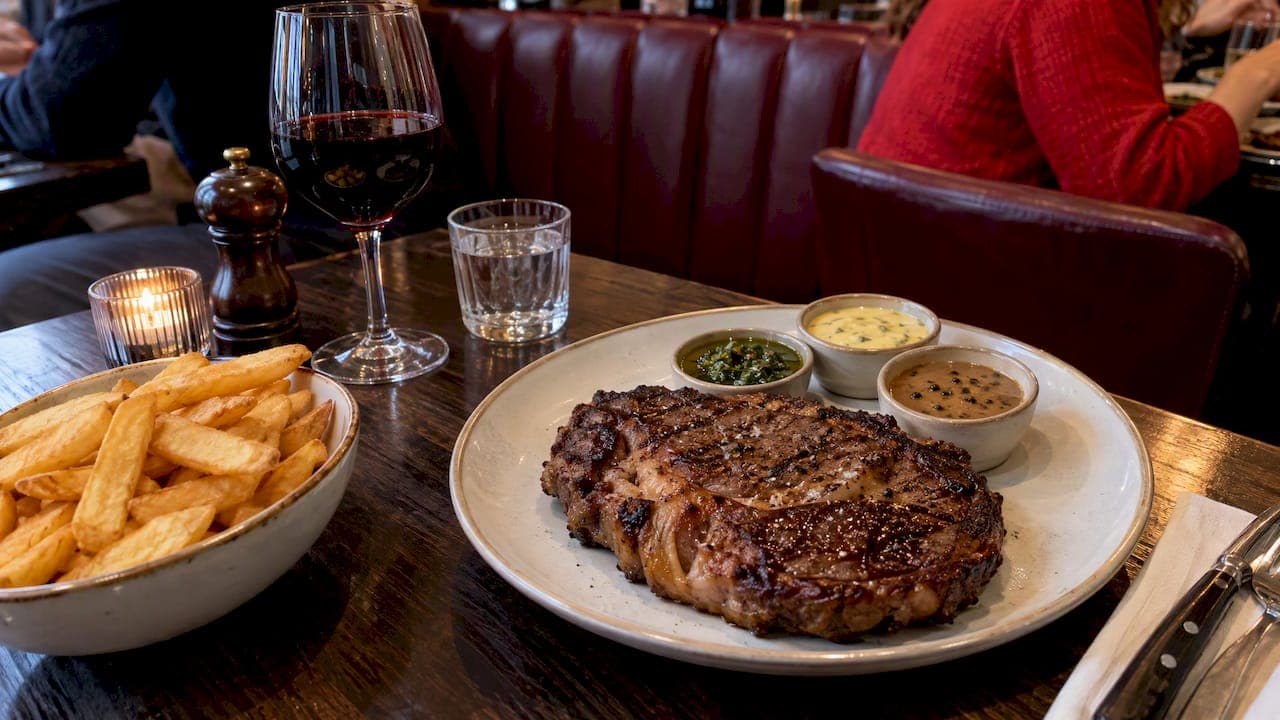
The best sauce for a steak is the one that balances the cut. Rich, fatty beef like ribeye wants something sharp and bright. Lean beef like filet mignon wants something rich and soft. Get that one idea right and almost every pairing below follows from it.
This guide walks through the classic sauces, which cuts they suit, when a bottled sauce is fine, and how to serve two or three sauces to a table of friends.
TL;DR
- Match opposites: fatty cuts (ribeye, wagyu) need acid or heat; lean cuts (filet, tenderloin) need richness.
- Ribeye and grilled skirt steak: chimichurri, salsa verde or horseradish. Filet: béarnaise or mushroom sauce. Strip: peppercorn or chimichurri.
- Bottled sauces such as A.1., Worcestershire or HP rescue lean or overcooked steaks, but they can mask a premium, dry-aged cut.
- For a group, put out three contrasting sauces: one rich, one bright, one bold.
Table of Contents
- The one rule behind every good pairing
- Quick pairing chart by cut
- Sauces for ribeye
- Sauces for filet mignon
- Sauces for strip, T-bone and other cuts
- What about A.1., Worcestershire and HP?
- Get the steak right first
- Building a sauce board for a group
- Pairing sauce with what you drink
- Our view: let the table decide
- Eating steak in Amsterdam
- FAQ
- Sources
The one rule behind every good pairing
A steak has two variables: how much fat it carries and how strong its flavor is. A sauce is there to correct the imbalance, not to cover the meat.
Meat Pairing's guide to steak sauces puts it simply: lean, mild cuts such as filet mignon and tenderloin benefit from richer sauces like béarnaise or mushroom, while bold, fatty cuts such as ribeye and wagyu need acid, heat or brightness to keep the richness in check. The same guide notes that a delicate filet can disappear under an aggressive chimichurri.
That is the same logic behind choosing what to drink with food. If you like thinking in terms of weight and intensity, matching food by flavor weight works the same way: light with light, bold with bold, or contrast where richness needs cutting.
A quick mental check before you pick a sauce:
- Is the cut fatty or lean? Fatty means choose acid. Lean means choose richness.
- How is it cooked? Char from a grill or a hot pan handles herbs and vinegar well. A gently cooked steak suits creamy or buttery sauces.
- How good is the beef? The better the meat, the lighter the touch.
Quick pairing chart by cut
| Cut | Character | Sauces that work | Why |
|---|---|---|---|
| Ribeye | Rich, heavily marbled | Chimichurri, salsa verde, horseradish cream | Acid and heat cut through the fat |
| Filet mignon | Lean, tender, mild | Béarnaise, mushroom sauce, compound butter | Adds the richness the cut lacks |
| New York strip | Balanced, firm bite | Peppercorn, chimichurri, red wine reduction | Holds up to bold flavors without needing rescue |
| Skirt or flank | Lean but intensely beefy | Chimichurri, salsa verde | Fresh herbs match the grilled flavor |
| T-bone or porterhouse | Two textures in one | Beurre rouge or chimichurri | Works for both the strip side and the tenderloin side |
| Overcooked or budget steak | Dry, less flavor | A.1., Worcestershire, HP, mushroom sauce | Moisture, sweetness and umami make up the difference |
The cut-by-cut matches follow the ranking in the Meat Pairing guide; the last row follows the point made in this look at bottled steak sauces.
Sauces for ribeye
Ribeye is the cut people ask about most, and for good reason: it is rich enough to need help.
Chimichurri
The Argentinian classic is made from parsley, garlic, oregano, red wine vinegar and olive oil. It is raw, green and sharp, and it gives grilled ribeye or skirt steak a fresh zing that cuts through the fat. Meat Pairing notes it is traditionally uncooked and tastes better after resting at least 30 minutes, so make it before you start the grill.
Salsa verde
A close cousin: herbs, capers, anchovy and olive oil, with a salty, briny edge. It is a little more savory than chimichurri and very good on a thick, charred ribeye.
Horseradish cream
Horseradish gives heat without sweetness, and the cream softens it. If you find vinegar-based sauces too sharp, this is the alternative that still keeps the fat in check.
What about dry-aged ribeye?
If the steak is dry-aged, hold back. Its nutty, concentrated flavor is the point. A few drops of a light herb sauce, or just salt and a squeeze of lemon, is enough. If you are curious about what you are paying for, our piece on what a dry-aged steak is and whether it is worth the price explains it.
Sauces for filet mignon
Filet is tender but mild. It has little fat of its own, so the sauce supplies it.
Béarnaise
An emulsion of clarified butter, egg yolks, vinegar and tarragon. Meat Pairing calls it widely considered the king of steakhouse sauces, and it fits filet best because it adds both richness and herbal complexity. If you have only one sauce to make for a filet, make this one.
Mushroom sauce
Cream, shallots and browned mushrooms give an earthy, savory sauce that supports the beef rather than competing with it. It is also forgiving if the steak goes a little past medium-rare.
Compound butter
Parsley, garlic, anchovy, or red wine and shallot butter melts over a hot steak in seconds. It is the easiest sauce on this list: mix, roll, chill, slice.
Sauces for strip, T-bone and other cuts
Peppercorn sauce
Sauce au poivre brings warmth and a little cream. It is bold enough to stand up to a New York strip, which has a firmer bite and a more assertive flavor than filet. It is the sauce that most often appears beside béarnaise and chimichurri in a classic steakhouse trio, according to Meat Pairing.
Red wine reduction
Wine, shallots and stock reduced until glossy. It adds acidity and depth and suits strip, ribeye and filet alike. A Dutch restaurant guide from Amsterdams Dagblad makes a similar point about ordering steak in Amsterdam: a good steak needs little sauce, and it names béarnaise and red wine among the options.
Steak frites and fries
If the steak comes with fries, your sauce also has to work for dipping. Mayonnaise-based sauces, peppercorn and béarnaise are the usual candidates. Tasting Table has a chef's take on the definitive sauce for steak frites.

What about A.1., Worcestershire and HP?
Bottled sauces get a bad reputation among steak purists, but they have a job. They combine sweetness, acidity and umami in one spoonful, which helps a leaner, budget or slightly overcooked steak.
The caution, noted in this guide to the best steak sauces, is that experts advise against them on premium, well-marbled beef such as dry-aged ribeye, where they cover the flavor you paid for. The practical rule: taste the steak first. If it is already great, skip the bottle. If it is a bit dry, reach for it without guilt.
Get the steak right first
No sauce rescues a badly cooked steak. Two things matter most.
Season simply. Gordon Ramsay's method, as described on this seasoning guide, uses only coarse sea salt and freshly cracked black pepper before cooking. He leaves out garlic powder and spice blends because they burn at high heat and turn bitter, and adds fresh garlic, thyme and rosemary only after the crust has set, basting in foaming butter.
Mind the doneness. The same source describes the 3-3-3 guideline for a 1-inch steak: 3 minutes of searing per side, 3 minutes of indirect heat per side, then a 3-minute rest. Treat it as a starting point, because thickness and heat change the result. Our steak doneness chart with the 54°C medium-rare target gives you pull temperatures to cook by.
A medium-rare steak with a proper crust needs less sauce than an overdone one. That is why a sauce is best served on the side, so each person decides how much.

Building a sauce board for a group
When friends share steaks, the easiest approach is to serve two or three sauces and let everyone mix. Meat Pairing suggests a trio of contrasting styles:
- Rich: béarnaise or a compound butter
- Bright: chimichurri
- Bold: peppercorn sauce or horseradish
This works at a table because every cut on it finds a partner. The person with the filet takes the béarnaise, the ribeye eater goes for chimichurri, and everyone tries the peppercorn.
Some practical tips:
- Small bowls, small spoons. Nobody wants a double-dipped sauce.
- Keep the strongest sauce for last. Taste mild to bold.
- Add something to cleanse the palate. Acidic or bitter sides help: asparagus, green beans, a lemon or balsamic finish all cut through the richness, as Land & Sea notes for côte de boeuf.
- Ready-made options help. If you are hosting at home and short on time, quick light sauces can be made in minutes; these light bowl sauces show how fast a few contrasting dips come together for guests to sample.
Pairing sauce with what you drink
Sauce and drink should agree. A creamy béarnaise or mushroom sauce sits well with a softer red, while a sharp chimichurri or a peppery sauce wants something with more structure. We go deeper in our guide on Merlot versus Malbec, and our food and drink pairings list covers more combinations. For the thinking behind it, see why alcohol pairing enhances dining.
Some people prefer to skip wine. Coffee also pairs with food by intensity, and these coffee and food pairing examples show how the same weight-matching idea carries over.
Our view: let the table decide
We run a sports bar, shisha lounge, restaurant and café at three central venues in Amsterdam, so most of the people we feed are not sitting alone with a single plate. They are a group of friends watching a match, a couple on a slow evening, or tourists sharing everything in the middle.
That shapes how we think about sauce. The "right" sauce depends less on a rulebook than on who is at the table and how they like to eat. Someone who wants heat should have it. Someone who likes a creamy sauce should not be talked out of it.
What we do believe is this: start with the cut, taste the steak before you sauce it, and keep the sauce on the side. Sauce should make a good steak better, not hide it. And when a table is sharing, variety wins. Two or three contrasting sauces will start more conversation than any one perfect one.
— Leo
Eating steak in Amsterdam
If you would rather have someone else do the cooking, you can see our steaks, burgers, pasta, tapas and more on the Big Shots Amsterdam menu. Prefer to eat at home or in your hotel? Our delivery page has the ordering options. And if the evening should go on after dinner, our lounge experiences are there for that.
For more on the local scene, read a foodie's guide to Amsterdam's best steak restaurants and why steak does so well on bar menus in Amsterdam's nightlife.
FAQ
What sauces complement steak well?
The classics are béarnaise, chimichurri, peppercorn sauce, red wine reduction, horseradish cream and compound butters. Which one is best depends on the cut: rich sauces for lean steaks like filet, acidic or spicy ones for fatty steaks like ribeye. Bottled sauces such as A.1. work best on leaner or overcooked steaks.
What is the 3-3-3 steak rule?
It is a grilling guideline for a steak about 1 inch thick: sear 3 minutes per side, cook 3 minutes per side over indirect heat, then rest 3 minutes. It aims at a crust and an even medium-rare center, according to this seasoning and cooking guide. Thicker or thinner steaks and different heat levels change the timing, so check with a thermometer.
What does Gordon Ramsay put on his steak?
He seasons with coarse sea salt and freshly cracked black pepper, nothing else before cooking. Fresh garlic, thyme and rosemary go in later, when he bastes the steak in butter once the crust has formed, as described here.
Should I put sauce on a dry-aged steak?
Usually only a little, if any. Experts quoted by Sporked advise against strong bottled sauces on premium, well-marbled cuts because they mask the beef. If you want something, choose a light herb sauce or a pat of butter on the side.
Sources
- Best Sauces for Steak: 12 Pairings Ranked by Cut, Meat Pairing
- Best Steak Sauce, Sporked
- Gordon Ramsay Steak Seasoning Recipe
- BBQ, grill en steakhouse restaurants in Amsterdam, Amsterdams Dagblad
- What to Serve with Côte de Boeuf, Land & Sea
- The Definitive Best Sauce for Steak Frites, Tasting Table