
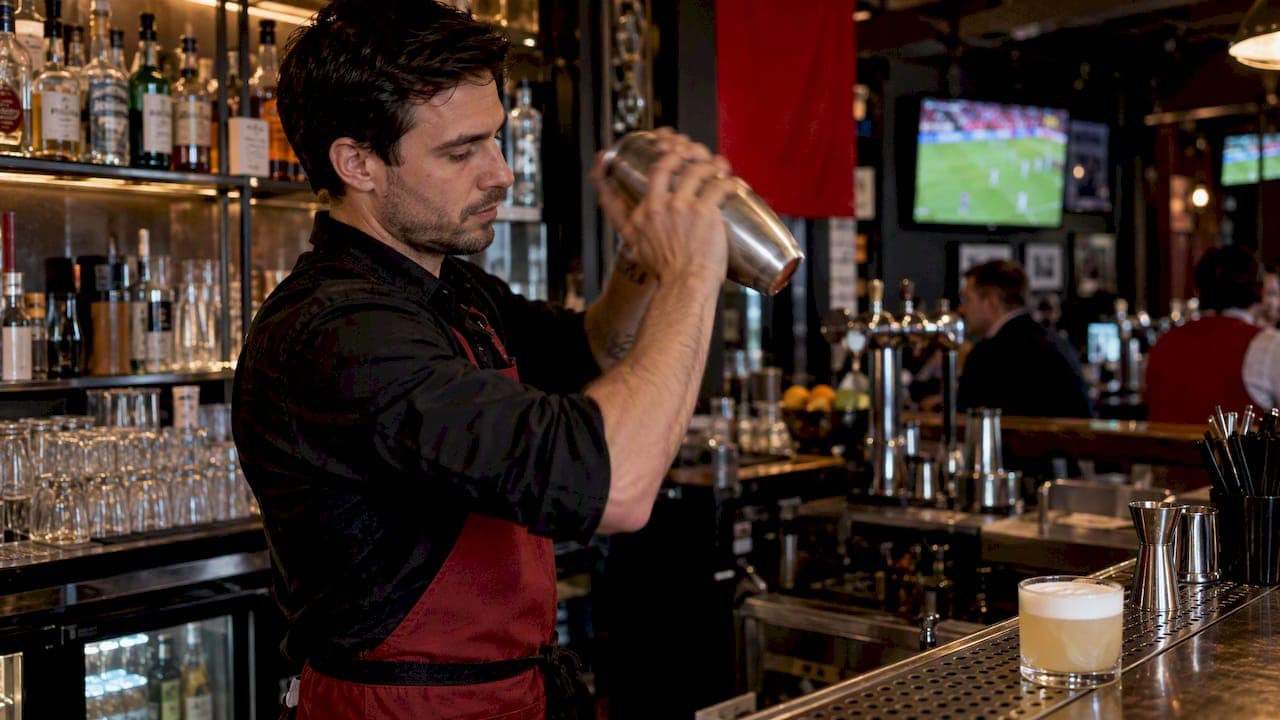
Egg white in a Whiskey Sour is optional but worth adding: it builds a silky, stable foam without changing the drink's flavor. The International Bartenders Association lists the canonical ratio as 45 ml bourbon, 25 ml fresh lemon juice, and 20 ml sugar syrup, with a few drops of egg white as an optional add. Getting that foam right comes down to one technique: a dry shake followed by a wet shake, a method taught in many cocktail bars and academies.
TL;DR:
- Dry shake egg white without ice for 10–45 seconds, then add ice and shake for 10–15 seconds before double straining into a chilled glass.
- For a vegan version, use about 30 ml of aquafaba per egg white and dry shake for the full 45 seconds; its foam is usually lighter.
- Keep raw eggs refrigerated and use them fresh to reduce salmonella risk; pasteurized liquid egg whites avoid raw egg but may need a larger pour.
- If foam collapses quickly, reduce lemon by 5 ml or shorten the wet shake; curdled texture signals excessive dry shaking, so reduce its duration.
- Bourbon gives the sour a sweeter, rounder profile and matches the classic recipe, while rye creates a drier, spicier drink with the same ratios.
Table of Contents
- The classic Whiskey Sour recipe with egg white
- Dry shake vs. wet shake: timing and the science behind the foam
- Is it safe, and what are the egg-free alternatives?
- Troubleshooting weak foam, fast collapse, and curdled texture
- Equipment, glassware, and garnish for a bar-quality finish
- What bartenders notice that home mixers miss
- Tips for selecting the best egg white for your sour
- Bourbon vs. rye: how the spirit changes the drink
- Why technique matters more than the recipe itself
- Want to taste one before you try it at home?
- FAQ
- Sources
The classic Whiskey Sour recipe with egg white
A proper Whiskey Sour needs only four ingredients, measured with a jigger rather than eyeballed. The IBA recipe calls for:
- 45 ml bourbon
- 25 ml fresh lemon juice
- 20 ml sugar syrup
- Few drops of egg white (optional)
Here is the method we follow, step by step:
- Add the bourbon, lemon juice, sugar syrup, and egg white to a shaker with no ice.
- Dry shake for a time within the commonly recommended range to start building the foam.
- Add ice, seal the shaker, and wet shake for a duration typical for chilling and dilution.
- Double strain into a chilled glass through both the shaker's built-in strainer and a fine mesh strainer.
- Garnish and serve immediately, before the foam settles.
Two easy variations are worth knowing. A New York Sour floats a splash of dry red wine on top of the finished drink, adding color and a tannic edge. For a sweeter or tarter pour, nudge the syrup or lemon by 5 ml in either direction. If you want more background on sour-format drinks and their offshoots, our guide to cocktail types covers how the format branches into other classics.
Dry shake vs. wet shake: timing and the science behind the foam
The dry shake, shaking without ice, is the step that actually builds foam. Shaking with ice afterward, the wet shake, chills and dilutes the drink but does little for texture on its own. According to a study on dry shake technique and protein denaturation, dry shake times commonly range from 10 to 45 seconds, followed by a wet shake of about 10 to 15 seconds.

Dry shaking for 10 to 45 seconds partially unfolds egg white proteins so they trap air and stabilize into foam. Egg white is mostly water and protein, with ovalbumin making up roughly 54% of that protein content, and partial denaturation is what you want: it lets the proteins form a stretchy film around air bubbles. Over-denaturation, from shaking too hard or too long, breaks that film down and produces a curdled texture instead.
A few practical notes make the difference between flat and bar-quality foam:
- Fill the shaker no more than half full during the dry shake so there's room for air to incorporate.
- Shake with real force, not a gentle rock, since weak agitation rarely builds enough structure.
- A reverse dry shake, shaking with ice first, removing it, then dry shaking, can give a finer, more stable foam on high-acid sours.
Successful foam sits as a thick, off-white cap that holds its shape for a minute or two rather than dissolving on contact with the glass.
Is it safe, and what are the egg-free alternatives?
Raw egg white carries a small salmonella risk, so freshness and proper refrigeration matter more than most home bartenders realize. Using eggs that are well within date and kept cold until use lowers that risk considerably. For anyone who wants to skip raw egg entirely, pasteurized liquid egg whites are a direct swap, sold in cartons at many supermarkets, though they sometimes need a slightly larger pour to match the foam you'd get from a fresh egg.
Aquafaba, the starchy liquid from canned chickpeas, is the standard vegan substitute. The swap is simple:
- Use about 30 ml of aquafaba in place of one egg white.
- Expect to dry shake a touch longer, since aquafaba's proteins take more agitation to build structure.
- The resulting foam is usually a little lighter and less dense than egg white foam, but still holds a clean cap.
Pro Tip: If you're using aquafaba, dry shake for the full 45 seconds rather than stopping at 15, since it's slower to build structure than egg white.
Troubleshooting weak foam, fast collapse, and curdled texture
Most foam problems trace back to one of three causes, and each has a quick fix.
- No foam at all: extend the dry shake, check that your egg is fresh (or switch to pasteurized whites or aquafaba), and confirm the shaker tin is fully sealed before you start.
- Foam that collapses within a minute: the drink may be too acidic or too diluted. Trim the lemon by 5 ml, or follow a firm dry shake with a shorter wet shake to limit extra dilution.
- Curdled or scrambled texture: this is almost always over-denaturation from shaking too hard or too long. Shorten the dry shake, keep the wet shake gentle, and fine-strain through a tea strainer to catch any small coagulated bits.
Pro Tip: When foam looks thin, the fix is almost never more egg white. It's more shake time.
Acidity plays a bigger role in foam stability than most people expect: very acidic sours deflate faster, so a touch more syrup can buy the foam a few extra minutes on the table. For more shaking fundamentals, our beginner cocktail techniques guide walks through building shake confidence from scratch.
Equipment, glassware, and garnish for a bar-quality finish
The right tools make foam easier to build and easier to present. A Boston or cobbler shaker seals tightly, which matters for the dry shake, while a fine mesh strainer catches the small bits a double strain is meant to remove. A jigger keeps your ratios exact, and a handheld citrus squeezer gets more juice out of each lemon than squeezing by hand.
- Serve in a coupe for a classic look, or an old-fashioned glass over fresh ice for a more casual pour.
- Keep the drink cold going into the glass. The wet shake should chill it close to serving temperature already.
- Dash 2 to 3 drops of aromatic bitters onto the foam and drag a toothpick through them for a simple pattern.
- Finish with an orange peel or a Luxardo cherry for aroma and color.
For more finishing touches, our cocktail garnish guide covers a short list of garnishes worth keeping stocked at home.
What bartenders notice that home mixers miss
Texture is where most home-made Whiskey Sours fall short, not flavor. A sour with correct ratios but a flat, thin foam tastes fine but reads as unfinished the moment it hits the glass. At Big Shots Amsterdam, a multifaceted hospitality venue combining a sports bar, shisha lounge, restaurant, and café, cocktails get shaken with real force and timed by feel rather than guesswork, which is the habit that separates a passable sour from a memorable one.
The drink should land at the table cold but not watered down, foam intact, aromatics still lifting off the surface. If you're curious how that finish comes together in person, it's worth tasting one made to order before you judge your own attempts too harshly.
Tips for selecting the best egg white for your sour
Freshness matters more for foam than for food safety alone. Older egg whites are thinner and have started to break down structurally, which means they whip up with less volume and a less stable foam, even when they're still perfectly fine to eat. Whites from eggs just a few days old hold together better under agitation.
A simple check: fresh egg white sits thick and slightly cloudy in the shell, not watery or thin when poured. If it runs flat and spreads quickly, it's past its prime for foam work, even if it's not spoiled.
Room temperature egg whites whip slightly better than cold ones straight from the refrigerator, since cold proteins are stiffer and slower to unfold during the dry shake. Letting an egg sit out for 10 to 15 minutes before use can make a small but noticeable difference.
Buying from a source with quick turnover, rather than eggs that have sat in a store or your refrigerator for weeks, is the simplest way to stack the odds in your favor. If you're not confident about freshness or prefer to skip raw egg altogether, pasteurized liquid egg whites or aquafaba remove the guesswork entirely while still producing a workable foam.

Bourbon vs. rye: how the spirit changes the drink
Egg white doesn't add flavor, but the spirit underneath it still drives the entire character of the drink. Bourbon, with its higher corn content, brings sweetness and a round, slightly vanilla-leaning profile that pairs easily with the lemon and syrup in a classic sour. It's the base the IBA recipe specifies, and it's the most forgiving choice for a first attempt.
Rye, with its higher rye-grain content, brings more spice and a drier, sharper edge. A rye Whiskey Sour tastes noticeably less sweet than a bourbon version made with identical ratios, since rye's peppery notes cut through the syrup rather than blending into it. Egg white foam sits the same on either spirit: the texture change is identical, but the aromatics riding on top of that foam will smell and taste different depending on which whiskey is underneath.
If you're choosing between the two for a first batch, bourbon is the steadier starting point. Once you're comfortable with the technique, rye is worth trying specifically to taste how much the base spirit shapes a drink that otherwise looks identical in the glass.
Why technique matters more than the recipe itself
The ratios for a Whiskey Sour have barely changed in a century, and they're not really the hard part. What separates a flat, forgettable pour from a genuinely good one is almost always shake time and shake force, not some secret ingredient. Most people who complain about weak foam are using a fine egg and a correct recipe. They're just not shaking long or hard enough, or they're shaking so aggressively they curdle the proteins they were trying to build up.
The conventional advice to "shake until your hands hurt" is a decent rule of thumb but not a substitute for watching the result. Foam that looks right, thick, pale, and slow to collapse, is the only real signal that matters. If your first few attempts are inconsistent, that's normal: timing a dry shake by feel takes a handful of tries to get right, and no recipe card can teach that part for you.
Prioritize the dry shake over everything else. Get that right, and the rest of the drink mostly takes care of itself.
— Leo
Want to taste one before you try it at home?
Reading about foam technique only gets you so far. If you'd rather taste a properly shaken Whiskey Sour before experimenting in your own kitchen, visiting a cocktail menu at a local venue is worth considering.

- Our menu covers cocktails alongside breakfast, tapas, steaks, burgers, and more, all served in a lively, relaxed setting.
- Our lounge experiences page has details for anyone who wants to book a spot for a casual hangout or a night out with friends.
- A professionally made sour is a nice benchmark to taste against, but it's not a requirement. Building the skill at home with the steps above is still the first thing we'd recommend trying.
Hiring a staffed bar or visiting one is a different experience from mixing at home, and as this guide to staffed bar service points out, a bartender's timing and consistency are hard to replicate on a first attempt. Stop by and see what the foam is supposed to look like, then go try it yourself.
FAQ
Why do you put egg white in a Whiskey Sour?
Egg white builds a silky, stable foam on top of the drink without changing how it tastes. The IBA's official recipe lists it as an optional addition specifically for that texture effect.
Do you add egg white to a Whiskey Sour?
Egg white is optional, not required. Many bars add it by default for the foam and smoother mouthfeel it creates, while a Whiskey Sour made without it is sometimes called a plain or "dry" sour.
Can I make a Whiskey Sour with raw egg whites?
Yes, raw egg white is the traditional choice, though freshness and proper refrigeration matter for safety. If you'd rather avoid raw egg, pasteurized liquid egg whites or aquafaba, roughly 30 ml in place of one egg white, both work as substitutes.
What is the name of a Whiskey Sour with egg white?
A Whiskey Sour made with egg white is sometimes called a Boston Sour, distinguishing it from the plain version. A version finished with a red wine float, separate from the egg white question, is called a New York Sour.