
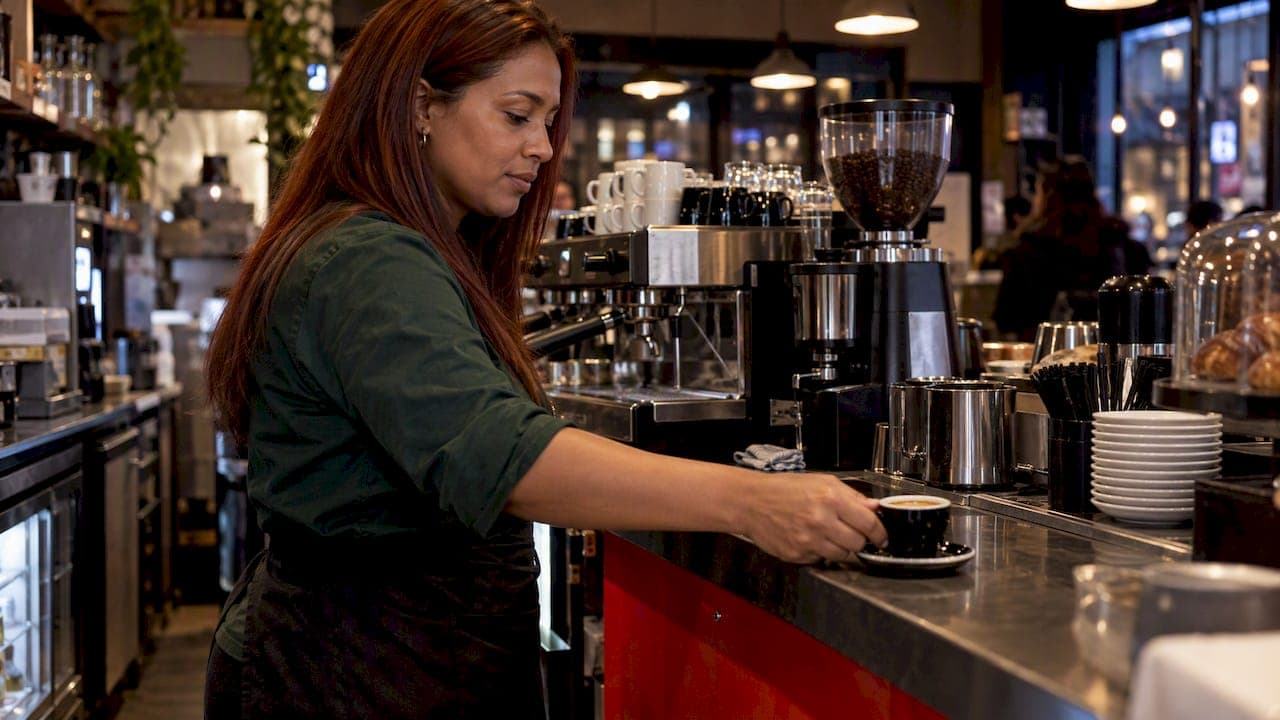
The best late night coffee drink is the one that matches how much caffeine your body can handle and how long you want to stay out. A decaf espresso or decaf cappuccino keeps the whole after-dinner ritual with almost none of the caffeine. A regular espresso is a small hit that suits most people before midnight. A coffee cocktail adds alcohol on top of the caffeine, which is a different decision altogether. Below you get the numbers, the drink menu explained, and how to order in Amsterdam.
TL;DR
- Decaf is not caffeine-free, but it is close: about 3 mg per 125 ml cup in the Netherlands, against about 60 mg for regular filter coffee.
- Dutch guidance for healthy, non-pregnant adults is a maximum of 400 mg of caffeine a day and 200 mg at one time. Sensitive people can notice 100 mg in their sleep.
- Small, strong drinks (espresso, cortado, ristretto) usually carry less caffeine per serving than a big milky latte or a filter refill.
- Caffeine clears at very different speeds, from about two to twelve hours for half a dose, so your own history matters more than any rule.
- Want something that still feels like a night out? A decaf cappuccino, an espresso martini or a hot chocolate all work, and each has a different effect.
Table of Contents
- Why coffee at night feels so natural, and what it does to you
- How much caffeine is in your late night cup?
- The late night coffee menu, explained
- Decaf: the late night drink that keeps the ritual
- Coffee with a kick: espresso martinis and other coffee cocktails
- Ordering late in Amsterdam
- Our view: finish the evening on your terms
- Finish your evening at Big Shots
- A quick way to choose
- FAQ
- Sources
Why coffee at night feels so natural, and what it does to you
In the Netherlands, a small coffee after dinner is close to a reflex. A Dutch food media article suggests a few reasons: a digestif-like tradition, a wish to beat the after-dinner dip, and the pleasant contrast between bitter coffee and something sweet. Black coffee or espresso is the customary partner to dessert.
The catch is biology. Adenosine is a chemical that promotes sleep, and caffeine works by blocking adenosine receptors, so you feel more alert and less tired. That is exactly what you want at 3 p.m. and not at 11 p.m. if you plan to sleep.
How long does caffeine stay in your system?
It depends on the person. According to NRC, on average half of the caffeine remains five hours after a cup and a quarter after ten hours. The same article says that anyone who wants to be sure of protecting their sleep should avoid coffee after lunch. NEMO Kennislink notes that the time needed to clear half a dose varies a lot between people, from roughly two to twelve hours.

So an espresso at 9 p.m. may be harmless for one person and a wide-awake 2 a.m. for another. If you already know that coffee after six keeps you up, treat the rest of this article as a decaf guide. If you sleep like a log, the espresso list is for you.
The limits worth knowing
The Dutch nutrition centre, the Voedingscentrum, recommends that healthy, non-pregnant adults stay under 400 mg of caffeine a day and 200 mg at a time. It also says that sensitive people can see their sleep length and pattern change after 100 mg at once, especially when it is taken a few hours or less before bed. For pregnant women, the Voedingscentrum advises no more than 2 cups of coffee a day, no more than 200 mg of caffeine in total. If you are pregnant, or a doctor has told you to cut caffeine for a heart or anxiety condition, ask your midwife or GP before you treat any of the regular options below as fine.
How much caffeine is in your late night cup?
Numbers differ by country, cup size and bean, so read the table as a guide. The Dutch figures come from the Voedingscentrum, which uses a 125 ml cup. The US figures come from the Mayo Clinic, which uses a 237 ml cup and a 30 ml espresso.
| Drink | Typical caffeine | Source basis |
|---|---|---|
| Filter or instant coffee, 125 ml | about 60 mg | Voedingscentrum |
| Brewed coffee, 237 ml | 96 mg | Mayo Clinic |
| Espresso, 30 ml | 63 mg | Mayo Clinic |
| Decaf coffee, 125 ml | about 3 mg (range 1 to 15 mg) | Voedingscentrum |
| Decaf brewed coffee, 237 ml | 1 mg | Mayo Clinic |
Two things stand out. First, an espresso looks small, but per milliliter it is the strongest thing on the menu. A single shot is still less than one big mug of filter coffee, which is why a short espresso is a sensible late choice. Second, anything built on a double shot, such as a large cappuccino or flat white, doubles the caffeine without looking any stronger. Check the shot count when you order.
If you want to dig into the decaf numbers, this breakdown of how much caffeine decaf really has compares servings in a useful way.

The late night coffee menu, explained
Not every coffee name tells you what is in the cup. The Consumentenbond sorts coffee drinks into strong pure coffee, mild pure coffee, strong milk coffee, mild milk coffee and cooled coffee or cold brew. Here is how that plays out after dark.
Short and black: espresso, ristretto, doppio, lungo
An espresso is a small, concentrated black coffee. A ristretto is shorter and even more concentrated, and an Americano is espresso with hot water added. A lungo pulls more water through the grounds. Koffietje puts an espresso at about 25 to 30 ml, a doppio at 50 to 60 ml, a ristretto at about 15 ml, and a lungo at 1.5 to 2 times the water.
After dinner, the single espresso is the classic move: small, quick, and it finishes the meal. A doppio is two servings of caffeine in one cup, so it is a daytime drink for most people. An Americano feels lighter, but it usually starts from the same shot, so do not mistake the volume for a lower dose.
Milky and mellow: cappuccino, latte, flat white, cortado
Milk makes a drink feel like dessert, which is why many people choose it at night. The differences are subtle but real:
- Cappuccino: a double espresso with foamed milk, with more foam than the others.
- Latte (koffie verkeerd): more milk, softer and creamier.
- Flat white: two espresso shots and about 150 ml of thinly foamed milk, so the coffee flavor stays stronger.
- Cortado: smaller and stronger, with less milk.
- Latte macchiato: milk and espresso in layers.
- Espresso macchiato: espresso topped with a small amount of foam.
The descriptions above follow the Koffietje guide and the Consumentenbond overview. If you want a deeper look at texture, we wrote about cappuccino versus latte and how to ask for dry foam or microfoam in Amsterdam.
For a late evening, a milk coffee made with one shot is a gentle choice. A latte macchiato or an espresso macchiato is another easy way to keep the dose small.
Cold options
Cold brew and iced coffee count as their own category with the Consumentenbond. They are rarely a late night order in a cold Dutch October, but on a warm summer evening they are common. Cold brew is often made strong, so ask how it is served before you assume it is mild.
Decaf: the late night drink that keeps the ritual
Decaf is the answer to a very common search: can you drink coffee at night without paying for it at 3 a.m.? According to the Voedingscentrum, decaf has 1 to 15 mg per 125 ml cup, with an average of 3 mg. That sits far below the 100 mg level at which sensitive sleepers can notice an effect, even if you drink two cups.
What can you order? After dinner, the common decaf choices are a decaf espresso, a decaf Americano or a decaf latte. These give the traditional coffee experience without a high dose. A cortado or flat white offers a milder, creamy finish, according to a coffee review site. Many cafés keep decaf beans for this reason, so it is always fair to ask whether the machine has a decaf option and whether it can do a cappuccino with it.
Is decaf any good?
It is, if the beans are fresh and the decaffeination method is gentle. The Decaf Club, a Dutch decaf seller, recommends Swiss Water Process decaf, which it says is chemical-free and removes 99.9% of the caffeine. It also advises grinding fresh, since pre-ground coffee loses aroma quickly. Another Dutch roaster says its decaffeinated Arabica espresso roast works as an after-dinner espresso or cappuccino.
If you want to keep a bag at home, a decaf espresso from a specialty roaster is an easy way to have the evening ritual without the caffeine.
A decaf espresso at home
The roaster recipe works for a quick evening cup: about 19 to 20 g of ground coffee to 38 to 40 g of water at roughly 92 to 93°C. The same page says the beans also suit a moka pot or French press. No machine? The moka pot is cheaper and still gives you that small, strong cup.
Coffee with a kick: espresso martinis and other coffee cocktails
Some people mean something different by late night coffee drinks: coffee in a glass with a spirit. The espresso martini is the best-known one. It is also the one to be careful with. You are mixing a stimulant with alcohol, so you may feel more awake than you are, and it is easy to underestimate how much you have had. Treat it like any cocktail: pace yourself, drink water, and skip the second one if you are cycling home.
If you like the idea, learn what makes a good one. Our guide to a bar-quality coffee cocktail with a 45:30:30 ratio explains the balance, and our list of seven espresso martini variations shows where you can take it. A decaf espresso is a perfectly good base for the same drink if you want the flavor with less caffeine.
Ordering late in Amsterdam
Amsterdam has a lot of places that serve a drink after dinner, but their hours and styles vary. A coffeeshop in the Dutch sense sells cannabis and has its own closing times, so it is a different thing from a café. If you want a proper espresso or cappuccino, look for a café, a restaurant or a bar with a coffee machine, and check the current opening hours before you go.
For a better picture of how the city eats and drinks after dark, read our local guide to late night food options and our overview of late-night bars and dining spots. If you are curious about why this works so well socially, Amsterdam café culture covers it in depth.
Phrases that get you the right cup
- "A decaf espresso, please." Short, clear, and works everywhere.
- "A cappuccino with one shot." Useful if a place defaults to a double.
- "Koffie verkeerd, but decaf." The Dutch latte, with the caffeine out.
- "Is the espresso martini made with decaf?" Worth asking if you want the flavor and an early night.
Our view: finish the evening on your terms
We run a sports bar, shisha lounge, restaurant and café under one name, at three central venues in Amsterdam. That mix teaches you something about late evenings: people rarely want just one thing. Some groups arrive for the match, stay for dinner and want a coffee at the end. Others sit in the lounge and want something warm and slow. The question we hear most is not what is the strongest drink, but what will not ruin my night's sleep.
Our advice is simple. Decide when you want to sleep, count back at least five hours if you are an average metabolizer, and be honest if you are not. If you are going to be out late anyway, a decaf or a small espresso is a better end to dinner than a big filter refill. If you are having cocktails, remember that the coffee in them still counts. And if you are not sure how you react, try a decaf cappuccino on a night you do not have to be anywhere early. The ritual of the after-dinner cup, sitting with friends, is the thing worth keeping. The dose is a detail you can control.
For a longer take on timing, we also wrote a practical guide to coffee after dinner.
— Leo
Finish your evening at Big Shots
Whether you want a dessert-style coffee after steak or pasta, a drink in front of the game, or a slow evening in the lounge, you can do all of it in one place. Browse the full menu for breakfast, tapas, soups, salads, steaks, burgers, pizza, pasta and drinks, or look at our lounge experiences if you want to settle in with a group.
Want the evening at home instead? You can also order through our delivery page. If you want to know what a specific drink contains, such as which coffee is decaf, ask the bar when you order.
A quick way to choose
Use this as a rule of thumb, then adjust for your own sensitivity.
- You want to sleep soon: decaf espresso, decaf cappuccino or a herbal tea. Around 3 mg of caffeine per cup is very low.
- You are having dessert: a single espresso or an espresso macchiato, which is the classic pairing.
- You want something creamy: a cortado or a one-shot flat white, or a latte macchiato.
- You are out for hours: alternate a decaf with water, and keep any regular coffee well below the 200 mg at one time that the Voedingscentrum recommends.
- You want a cocktail: an espresso martini, in moderation, and never as a way to feel sober.
One more point on timing. Even if you are the kind of person who falls asleep after a double espresso, caffeine can still change how well you sleep, which is why the Voedingscentrum talks about sleep length and pattern and not just falling asleep. If you wake up tired after nights with late coffee, that is useful information. Move your last regular cup earlier by a couple of hours for a week and see.
FAQ
Can you drink decaf coffee at night?
Yes. Decaf in the Netherlands has an average of about 3 mg of caffeine per 125 ml cup, compared with about 60 mg for regular filter coffee. Even a few cups stay well below the 100 mg that can affect sensitive sleepers. It is not completely caffeine-free, so if your doctor has told you to avoid all caffeine, ask them first.
What is the best coffee to drink after dinner?
A small espresso is the traditional choice, since it pairs well with dessert and carries a limited dose. If you want something softer, try a cortado or a flat white, or a decaf version of either. A large milky latte with a double shot has more caffeine than it seems.
Is it okay to drink coffee right after dinner?
For most healthy adults, yes, as long as the total stays under 400 mg a day and 200 mg at a time, as the Voedingscentrum recommends. The issue is sleep, not safety. Because half of the caffeine is still in your body about five hours later on average, a cup at 8 p.m. can still be active at 1 a.m. Pregnant women should limit coffee to 2 cups a day.
Why do people drink coffee at night?
Often it is habit and ritual. In the Netherlands, coffee after dinner is a social custom, a way to fight the post-meal dip and a bitter contrast to something sweet. Caffeine also makes you more alert by blocking the signal that tells you you are tired, which is useful when you plan to stay out.
Which late night coffee drink has the least caffeine?
Decaf espresso or decaf coffee has the least, around 1 to 15 mg per cup. Among regular drinks, a single espresso shot, at about 63 mg per 30 ml according to the Mayo Clinic, is lower than a large mug of brewed coffee at 96 mg for 237 ml.
Sources
- Cafeïne, Voedingscentrum
- Cafeïne factsheet, Voedingscentrum (PDF)
- Wat kan ik wel en niet eten tijdens mijn zwangerschap?, Voedingscentrum
- Caffeine content for coffee, tea, soda and more, Mayo Clinic
- Is It Bad To Drink Coffee Late at Night?, Cleveland Clinic
- Is koffie gezond? En wat doet cafeïne met je?, NRC
- Waarom je wakker ligt van koffie, NEMO Kennislink
- Waarom vinden we in Nederland een kopje koffie na het eten zo lekker, Voeding Nu
- Koffievarianten uitgelegd, Consumentenbond
- Koffiesoorten uitgelegd, Koffietje
- What Is the Best Coffee to Drink in the Evening?
- Decaf koffie voor het slapen, Decaf Club
- Fresh Decaf Coffee Beans, Zwarte Roes
- Decaf Espresso, Qahwat Al'ard
- How Much Caffeine Is in Decaf, Really?, Purelight Coffee