
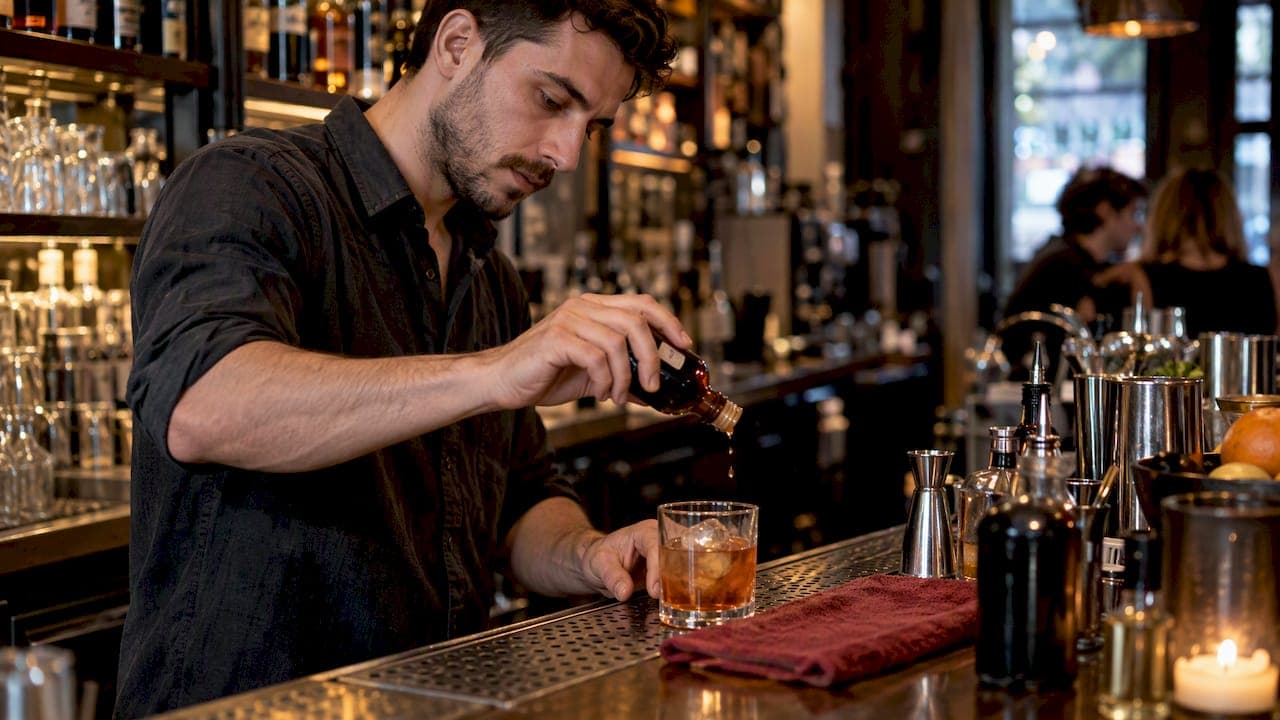
Bitters are concentrated flavor extracts made by steeping botanicals such as bark, roots, flowers, berries and citrus peel in a liquid, usually high-proof alcohol. You use them by the dash or the drop, the way a cook uses spice. A small bottle can sit on a bar for months because a few drops change the whole drink.
That is the short answer. The rest of this guide covers what bitters are made of, what they do in a glass, the types worth knowing, and how to use them without ruining a drink. We also cover the questions people ask most often, including whether bitters contain alcohol and whether you can drink them straight.
TL;DR
- Bitters are botanical extracts, traditionally infused in spirits, and used mainly as a flavoring in cocktails, not as a main drink.
- Their job is balance: they add bitter, spicy, herbal or citrus notes and tie other flavors together, much like spices in food.
- Many bitters contain alcohol, but alcohol-free versions exist, so read the label.
- If a recipe just says "bitters," start with aromatic bitters, and add them one dash at a time.
- Aromatic bitters are not the same as amari such as Campari. Amari are made to be sipped.
Table of Contents
- What bitters are, and what they are made from
- What bitters do in a cocktail
- Types of cocktail bitters
- Do bitters contain alcohol?
- Can you drink bitters straight?
- How to use bitters
- What can you use instead of bitters?
- Our perspective: bitters are the bartender's quiet skill
- Try it in Amsterdam
- FAQ
- Sources
What bitters are, and what they are made from
Think of bitters as a seasoning rack for drinks. Epicurious describes them as flavor extracts made by infusing barks, flowers, roots, berries, citrus peels and other botanicals into a liquid. The bitterness comes from ingredients like gentian, wormwood or cinchona. Citrus peel, flowers and spices then make the finished extract brighter, warmer or more aromatic, according to the Escoffier School's guide.
That last point surprises beginners. Not every bottle tastes harshly bitter. An orange bitters can smell like marmalade, while an aromatic bitters leans toward baking spice and dried herbs. The bitter backbone is there, but it is one layer among several.
A short history
Bitters began as medicine. Wikipedia's entry notes that many long-standing brands started life as patent medicines, and that today they are sold as digestive aids and as cocktail flavorings. Robert Simonson, writing for NYT Cooking, points out that bitters sit inside the historical definition of a cocktail. They are not a garnish. They are a seasoning that gives many classic mixed drinks their structure.
What bitters do in a cocktail
Sweet and sour alone make a drink taste flat or childish. Bitters add the third dimension. According to NYT Cooking, they work in drinks the way spices do in food, and Angostura is the indispensable classic. In practice they do four things:
- Balance. Bitterness offsets sugar, so a drink tastes complete rather than sweet.
- Depth. Spice and herbal notes add a layer that a spirit alone does not have.
- Connection. They link flavors that would otherwise sit side by side, such as whiskey and sugar, or gin and vermouth.
- Aroma. A dash on top of a drink changes what you smell before you taste.
Because the extract is so concentrated, the volume added is tiny. Epicurious compares bitters to a bar's spice rack for this reason: they add aroma, structure and balance without materially changing the volume of the drink.
Types of cocktail bitters
You do not need a shelf of twenty bottles. Four styles cover most recipes, and the pairings below follow the Escoffier School's practical advice and the classic recipes named by NYT Cooking.
| Style | Flavor | Classic drinks | Pairs well with |
|---|---|---|---|
| Aromatic (Angostura-style) | Warm spice, clove, dried herbs, bittersweet | Old Fashioned, Manhattan | Oak-aged spirits such as whiskey and aged rum |
| Peychaud's-style | Lighter, floral, anise and cherry notes | Sazerac | Rye and cognac |
| Orange or citrus | Bright peel, marmalade, lift | Martini, gin drinks | Lighter spirits such as gin and vodka |
| Celery and savory | Herbal, vegetal, salty edge | Savory and vermouth-led drinks | Vermouth, sherry, tequila |
Aromatic bitters: the default
If you buy one bottle, buy this. NYT Cooking's guidance is that when a recipe says only "bitters," aromatic is the practical starting point. It suits dark, oak-aged spirits best, because the spice picks up the vanilla and caramel the barrel gave them. If you like spiced dark spirits, this guide to spiced rum cocktails shows how warm spice and rum pair, and aromatic bitters follow the same logic.
Orange and citrus bitters
These are for drinks that need lift rather than weight. A dash in a gin Martini brightens the botanicals. Citrus bitters also work on lighter spirits where aromatic bitters would feel heavy.
Peychaud's and other regional styles
Peychaud's is the one to know by name, because the Sazerac is built around it. It is lighter and more floral than Angostura. Swapping one for the other in a Sazerac gives you a noticeably different drink.
Celery and other savory bitters
These suit drinks with vermouth, sherry or a savory streak. They are a good second or third bottle once you are comfortable with the basics.
Beyond these, makers now produce chocolate, coffee, cherry, lavender and many other styles. They are fun, but they are refinements, not essentials.
Do bitters contain alcohol?
Often, yes. Traditional cocktail bitters commonly use high-proof alcohol to pull flavor from the botanicals and to preserve it. One practitioner guide cited by Epicurious describes many cocktail bitters as roughly 35% to 45% ABV. Strength varies a lot by brand and style, so do not assume that range for every bottle.
Alcohol-free bitters also exist, and they usually use glycerin instead of alcohol. Shae Whitney of DRAM Apothecary told Epicurious that glycerin-based versions can taste more pungent and last longer on the palate. So they are not just watered-down versions of the alcoholic kind.
The word "bitters" does not tell you whether a product contains alcohol. The label does.

What this means in Amsterdam
In the Netherlands, alcoholic beverages may only be sold to people aged 18 or older, and the same page describes drinks with a maximum alcohol content of 0.5% as the alcohol-free category. If you order a bitters-forward mocktail and need it to be fully alcohol-free, for health, religious or personal reasons, ask the bartender which bitters go in and check that they are alcohol-free. Do not assume. Dutch government guidance also states that alcohol is psychologically and physically addictive. If you are pregnant, taking medication or have been advised to avoid alcohol, speak to your doctor or pharmacist before treating any alcohol-based bitters as harmless because the dose is small.

Can you drink bitters straight?
Technically yes, but ordinary aromatic bitters are intensely concentrated. They are designed for drops and dashes, not for sipping like a normal spirit. The Escoffier School separates these from potable bitters, a sip-oriented category that includes some amari such as Campari or Fernet-Branca.
If you want a first taste, put a dash in a glass of soda water. It is a fast way to learn what a bottle actually tastes like. Do not confuse a small bottle of aromatic bitters with a bottle of amaro: one is a seasoning, the other is a drink. Our own piece on how a Campari spritz compares with an Aperol spritz shows the sip-friendly side of bitter flavors.
How to use bitters
The rules are simple, and they are worth following.
- Count in dashes. A dash is a quick shake from the bottle. Two or three dashes is normal for a single cocktail. Use a dasher top or a small dropper so you control the amount.
- Add one at a time and taste. The extract is so concentrated that overdosing is hard to correct, as NYT Cooking warns. You cannot take a dash back out.
- Match bitters to the spirit. Aromatic for oak-aged spirits, citrus for lighter ones, Peychaud's for a Sazerac, celery for vermouth or sherry drinks.
- Add them early or late. Most recipes stir bitters in with the other ingredients. You can also dash them over the top so you smell them first.
- Try them outside cocktails. A dash in soda water, tonic or a glass of ginger beer makes a simple, low-effort drink.
A worked example: the Old Fashioned
The Old Fashioned shows how much work a few drops do. You stir a measure of whiskey with a little sugar and two or three dashes of aromatic bitters over ice, then add an orange peel. Without the bitters, you have sweetened whiskey. With them, the sugar has something to push against and the whiskey tastes rounder. If you are starting out, our cocktail tips for beginners cover the habits that matter most, and a few well-chosen garnishes for a home bar finish the job.
Common mistakes
- Assuming every bottle is aggressively bitter. Many are more aromatic than bitter.
- Pouring instead of dashing. Bitters are a seasoning, not a mixer.
- Buying many bottles at once. One aromatic and one orange cover most classics.
- Treating bitters and amaro as the same thing. They are used very differently.
What can you use instead of bitters?
If a recipe calls for bitters and you have none, there is no perfect swap, because the whole point is the concentrated bitter-botanical blend. Reasonable stand-ins depend on the drink. A small splash of an amaro can add bitterness and herbal depth to a whiskey drink, though it will also add sweetness and volume. A twist of orange or grapefruit peel expressed over the glass gives some of the aroma that citrus bitters would. Expect a different drink, not an identical one. For a non-alcoholic result, alcohol-free bitters are the closest match.
Our perspective: bitters are the bartender's quiet skill
We run a sports bar, shisha lounge, restaurant and café across three central venues in Amsterdam, and we see how people actually order. Most guests never ask what is in the drink. They ask for something "balanced" or "not too sweet", and bitters are one of the main tools a bartender uses to get there.
That matches how we think about the bar more broadly. A good drink is not about showy technique. It is about a few small decisions that add up: how much sweetness, how much dilution, how much seasoning. We have written about how mixology shapes modern bars and how bartenders shape the drink experience, and bitters fit the same idea: invisible when done well, obvious when missing.
Our advice to guests is practical. If you like spirit-forward drinks, tell your bartender you enjoy something stirred and slightly bitter, and let them choose. If you want an alcohol-free drink, say so clearly and ask what goes in it. A good bartender will be happy to explain. For a wider overview of what you can order, see our guide to every cocktail type.
— Leo
Try it in Amsterdam
Reading about bitters only gets you so far. The quickest way to learn what they do is to taste the same spirit with and without them. At Big Shots Amsterdam you can do that over a relaxed evening: cocktails at the bar, food from our menu, and a lounge setting if you want to stay longer, see Lounge Experiences. Prefer to stay in? Check delivery options. You can find all three of our venues on our home page.
FAQ
What is the purpose of bitters?
Bitters balance and deepen a drink. They add bitter, spicy, herbal or citrus notes and connect flavors that would otherwise stay separate. NYT Cooking compares them to spices in food.
Do bitters have alcohol in them?
Often they do, because high-proof alcohol extracts and preserves the botanicals. Alcohol-free bitters made with glycerin also exist, so check the label rather than relying on the name.
Can you drink straight bitters?
You can, but aromatic cocktail bitters are extremely concentrated and are meant for dashes, not sipping. A dash in soda water is a gentler way to taste one. Amari such as Campari are made to be sipped and are a different category.
What is a substitute for bitters?
There is no exact one. A splash of amaro or an expressed citrus peel can add some of the bitterness or aroma, but the drink will change. For an alcohol-free drink, use alcohol-free bitters.
Which bitters should a beginner buy first?
Aromatic bitters. They are the default when a recipe says only "bitters", and they suit whiskey, aged rum and many other classics. Add an orange bitters next for lighter spirits.
Sources
- BITTERS | definition in the Cambridge English Dictionary
- How to Make Mixed Drinks and Cocktails, NYT Cooking
- What Are Bitters and Why Do They Make Drinks Better? Epicurious
- A Guide To Bitters, Escoffier School of Culinary Arts
- Bitters, Wikipedia
- The rules on selling alcoholic beverages to young people, Government.nl
- Preventing alcohol abuse and alcoholism, Government.nl