
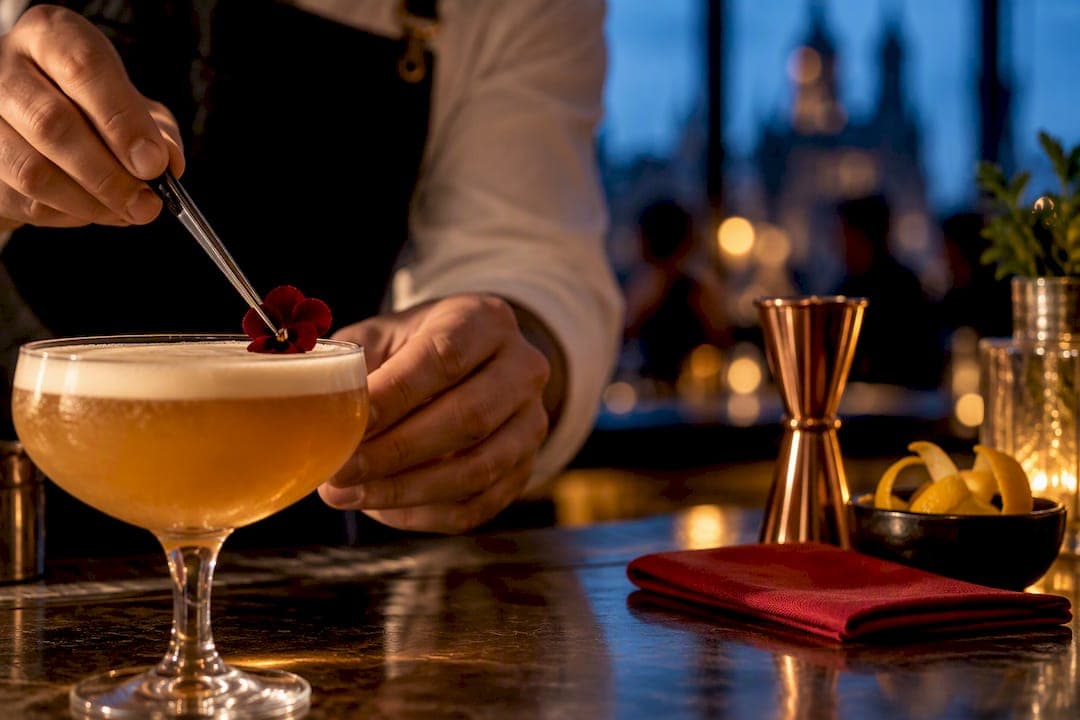
A signature cocktail is an original drink created to express the identity of a person, bar, or event, rather than a fixed recipe copied from a bartending manual. It stands apart from IBA-recognized classics because it is meant to be exclusive to the place or occasion that inspired it, often built around a local ingredient, a personal story, or an unusual presentation.
TL;DR:
- A signature cocktail is built around local ingredients, a personal story, or a unique presentation that sets it apart from standard recipes.
- Clear naming and storytelling increase memorability and emotional impact, making the drink more meaningful to guests.
- Standardizing preparation, testing ratios, and planning for batch service are essential to maintain quality at scale during large events.
- Operational planning, including pre-batching and staff training, is often more critical to success than the drink's originality or ingredients.
- Focusing on a distinct point of difference and consistent service is more important than inventing unusual ingredients or overly complex recipes.
Table of Contents
- What sets a signature cocktail apart from classic cocktails
- Why a signature cocktail matters for guest experience and branding
- How to design and test a signature cocktail step by step
- Serving a signature cocktail at scale without losing quality
- How Big Shots Amsterdam builds signature cocktails into its menu
- What actually makes a signature cocktail work
- Sources
- FAQ
What sets a signature cocktail apart from classic cocktails
A classic cocktail follows a standardized recipe that stays consistent wherever it is poured. A signature cocktail does the opposite: it is built to be exclusive to one bar, one host, or one occasion, and it deliberately breaks from the recipes the International Bartenders Association lists as the global reference for classic drinks.
Most signature cocktails share a few traits:
- An ingredient tied to the location, the season, or the person hosting the event.
- A name and short backstory that give the drink meaning beyond its taste.
- A presentation detail, glass, garnish, or serving ritual, that makes it recognizable.
- A limited availability that keeps it feeling special rather than routine.
The Bellini is a useful illustration of how this works in practice. It grew out of a bartender combining local white peaches with prosecco, and that regional pairing turned into a widely recognized drink tied to a single origin. A guide to cocktail types breaks down this classics-versus-house-creation distinction in more detail.
Why a signature cocktail matters for guest experience and branding
A drink with a name and a story does more work than a drink with neither. Guests remember what they can retell, and a cocktail tied to a theme or a person gives them something to talk about at the table and later on social media.
This is where naming carries real weight. Mixologists interviewed by the Tales of the Cocktail Foundation treat storytelling and a clear point of difference as central to a cocktail's impact, not a finishing touch added after the recipe is set. A short, on-theme name paired with a one-line story on a menu or cocktail card increases how well guests recall the drink and, at charity events, how likely they are to connect it to the cause.
A signature cocktail's emotional pull often comes from its story more than its mixing technique, according to the Tales of the Cocktail Foundation. Good balance and technique matter, but they are the baseline, not the differentiator. The differentiator is the narrative a guest carries home.

How to design and test a signature cocktail step by step
Building a signature cocktail is a process, not a single flash of inspiration. Skipping steps usually shows up later as an inconsistent drink or a name nobody remembers.
- Define the concept. Decide who the drink is for and what story it should tell: a host's favorite flavors, a bar's neighborhood identity, or an event's theme.
- Pick a base spirit and local or seasonal ingredients. Anchor the drink around one spirit, then build around ingredients that are fresh, regional, or personally meaningful.
- Mix, taste, and adjust ratios. Test small batches and adjust sweetness, acidity, and dilution until the balance holds up across several tastings, not just the first pour.
- Finalize presentation and naming. Settle on a glass, a garnish, and a short, pronounceable name that guests can repeat without hesitation.
- Prepare it for service. Write down exact measurements, decide what can be pre-batched, and brief the staff who will pour it so every serve matches the original.
A garnish guide is worth keeping on hand during step four, since the right garnish often does as much for recognition as the base spirit.
Pro Tip: Keep the name to two or three syllables. Guests order what they can pronounce with confidence, and staff repeat it more accurately behind the bar.
Serving a signature cocktail at scale without losing quality
A cocktail that works one glass at a time does not always work for 150 guests at once. Event and bar service bring their own set of problems: speed, consistency, and staffing.
Pre-batching the base, spirit and mixer together, ahead of service is standard practice for keeping wait times down during peak hours. The trick is adding one fresh element per serve, a citrus squeeze, a sparkling top-off, or a fresh garnish, so the drink still tastes made to order even though most of it was prepared in advance.
A few points to plan around:
- Single-serve cocktails suit small, slow-paced events where bartenders have time per guest.
- Batched or bottled formats suit large events, weddings, and any service where speed matters more than tableside flair.
- A quick taste check every hour during service catches drift in flavor before guests notice it.
- Staff need the same written recipe and pour measurements so the drink tastes identical no matter who mixes it.
Pro Tip: Assign one person to taste-test the batch every hour. A ten-second check prevents an entire evening of inconsistent pours.
Age verification and responsible serving rules apply to any alcoholic signature cocktail exactly as they would to a standard drink menu, and hosts and venues remain responsible for following the alcohol service rules in their own country.
How Big Shots Amsterdam builds signature cocktails into its menu
A sports bar, shisha lounge, restaurant, and café setup makes a signature cocktail menu a natural fit. A drink that reflects a venue's personality gives guests something distinct to order in various social settings.
The same logic that applies to any bar building a house drink applies here:
- A cocktail built around local or seasonal ingredients ties the drink to the city and the season rather than a generic bar menu.
- A short, memorable name and story make the drink easier for staff to recommend and for guests to reorder.
- A serving format matched to the setting, single-serve at the bar, batched for a private event, keeps quality steady during busy hours.
Readers who want to see how a classic gets reworked into something venue-specific can look at how Negroni variations get built, or how bartenders shape the drink experience beyond the recipe itself. The full menu lists the current food and drink lineup for anyone planning a visit.
What actually makes a signature cocktail work
Most advice on signature cocktails focuses too heavily on the recipe and not enough on the decisions around it. A perfectly balanced drink with no name, no story, and no consistent way to pour it at scale will still fall flat at an event or on a menu.

The overrated part is originality for its own sake. A drink does not need an unusual ingredient to succeed. It needs a clear point of difference from the classics on the IBA list, a name a guest can repeat the next day, and a preparation method that holds up whether one bartender makes it or five.
The underrated part is the operational planning: deciding early what gets pre-batched, how it gets tasted mid-service, and how staff learn the exact pour. Skip that step and even a great concept turns into an inconsistent drink by the second hour of a busy night. Readers building their own signature cocktail should lock in the naming and the service plan before worrying about a rare ingredient.
— Leo
Sources
- Signature drink — Wikipedia
- IBA cocktails — IBA
- How to Create Your Bar's Signature Cocktail — Tales of the Cocktail Foundation
- What is Cocktail Attire for a Wedding? — Anatole Wedding Guide
FAQ
What is a cocktail dress code for a wedding?
Cocktail attire for a wedding is a semi-formal dress code, typically knee-length or midi dresses for women and dark suits for men, though the exact expectation shifts with region and event timing according to the Anatole wedding guide. Evening weddings tend to call for slightly more formal choices than daytime ones.
What is the hardest cocktail to make?
There is no single agreed-upon "hardest" cocktail, since difficulty depends on technique, ingredient availability, and the bartender's experience rather than a fixed ranking. Drinks that require precise layering, house-made ingredients, or multiple infused components are generally considered more demanding to execute consistently.
What does cocktail dress code mean?
Cocktail dress code refers to a semi-formal style of dress, generally knee-length or midi dresses paired with dark suits, that sits between casual and black-tie formality. Interpretation varies by region and by the time of day the event takes place, according to the Anatole wedding guide.
What are the five most popular cocktails?
There is no single universally agreed list of the five most popular cocktails, since popularity varies by region and by year. The IBA's official list of recognized cocktails serves as the closest global reference point, spanning categories from unforgettables to contemporary classics.
How is a signature cocktail different from a house cocktail?
The terms are often used interchangeably, since both describe a drink created specifically for one bar, host, or event rather than copied from a standard recipe. A signature cocktail typically carries an added layer of personal or thematic meaning, such as a name or story tied to the person or occasion it represents.