
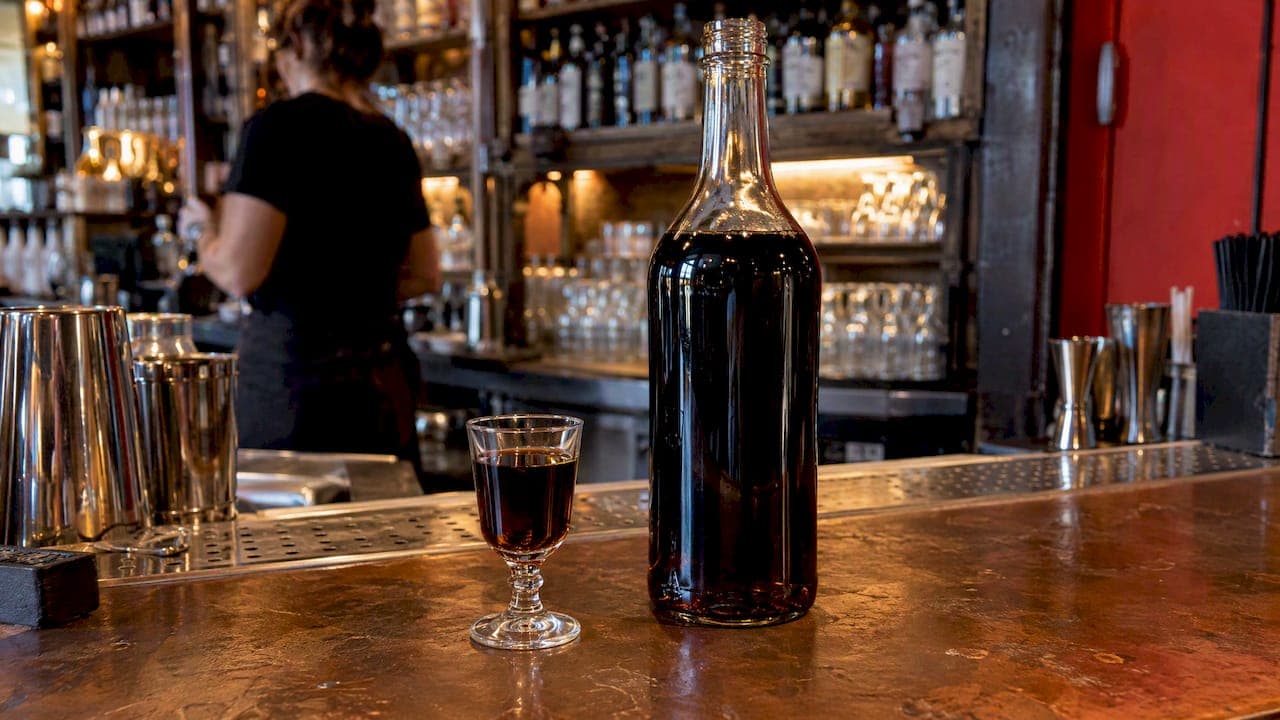
Amaro is an Italian herbal liqueur with a bittersweet taste. Makers steep herbs, roots, bark and citrus peel in alcohol, sweeten the result and often let it rest. Italians usually sip it after dinner, but it also works over ice, with tonic or in cocktails. The word simply means "bitter", and the plural is amari.
If you saw it on a drinks list and wondered whether to order it, this guide covers the essentials: what is inside, why one bottle tastes of orange peel and another of mountain herbs, how it differs from Campari, and how to start without wincing.
TL;DR
- Amaro is a bittersweet Italian herbal liqueur, made by steeping botanicals in wine or spirit, then sweetening it.
- Strength varies a lot, roughly 16% to 40% ABV for most bottles, so it is not one fixed type of drink.
- An aperitif opens the meal and a digestif closes it. Lighter bitters like Campari lean aperitif, darker amari lean digestif.
- Start with one ice cube or a splash of soda, then move on to cocktails like the Negroni.
- Taste is local: each region puts its own herbs and citrus into the bottle.
Table of Contents
- What amaro actually is
- How amaro is made
- Is amaro hard liquor?
- Aperitif vs digestif: where amaro fits
- Amaro vs Campari
- What amaro tastes like
- How to drink amaro
- Food pairings and the after-dinner moment
- Our perspective
- Try it with a meal in Amsterdam
- Making amaro at home
- FAQ
- Sources
What amaro actually is
Amaro is a herbal liqueur that typically sits between 16% and 40% alcohol. Producers macerate botanicals such as herbs, roots, flowers, bark and citrus peel in a base of wine or spirit. They then sweeten it with sugar or caramel, and sometimes age it.
The ingredient lists can be long. Recipes often contain dozens of botanicals such as gentian, rhubarb root, cinnamon and mint, a nod to medicinal origins in 13th-century Italian monasteries. Many families and distilleries still guard their recipes closely.

The key thing to grasp is that amaro is a style, not a single product. There is no single legal recipe, so one bottle can be a light, orangey aperitivo and another a dark, almost savory mountain bitter. Think of it the way you think of "red wine": a broad family with very different members.
Amaro versus cocktail bitters
The Angostura-style bottles behind a bar are a different thing. Cocktail bitters go in by the drop or dash. Amari are readily potable liqueurs you can drink on their own. They may use similar ingredients, but the balance is tuned so you can sip them straight. We cover the other side in our plain guide to cocktail bitters.
How amaro is made
The method matters because it explains the flavor differences from bottle to bottle.
- Extraction. Producers use maceration (soaking), percolation, decoction (simmering) and sometimes distillation of certain botanicals. Delicate materials like flowers and peel are often handled in separate batches from hard ones like roots and bark, then blended.
- Sweetening. Sugar or caramel balances the bitterness. More sugar gives a rounder, syrupy bottle. Less gives a drier, sharper one.
- Resting or aging. Time lets the blend marry. Some amari rest for months, others are aged in barrels.
The bittering agent, extraction method, sugar level and resting time all shape the result, from bright citrus to the deep, broth-like character of a fernet.
It is also why color is no guide to quality. Some of the redder, lighter bottles get their color from dye rather than from botanicals, so judge by taste and label, not by shade.
Is amaro hard liquor?
Sort of, but it is gentler than most spirits. Most amari land between 16% and 40% ABV. For comparison, EU rules set a minimum of 15% alcohol by volume for most spirit drinks. So many amari sit close to wine-and-fortified-wine territory, while the strongest ones match a standard spirit.
A practical rule: lighter, sweeter, orange-leaning bottles are usually lower in alcohol. Dark, mentholated or smoky ones tend to be stronger. Always check the label, and remember a small pour of a 30% bottle still counts as a real drink.
Aperitif vs digestif: where amaro fits
The two words describe when you drink, not what is in the glass.
| Aperitif | Digestif | |
|---|---|---|
| When | Before dinner | After dinner |
| Style | Bright, lighter, lower alcohol | Darker, richer, more herbal |
| Purpose | Stimulates the appetite | Traditionally a closing drink to settle a meal |
| Typical examples | Campari or Aperol with soda or prosecco | Many amari, served neat or on ice |
Aperitifs are meant to open the palate, and amari are popular digestifs. One honest caveat: the idea that a digestif helps digestion is tradition, and there is no strong evidence for it. Enjoy it for taste and ritual. If you have stomach problems, talk to your doctor rather than relying on a nightcap.
The Italian approach to the hour before dinner is also worth borrowing. Bartender Sother Teague describes it as leisurely sipping and social connection rather than a race to get drunk. Different cities have their own versions of this rhythm. Signature drinks in Bruges are one example of how a place's local drinks end up shaping an evening out.
Amaro vs Campari
This is the question most people ask. Campari is a bitter commonly drunk before dinner, while amari are usually the dark, herbal bottles served after. In practice Campari is a bright red aperitivo bitter. It works as a mixer in a Negroni or a spritz, and many people consider it a cousin of amaro rather than a separate species.
If you are choosing at the bar:
- Want something refreshing before food? Go for a Campari or Aperol spritz. Our bartender-tested Aperol vs Campari spritz guide explains how to order either.
- Want something to close the meal? Pick a darker amaro, neat or over ice.
- Want something in between? A Negroni. See our 12 Negroni variations.
What amaro tastes like
Flavors differ enormously. Styles include Rabarbaro made with Chinese rhubarb, minty and bitter Fernet, and Carciofo from artichoke leaves. Rome bar owner Matteo Zed calls amaro a "business card of a territory", because producers often add local ingredients such as mountain sage or Sicilian citrus.
A simple way to map your taste:
| If you like... | Look for... |
|---|---|
| Orange marmalade, light bitterness | Citrus-led, lighter amari |
| Cola, cinnamon, warm spice | Spiced, medium-bodied amari |
| Dark chocolate, black coffee | Darker, rounder, sweeter-bitter bottles |
| Menthol, pine, strong herbs | Fernet-style and Alpine bottles |
These are rough guides, not rules. Within each family there is a wide spread of sweetness and bitterness.
How to drink amaro
You have more options than a small glass after dinner.
- Neat. The traditional digestivo. Pour a small measure and sip slowly.
- On the rocks. One large ice cube softens the edges and releases aroma as it melts.
- Ice-cold from the freezer. A current trend that softens the herbs and bitterness for beginners.
- With tonic or soda. Works as a long aperitif, a lighter way in.
- In cocktails. Amari appear in the Negroni, Americano and Paper Plane.
Teague's advice for newcomers is to try it by itself with an ice cube or some soda before mixing it into drinks. That is good advice: you learn what the bottle tastes like before other ingredients cover it.
Bartenders also have a habit of taking an amaro shot as a welcome or farewell, the "bartenders' handshake". If a bartender offers you one, that is a friendly gesture.
What it means on a drinks menu
When a menu lists "amaro", it means dark, herbal Italian bitter liqueurs, usually served after dinner or used in cocktails. If the menu does not say which one, ask the bartender what is open, and describe what you like: sweet, smoky, citrusy or very bitter. A good bar will point you to the right bottle in seconds.
Food pairings and the after-dinner moment
Amaro earns its place at the end of a rich meal. A steak, a heavy pasta or a plate of cheese leaves the palate coated, and the bitterness cuts through it. Citrus-led bottles also work with desserts and fruit. For the thinking behind this, our sensory guide to alcohol pairing walks through how bitterness, sweetness and fat interact.

Coffee is the other classic closer. Whether to have it before or after your digestif is a real debate, and we give our view in coffee after dinner: yes or no. If you prefer the two combined, try one of our espresso martini variations.
Our perspective
We run a sports bar, shisha lounge, restaurant and café under one roof, and our guests come for very different evenings. Some arrive for a match with friends. Others want a slow dinner or a quiet night in the lounge. What we see is that the drinks people enjoy most are the ones they feel free to ask about.
Amaro is a good example. It looks intimidating, with strange names and a bitter reputation, yet it suits a long, unhurried evening very well. Our advice is simple: tell the bartender what you usually drink, ask for a small pour with ice, and take your time. If you like it, order a Negroni next. If you do not, you have lost very little and learned something about your taste.
We also think the bitter family is best understood in context: a spritz before food, a good meal, then something dark and herbal to close. That arc is what makes a night out feel complete, and it is the rhythm we like to serve in Amsterdam. For a broader view of what you can order, see our guide to every cocktail type.
— Leo
Try it with a meal in Amsterdam
If this made you curious, make an evening of it. Our menu runs from tapas, steaks and burgers to pasta and pizza, with drinks to match. Prefer a slower pace? Look at our lounge experiences. Staying in, you can order through our delivery page. We have three central venues in Amsterdam, so ask the bar team about the drinks available at the one you visit.
Making amaro at home
You do not need a full bar to start. Buy one small bottle of a medium-bitter amaro and keep it in the freezer door. Serve it in a small glass with a twist of orange or lemon peel. A few garnishes go a long way, and our list of versatile cocktail garnishes covers what to stock.
A few habits help:
- Pour small. Amari are rich, and 30 to 50 ml is plenty.
- Taste before and after adding ice, to notice how the flavor opens.
- Keep a bottle of tonic or soda water on hand for a long drink.
- Store bottles upright, away from heat and sunlight, and the flavor will hold for a long time.
If you drive, cycle home or have a health condition, keep in mind that a small glass still contains alcohol. Drink within the limits your doctor or national health guidance recommends.
FAQ
What is amaro?
Amaro is an Italian herbal liqueur that tastes both bitter and sweet. It is made by steeping herbs, roots, bark and citrus peel in wine or spirit, then sweetening it. Italians usually drink it after dinner, but it also works over ice or in cocktails.
What is the difference between Campari and amaro?
Campari is a bitter aperitivo, usually drunk before dinner. Amari tend to be darker, more herbal drinks served after a meal. The two overlap, since Campari is itself a bitter liqueur, and both appear in classic cocktails such as the Negroni.
How do you drink amaro for the first time?
Start with a small pour neat, with one ice cube, or with a splash of soda or tonic. Serving it very cold also softens the bitterness. Once you know the flavor, try it in a cocktail.
Is amaro a hard liquor?
Not quite. Most amari fall between about 16% and 40% alcohol by volume, so some are closer to fortified wine and others to spirits. Check the label on the bottle you are drinking.
Sources
- Amaro: Italiaanse kruidenbitter en hoe je hem drinkt
- Amaro is hot: zo gebruik je de kruidenlikeur in je cocktails
- AMARI CLUB booklet
- How Amaro Is Made
- Regulation (EU) 2019/787 on spirit drinks
- Aperitif vs. Digestif: What's the Difference?
- Apéritif and digestif
- Amari 101: Your Guide to Italy's Essential Bittersweet Liqueurs
- What Are Amari And Bitters Anyway?
- What Is Amaro? An Intro to the Types, Most Common Bottles